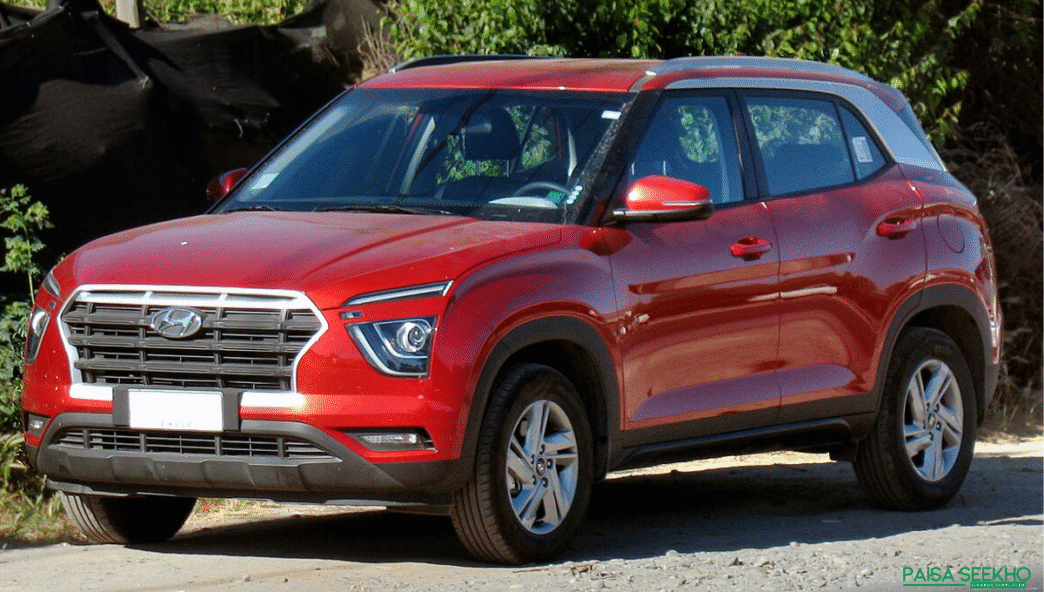
You’ve been scrolling through car reviews late at night, looking at the sleek new Hyundai Creta, imagining those weekend drives, and wondering how incredible it would feel to finally sit behind the wheel of your own SUV.
Maybe you’ve seen neighbours upgrade, or your friends talk about EMIs and road trips.
Now it’s your turn, the thought of owning a Creta makes your heart race, but so does that price tag.
And you’re probably asking yourself:
“Can I really afford the Hyundai Creta without draining my savings or killing my monthly budget?”
Good news, you absolutely can.
With a smart plan, clear budgeting, and a bit of financial discipline, this dream SUV can fit comfortably into your life and your wallet.
In this guide, we’ll walk you through:
- The real on-road price of the Hyundai Creta in 2025 (variant-wise & city-wise)
- How much downpayment you actually need
- What your EMI will look like under different loan tenures
- A simple saving strategy to reach your goal faster
- And once you’ve cleared your loan, how to turn that EMI into investments for your next dream
By the end, you’ll know exactly how to buy the Hyundai Creta confidently, not impulsively, and enjoy the journey without financial stress.
Section 1: Understand the Real Cost of Hyundai Creta in 2025
How Much Does a Hyundai Creta Cost in India (2025)?
Before you start calculating EMIs or comparing loan offers, it’s important to understand the real cost, not just the one you see in ads.
The ex-showroom price is just the base, the actual on-road price includes RTO registration, road tax, insurance, and handling charges.
Depending on your city and variant, this can add ₹1.5–₹2.2 lakh to the final bill.
Here’s a quick look at the Hyundai Creta price in India 2025 (updated post-facelift launch):
| Variant | Ex-Showroom Price (₹) | On-Road Price (Delhi) | Fuel Type |
| Creta E 1.5 Petrol | 10.99 lakh | 12.70 lakh | Petrol |
| Creta EX 1.5 Petrol | 12.17 lakh | 13.90 lakh | Petrol |
| Creta S 1.5 Diesel | 13.93 lakh | 15.90 lakh | Diesel |
| Creta SX 1.5 Petrol CVT | 15.87 lakh | 18.00 lakh | Petrol (CVT) |
| Creta SX(O) 1.5 Turbo DCT | 19.20 lakh | 21.80 lakh | Petrol (Turbo) |
(Prices are approximate as per Hyundai India dealership listings, Q1 2025.)
💬 Tip: Petrol variants suit urban commuters, while diesel options deliver better long-distance mileage, pick based on your lifestyle, not peer pressure.
City-Wise Hyundai Creta On-Road Price (2025)
Just like with any car, the final cost of your Hyundai Creta depends on where you buy it.
Here’s how prices vary across major cities:
| City | Base Variant (E 1.5 Petrol) | Top Variant (SX(O) Turbo DCT) |
| Delhi | ₹12.70 lakh | ₹21.80 lakh |
| Mumbai | ₹13.25 lakh | ₹22.40 lakh |
| Bangalore | ₹13.80 lakh | ₹23.10 lakh |
| Hyderabad | ₹13.40 lakh | ₹22.60 lakh |
| Chennai | ₹13.60 lakh | ₹22.70 lakh |
| Kolkata | ₹13.15 lakh | ₹22.20 lakh |
| Pune | ₹13.50 lakh | ₹22.55 lakh |
(On-road prices include RTO, insurance, fast-tag, and standard accessories.)
💬 Pro Tip: If your employer offers a car lease program, check whether the Hyundai Creta qualifies, it can save you 10–12 % in tax and registration costs.
Why Hyundai Creta Prices Differ by City
- RTO tax slabs: States like Karnataka and Maharashtra have higher registration charges compared to Delhi or Haryana.
- Insurance premiums: Dense metro traffic increases premium costs.
- Dealer handling & logistics: Bigger cities often add ₹10,000–₹20,000 for delivery and paperwork.
- Seasonal discounts: Offers vary, festive months (September–November) often have the best deals.
💬 Paisaseekho Tip: Always ask your dealer for a written breakup of the ex-showroom vs on-road price. It helps you spot “optional” charges that can be negotiated or removed.
Section 2: Plan Your Downpayment Smartly
How Much Downpayment Do You Need for a Hyundai Creta?
Buying an SUV like the Creta is exciting, but let’s get one thing straight: a smart downpayment makes your EMIs lighter and your financial life smoother.
In India, most banks and NBFCs finance up to 85–90 % of the car’s on-road price, which means you’ll need to arrange the remaining 10–15 % as your downpayment.
Here’s what that looks like in numbers:
| On-Road Price (₹) | 10 % Downpayment | 15 % Downpayment | Loan Amount (after 15 %) |
| 13 lakh (Base variant) | 1.30 lakh | 1.95 lakh | 11.05 lakh |
| 18 lakh (Mid variant) | 1.80 lakh | 2.70 lakh | 15.30 lakh |
| 22 lakh (Top variant) | 2.20 lakh | 3.30 lakh | 18.70 lakh |
💬 Tip: Always confirm whether your lender is financing the ex-showroom or on-road value. The difference can easily be ₹1–2 lakh, and that affects your EMI significantly.
How to Decide the Right Downpayment
Think of your downpayment as the foundation of your car ownership experience.
The more solid it is, the smoother your journey.
| If You Want To… | Go For | Why It Works |
| Keep EMIs low & save on interest | 20 % downpayment | Reduces total interest by ₹40,000–₹60,000. |
| Maintain cash flow flexibility | 15 % downpayment | Balanced, affordable upfront, manageable EMIs. |
| Start early with limited savings | 10 % downpayment | Works if you plan tight, just ensure you have emergency backup. |
💬 Paisaseekho tip: Don’t go for a 0 % downpayment offer unless you have strong financial discipline, it often comes with higher processing fees and total interest.
Saving for Your Downpayment (Without Feeling the Pinch)
You don’t need to cut all your weekend plans to save for your Creta.
Instead, treat it like a short-term goal and automate small, consistent savings.
| Time to Purchase | Target Downpayment (₹2 lakh) | Monthly Saving Needed | Best Option to Save |
| 6 months | ₹2 lakh | ₹33,300/month | Short-term RD or Liquid Fund |
| 12 months | ₹2 lakh | ₹16,700/month | High-yield savings or recurring deposit |
| 18 months | ₹2 lakh | ₹11,100/month | Balanced mutual fund SIP |
💬 Pro Tip: Rename your account “Creta Downpayment Fund.”
It might sound small, but seeing your goal’s name in your banking app boosts consistency, a trick financial coaches swear by.
Avoid These Common Mistakes
- ❌ Using emergency funds for your downpayment, keep that separate.
- ⚠️ Taking a personal loan to cover downpayment, you’ll end up juggling two EMIs.
- 🏦 Ignoring other costs like insurance, accessories, and RTO, these can add ₹60,000–₹1 lakh to your initial spend.
- 💳 Relying entirely on credit cards or BNPL offers, they increase total cost quietly.
Quick Recap
✅ Aim for at least 15–20 % downpayment to reduce EMI stress.
✅ Save through automation, not impulse.
✅ Don’t touch your emergency or investment funds.
✅ Confirm loan coverage (ex-showroom vs on-road) before signing anything.
Section 3: What Will Your EMI Look Like?
Understanding Your Monthly Commitment
You’ve got your downpayment sorted, now comes the number that really matters, your monthly EMI.
This is what decides whether your Creta adds to your comfort or your financial stress.
Think of it like a long-term subscription, except this one brings home your dream SUV, not another OTT platform.
How Car EMIs Work
Your Equated Monthly Instalment (EMI) depends on three main factors:
- Loan amount – After downpayment, the amount you borrow.
- Interest rate – Usually around 9 % – 10.5 % p.a. for salaried professionals in 2025.
- Tenure – The repayment period, usually 3–7 years.
Shorter tenures mean higher EMIs but lower total interest, while longer tenures make monthly payments easier but increase the total cost.
Example: EMI for Hyundai Creta (2025)
Let’s assume:
- On-road price: ₹18 lakh (mid variant)
- Downpayment: ₹2.7 lakh (15 %)
- Loan amount: ₹15.3 lakh
- Interest rate: 9.5 % p.a.
Here’s what your EMI could look like:
| Loan Tenure | Approx. EMI (₹) | Total Interest (₹) | Total Amount Payable (₹) |
| 3 years | 48,200 | 2.00 lakh | 17.30 lakh |
| 5 years | 32,000 | 3.90 lakh | 19.20 lakh |
| 7 years | 25,200 | 5.85 lakh | 21.15 lakh |
💬 Tip: A 5-year loan usually hits the sweet spot, affordable monthly payments and reasonable interest cost.
How to Choose the Right Tenure
| If You Want To… | Go For This Tenure | Why It Works |
| Pay off quickly and save on interest | 3–4 years | You’ll own the car faster and pay less overall. |
| Keep EMIs comfortable without overpaying | 5 years | Balanced option, ideal for most salaried professionals. |
| Prioritise cash flow flexibility | 6–7 years | Lowers EMI, but increases total interest, fine if your salary is variable. |
💬 Paisaseekho Tip: Keep your EMIs within 30–35 % of your monthly income. That’s the zone where your lifestyle stays comfortable and your credit score strong.
Affordability Check
Let’s say your monthly take-home salary is ₹80,000.
Here’s how your EMI might fit your budget:
| Income | Comfortable EMI Range (30 %) | Ideal Creta EMI |
| ₹60,000 | ₹18,000 | Choose base or mid variant |
| ₹80,000 | ₹24,000 | Mid variant (5-year loan) |
| ₹1,00,000 | ₹30,000 | Top variant (5–7-year loan) |
💬 Pro Tip: Don’t stretch beyond 35 % of your salary for all combined EMIs (car + credit card + personal loans). That’s the line between “living well” and “living stressed.”
How to Reduce Your EMI Smartly
- Increase your downpayment, even ₹50,000 extra can lower EMI by ₹1,000/month.
- Opt for festive offers, banks often waive processing fees or offer lower interest rates during Diwali, Navratri, or year-end.
- Negotiate insurance and accessories, buying them outside the dealership can save up to ₹15,000–₹20,000.
- Check prepayment options, some banks let you pay an extra EMI yearly without penalty.
Quick Recap
✅ Keep your EMIs under 35 % of your income.
✅ Compare 3–5-year loan options for best value.
✅ Use festive or corporate discounts to lower cost.
✅ Avoid 0 % downpayment traps, they usually hide higher processing fees.
Section 5: After You Buy, Managing EMI & Lifestyle
That moment when you finally take delivery of your Hyundai Creta, the new-car smell, your family’s excitement, the first drive home, it’s pure magic. ✨
But once the honeymoon phase settles, reality rolls in.
Now you’ve got an EMI, fuel bills, and maintenance to think about.
The key is simple: own the car, don’t let it own your budget.
Let’s see how you can balance joy and responsibility like a pro.
1. Rethink Your Monthly Budget
Once your EMI starts, you’ll need to slightly restructure your spending, not restrict it.
Here’s a sample breakdown for a ₹80,000 take-home salary:
| Category | Suggested % of Income | Example Allocation (₹) |
| Car EMI | 30 % | ₹24,000 |
| Rent & bills | 25 % | ₹20,000 |
| Groceries & essentials | 20 % | ₹16,000 |
| Fuel & maintenance | 10 % | ₹8,000 |
| Investments / SIPs | 10 % | ₹8,000 |
| Lifestyle / leisure | 5 % | ₹4,000 |
💬 Tip: Keep your total EMIs (including car, phone, or credit card) within 35 % of your salary. Beyond that, you’ll start feeling the pinch on daily spending.
2. Automate Your EMI Payments
One missed payment can do serious damage to your credit score, not to mention late fees.
Set your EMI auto-debit for 2–3 days after your salary is credited.
💬 Paisaseekho Tip: Maintain a small buffer (₹25,000–₹30,000) in your account, roughly one EMI, to safeguard against delayed salaries or emergencies.
3. Budget for Running & Maintenance Costs
Owning a car doesn’t end with the EMI.
You’ll have recurring monthly costs that are easy to underestimate.
Here’s a ballpark estimate for the Hyundai Creta:
| Expense Type | Average Monthly Cost (₹) | Remarks |
| Fuel | 7,000–9,000 | Based on 1,000–1,200 km/month usage |
| Insurance (annual, averaged monthly) | 3,000–4,000 | Depends on variant & coverage |
| Servicing & maintenance | 1,500–2,500 | Higher in diesel models |
| Parking / tolls | 1,000–1,500 | Varies by city |
| Miscellaneous (washing, accessories, etc.) | 500–1,000 | Keep a small buffer |
💬 Pro Tip: Add a “Car Care” line in your monthly budget. When it’s planned for, it never feels like an extra burden.
4. Continue Investing Alongside EMIs
Don’t make the mistake of pausing your SIPs just because you have an EMI.
Remember, your Creta is a depreciating asset, but your investments build future wealth.
Even ₹5,000–₹8,000/month invested in a balanced mutual fund will grow over time while your loan balance shrinks.
💬 Example:
If you invest ₹6,000/month for 5 years at 10 % annual return, you’ll have around ₹4.7 lakh, almost equal to your car’s resale value at that time.
That’s smart wealth balancing.
5. Avoid Lifestyle Inflation
New car, new lifestyle, it’s tempting.
Weekend trips, café stops, and “why not, I deserve this” moments.
Enjoy it, but consciously.
Before every swipe, ask:
“Am I spending because I can, or because I planned to?”
Small awareness makes a big difference.
6. Track & Review Every Quarter
Just like your car needs servicing, so does your budget.
Every 3 months:
- Check your EMI, savings, and expense patterns.
- Prepay an extra EMI if your bonus allows, it saves interest.
- If your salary rises, increase your SIP by 10 %, not your spending.
💬 Paisaseekho Tip: Keep a simple Excel or use apps like Walnut, Money Manager, or CRED to track EMIs, fuel, and maintenance. Seeing data helps you stay disciplined.
The Paisaseekho Way of Ownership
Owning a Hyundai Creta isn’t just a financial decision, it’s an emotional one.
It’s comfort, independence, and pride, all rolled into one.
But the real win isn’t in the purchase, it’s in how you manage it.
When you handle your EMI, fuel, and investments wisely, you’re not just driving an SUV, you’re driving your financial confidence forward.
Section 6: Once Your EMI Is Over, What Next?
That final EMI message hits your phone, and this time it feels different.
No anxiety. No auto-debit alert panic.
Just a deep sense of pride, because you’ve officially finished paying off your Hyundai Creta. 🚗✨
You’ve done the hard part, the saving, the payments, the discipline.
Now comes the smart part, using that same habit to build wealth.
1. Keep the Habit Alive
For years, you’ve been paying ₹25,000–₹30,000 every month without fail.
You’ve built one of the hardest financial habits, consistency.
Now, all you have to do is redirect that EMI to something that grows.
💬 Paisaseekho Tip: Don’t let that ₹30,000 disappear into lifestyle upgrades. Keep the debit alive, but this time, make it your investment auto-transfer.
2. Turn Your EMI into an SIP
If you start investing the same ₹25,000 EMI into a mutual fund SIP earning around 10 % per year, here’s what your future looks like:
| Investment Duration | Monthly SIP (₹) | Expected Value (₹) |
| 5 years | 25,000 | ₹19.3 lakh |
| 10 years | 25,000 | ₹51 lakh |
| 15 years | 25,000 | ₹1.05 crore |
That’s the power of compounding, the same money that once paid off your car can now fund your next SUV, your home’s downpayment, or your retirement cushion.
👉 Check out: How to Start Investing in Mutual Funds in 2025 (Step-by-Step)
3. Create a “Next Goal” Fund
You’ve already mastered goal-based saving, now aim higher.
Maybe your next dream is a Hyundai Tucson, a family home, or a road trip through the Himalayas.
Whatever it is, open a new SIP named after that dream.
Every rupee you save will feel more meaningful when you see that fund grow with your goal’s name on it.
💬 Pro Tip: Rename your SIP to “Next Drive Fund”, that’s motivation every time you check your portfolio.
4. Revisit Your Financial Foundation
Now that your EMI is gone, take this opportunity to strengthen your money base:
- Refill or expand your emergency fund to 6 months of expenses.
- Review your insurance covers (car + term + health).
- Increase your long-term SIPs by 20 % since you’ve freed up that EMI amount.
💬 Paisaseekho Tip: The money discipline you built while paying off your loan is your biggest asset. Protect it, don’t reset to zero.
5. Celebrate the Right Way
Go ahead and celebrate, take that road trip, go on a weekend getaway, or buy your family something thoughtful.
You’ve earned it.
But remember, the real victory isn’t just owning the Hyundai Creta, it’s owning your financial future.
The Paisaseekho Perspective
Finishing your car loan isn’t the end, it’s the graduation ceremony of your financial journey.
You’ve learned how to save, borrow, and repay responsibly.
Now, you’re learning the most important part, how to make your money work for you.
At Paisaseekho, we believe every EMI you close is an opportunity to invest, to move from owning assets to building wealth.
Because true financial freedom doesn’t come when you buy your dream car, it comes when you learn to invest beyond it. 🚀
Conclusion: Turning Your SUV Dream into a Financial Success Story
Owning a Hyundai Creta isn’t just about upgrading your ride, it’s about upgrading your life.
It represents independence, comfort, and the confidence of achieving something through your own hard work.
But what truly makes this purchase powerful is the way you do it.
When you save with purpose, plan your EMI smartly, and keep investing after repayment, your Creta becomes more than a car, it becomes a symbol of financial maturity.
At Paisaseekho, we believe dreams like these should never cause financial stress.
They should be milestones you celebrate, not months you dread.
So go ahead, plan well, drive proud, and let your Hyundai Creta remind you every single day:
💬 “Smart money moves always take you further.”
FAQs: Everything You Need to Know About Hyundai Creta (2025)
1. What is the on-road price of Hyundai Creta in India 2025?
The Hyundai Creta on-road price in India 2025 starts around ₹12.7 lakh for the base E variant and goes up to ₹23 lakh for the top-end SX(O) Turbo DCT.
Prices may vary slightly depending on city, RTO charges, and insurance add-ons.
2. What is the monthly EMI for Hyundai Creta in India?
For an on-road price of ₹18 lakh and a 15 % downpayment, your EMI will be approximately ₹32,000/month for 5 years at 9.5 % interest.
You can use an online Hyundai Creta EMI calculator to compare different tenures and rates.
3. What is the downpayment required for Hyundai Creta?
Most lenders require 10–20 % of the on-road price as downpayment.
That means a downpayment between ₹1.5–₹3.5 lakh, depending on variant and bank.
💬 Tip: Aim for 15–20 %, it reduces EMI and total interest over time.
4. What is the mileage of Hyundai Creta (2025)?
The 2025 Creta offers mileage between 17–21 km/l, depending on the engine type:
- 1.5 Petrol: ~17.4 km/l
- 1.5 Diesel: ~21.8 km/l
- 1.5 Turbo Petrol (DCT): ~19.1 km/l
(As per ARAI figures; real-world mileage may vary.)
5. Is Hyundai Creta worth buying in 2025?
Absolutely. The Creta continues to be one of India’s most popular SUVs, offering great design, strong resale value, and reliable performance.
It’s ideal for both families and professionals looking for long-term comfort.
6. What is the maintenance cost of Hyundai Creta?
Annual maintenance costs average around ₹10,000–₹12,000 for petrol variants and ₹12,000–₹15,000 for diesel.
Hyundai’s service network and prepaid maintenance plans make upkeep affordable and hassle-free.
7. Is it better to buy Hyundai Creta on loan or full cash?
If you have enough savings after building an emergency fund, paying in full saves interest.
But for most buyers, a car loan is smarter, it keeps cash flow stable and helps build a strong credit history.
What to Read Next on Paisaseekho
If you’re planning your next financial milestone, these guides will help you drive smarter:
- 💡 Budgeting You’ll Actually Follow: What is the 50/30/20 Rule of Budgeting (with examples)
- 💰 Smart Money Habits: Budgeting Hacks for Young Indians: Spend Smart, Save More
- 📈 Turn EMIs into Investments: Fixed Deposits vs Mutual Funds – Which is Better for Beginners?
- 🏦 Build Your Safety Net: 10 Types of Financial Emergencies & How to Be Prepared
- 🚗 Goal-Based Planning: How to Buy a Hyundai VENUE in India (2025 Guide to Price, EMI & Savings)
Disclaimer
This article is for educational purposes only. Prices and loan rates are indicative as of 2025. Please verify current details with authorised Hyundai dealers and financial institutions before purchase.