
Ever find yourself daydreaming about that shiny new bike, a long-awaited family trip, or a big purchase that seems just out of reach? If you’re from a middle-class background in India, managing these dreams can be both exciting and intimidating. Life responsibilities – family support, daily expenses, and EMI payments – often come first, making it challenging to set aside money for personal aspirations.
But the truth is, with a bit of planning and discipline, you can afford these milestones without running your finances into the ground. This guide will show you how to save strategically for your next big goal, whether it’s your first bike, a dream vacation, or a significant purchase like a laptop or home appliance.
Why Saving Matters for Middle-Class India
Before we jump into the “how,” let’s talk about the “why.” You might already know saving is important, but why is it particularly crucial if you’re from a middle-class background?
- Economic Safety Net
With family responsibilities, you never know when unexpected costs—like a medical emergency or house repair—might pop up. Having savings protects not only your big dreams but also your peace of mind. - Avoid Debt Traps
It’s tempting to swipe a credit card or take a personal loan for that new bike or holiday. But high-interest rates can quickly turn a joyful purchase into a monthly headache. Saving in advance helps you avoid these interest pitfalls. - Encourages Healthy Financial Habits
Learning how to save builds discipline, ensures you live within your means, and fosters a mindset of delayed gratification—key to long-term wealth.
Step by Step Guide on How to Save
Step 1: Define Your Goal Clearly
How to save effectively begins with clarity on what you’re saving for. Are you targeting:
- A two-wheeler within ₹80,000 to ₹1.5 lakh?
- A dream vacation costing around ₹50,000 to ₹1 lakh?
- A big household purchase—like a washing machine, new smartphone, or gaming laptop?
By stating your goal and its approximate cost, you create a tangible roadmap. For instance, let’s say you aim to buy a bike worth ₹1.2 lakh in a year. That means you need to save ₹10,000 each month (excluding any down payment or trade-in value) or come up with a strategy that fits your current income.
Pro Tip: Write your goal on a sticky note and place it somewhere visible (like a cupboard or near your study area). This constant reminder keeps you motivated.
Step 2: Assess Your Current Financial Situation
It’s easier to learn how to save once you know your starting point. Begin by understanding your monthly cash flow:
- Income
Include your salary, side hustle earnings, or any familial contributions. - Fixed Expenses
Rent, electricity, groceries, EMIs, etc. - Variable Expenses
Eating out, entertainment, mobile recharge, etc.
Subtract your total expenses (fixed + variable) from your total monthly income. The result is your “free cash flow”—the amount you can potentially set aside for your dream goal.
If that free cash flow is low, review your variable expenses. Can you cut down on occasional restaurant outings or reduce shopping sprees? Small lifestyle adjustments can add up quickly.
Step 3: Choose the Right Saving Strategy
Now that you know how much you can save each month, let’s talk about where to keep this money. The right option depends on your timeline and risk tolerance.
Bank Recurring Deposit (RD)
- Why: If you’re saving for a short-term goal (6–12 months), an RD is easy and offers a fixed interest rate.
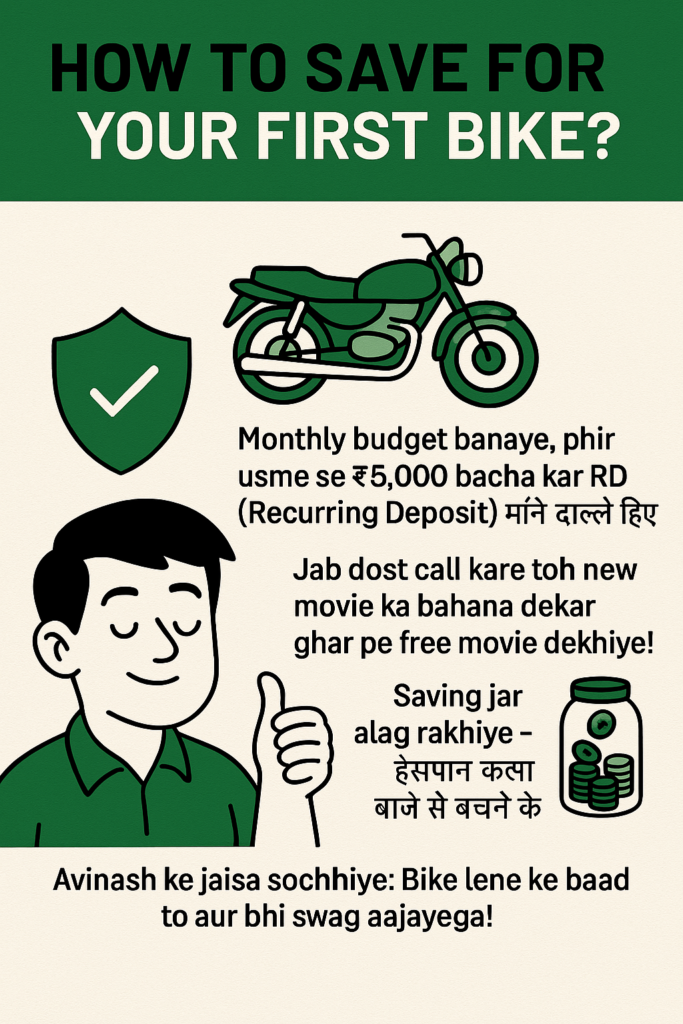
- How: Set up an auto-debit so a fixed amount moves from your savings account to the RD every month.
- Pros: Forced savings, stable returns.
- Cons: Interest might not be high enough to beat inflation, but it’s still better than keeping money idle in a low-interest account.
SIP in Mutual Funds
- Why: If you can wait at least 1–2 years, consider a short-term or balanced mutual fund. SIPs allow you to invest monthly, leveraging the power of compounding.
- How: Choose a reputable fund with decent track records, especially if you’re risk-averse. Make sure the fund suits your timeline (e.g., low- to moderate-risk if you need the money soon).
- Pros: Potentially higher returns than an RD or fixed deposit.
- Cons: Market risk—returns aren’t guaranteed.
Savings Account with an Auto-Debit
- Why: If you prefer simplicity, set up a separate high-interest savings account.
- How: Schedule an auto-debit right after payday so you don’t even see the money.
- Pros: High liquidity—you can withdraw anytime without penalties.
- Cons: Lower interest rates compared to RDs or mutual funds.
Pro Tip: If your timeline is 3+ years (e.g., an international vacation or a more expensive bike), you might explore equity mutual funds or other long-term instruments with higher potential returns. Just remember to gauge your comfort with risk.
Step 4: Automate Your Savings
One of the simplest but most powerful tips on how to save is automation. Rather than relying on willpower each month, schedule an automatic transfer from your salary account to your chosen saving tool (RD, SIP, or a separate savings account). This approach ensures:
- Consistency: You won’t forget or postpone.
- Discipline: You’re less likely to be tempted to spend that money impulsively.
- Stress-Free: You don’t have to manually calculate how much to set aside every month.
Golden Rule: Pay yourself first. Let the savings be the first transaction after your salary comes in.
Step 5: Find Small Ways to Boost Savings
It’s not just about cutting costs—sometimes you can earn more or find hidden sources of money to accelerate your goal.
- Part-Time Gigs
If you have a skill—like content writing, coding, or tutoring—use a freelance platform to earn an extra ₹2,000–₹5,000 a month. All of that can go straight to your savings fund.
- Sell Unused Items
We often have gadgets or clothes lying around. Selling them online might net a few thousand rupees, which can significantly speed up your progress.
- Festive Bonuses
If you receive Diwali or annual bonuses, allocate a percentage—say 50% or more—toward your big purchase goal rather than splurging entirely.
- Cashbacks & Rewards
Use credit cards or payment apps that offer cashback or reward points, but remember to pay the full bill on time to avoid interest charges.
Step 6: Track Progress and Make Adjustments
Saving for a big goal is like a journey with small milestones along the way. Checking your progress every month or quarter:
- Reminds you how far you’ve come, boosting motivation.
- Reveals if you’re falling short so you can adjust your plan—maybe cutting an expense further or adding a part-time gig.
Also, stay flexible. If unexpected expenses (like medical bills) crop up, it’s okay to pause or reduce your monthly savings for a while. The key is to bounce back as soon as possible.
Real-Life Example: Saurabh’s First Bike
Saurabh, a 24-year-old from Lucknow, dreamed of owning a sporty motorcycle worth around ₹1.5 lakh. Earning about ₹25,000 a month, he initially felt it was impossible without a loan. But here’s what he did:
- Calculated free cash flow: ₹25,000 salary – ₹15,000 expenses = ₹10,000 left.
- Decided to save ₹8,000 each month in a recurring deposit for 12 months. This yielded about ₹98,000 (principal + interest).
- Sold off his old scooter for ₹30,000.
- Tapped into a small Diwali bonus of ₹15,000.
Within a year, Saurabh had around ₹1.43 lakh—close enough to his target. He bridged the gap with a small short-term loan from his parents, which he repaid within three months. His dream bike was his without a long-term EMI burden.
Avoiding Common Pitfalls
- Impulse Purchases
All your planning can go down the drain if you give in to frequent impulsive buys—like high-end gadgets or multiple online splurges. - Underestimating Small Expenses
A daily chai break, a snack here, a weekend movie there—these small expenditures add up to sabotage your saving plan. - Mixing Emergency Funds with Savings
Keep your emergency fund separate. If you dip into it for bike accessories or vacation upgrades, you could be left unprotected for real emergencies.
Conclusion
Figuring out how to save for a big milestone—be it your first bike, a dream vacation, or any other large purchase—doesn’t have to be overwhelming. By defining a clear goal, assessing your finances honestly, and automating your monthly contributions, you’ll make steady progress without sacrificing life’s small joys. Whether you choose a recurring deposit, a SIP, or a dedicated savings account, the real power lies in consistency and discipline.
Remember, small sacrifices now—skipping a fancy dinner or delaying that smartphone upgrade—can bring huge rewards later. Plus, you’re building lifelong financial habits that will help you achieve even bigger dreams in the future: a home, a luxury car, or funding a startup. The key is to start today.
Why wait? Write down your goal, estimate its cost, and pick a saving strategy that aligns with your timeline. Make sure to automate your savings to avoid the trap of “maybe next month.” And if you found this guide useful, share it with a friend who’s also saving for a big dream. Together, we can make middle-class aspirations a reality!
FAQs (Frequently Asked Questions)
Q1: How to save effectively if my salary is low?
Even if you earn a modest salary, start small. Save ₹500 or ₹1,000 each month in a recurring deposit or a high-interest savings account. Over time, aim to increase this amount, or supplement your income with freelance or part-time work.
Q2: Is it better to take a loan or save up for a bike or vacation?
Loans come with interest, which ultimately increases your total cost. If you can save up and pay outright, you avoid interest charges. However, if you need the item urgently and can’t wait, choose a loan with a low interest rate and aim for short tenure.
Q3: What’s the best instrument to save for short-term goals under one year?
A recurring deposit or a short-term debt mutual fund are good options. An RD is hassle-free and provides guaranteed, albeit modest, returns. Debt funds can offer slightly higher returns but carry market risk.
Q4: Can I use a credit card’s EMI feature instead of saving in advance?
While credit card EMIs can be convenient, they often include interest or processing fees. This approach can turn expensive if you delay or miss payments. Saving in advance avoids these hidden costs.
Q5: How can I handle emergencies if all my money is going into savings for a big purchase?
Maintain a separate emergency fund (ideally three to six months of basic expenses). This ensures you won’t derail your big purchase savings whenever unforeseen expenses arise.
Q6: Are SIPs risky for short-term goals like a year or less?
Equity mutual funds are better suited for longer horizons (3+ years) due to market fluctuations. For a time frame of under a year, consider liquid or ultra-short-term debt funds, but weigh the risk-return carefully.
Q7: How do I stay motivated for long-term savings goals?
Break your goal into monthly or quarterly milestones. Celebrate small wins, track your progress visually (like a chart), and remind yourself why you’re saving—be it a dream bike or a once-in-a-lifetime vacation.
Q8: Can I prepay a personal loan if I’ve saved enough?
Yes, most lenders allow prepayments. However, some may charge a small penalty or have restrictions on when you can prepay. Check the terms before signing the loan agreement.
Q9: Should I consider using family gold or assets to get a loan for a big purchase?
Gold loans or collateral-based loans often have lower interest rates, but you risk losing the asset if you can’t repay. It’s safer to build your savings unless you’re certain you can handle the repayments comfortably.
Mastering how to save means taking control of your financial destiny. With focus, discipline, and smart planning, your middle-class dream—whether it’s revving up a new bike or chilling on a beach vacation—can become a gratifying reality.