

Managing personal finances has never been more critical, especially in an age where digital payments, subscriptions, and investments dominate our financial lives. With the right personal finance management tools, you can track expenses, create budgets, save smartly, and achieve your financial goals effortlessly. India offers a wide range of finance apps designed to simplify money management. Let’s go through the best finance apps in 2026 that cater to budgeting, savings, and investments for a well-rounded approach to personal finance.
Why Use Personal Finance Apps?
Personal finance apps are essential for:
- Expense Tracking: Automatically categorise and track where your money goes.
- Budgeting: Set limits for spending in various categories like food, travel, or entertainment.
- Goal Setting: Save for specific goals like a vacation, emergency fund, or investments.
- Debt Management: Monitor EMIs and ensure timely payments.
- Investment Insights: Manage mutual funds, stocks, or SIPs in one place.
These apps provide a consolidated view of your financial health, helping you make informed decisions.
Best Personal Finance Apps in India for 2026
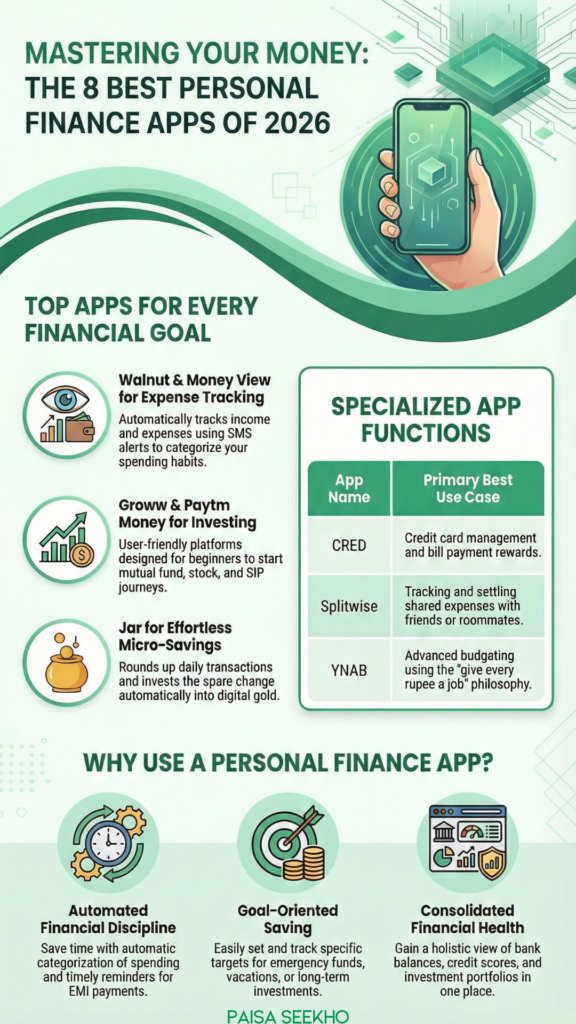
Here are some of the best personal finance apps in India that you should try in 2026:
1. Walnut
Best for: Expense tracking and budgeting
Walnut is a leading personal finance app that simplifies expense tracking by analysing your SMS alerts for transactions. It categorises your spending and offers insights into your financial habits.
Key Features:
- Tracks expenses automatically via SMS.
- Budgeting tools to set monthly limits.
- Splits bills among friends and family.
- Reminders for bill payments and EMIs.
Why It’s Great: Easy-to-use interface and automatic expense tracking save time and effort.
2. Money View
Best for: All-in-one personal finance management
Money View is a comprehensive app that tracks expenses, manages budgets, and offers insights into your financial health. It also helps with loan eligibility checks and EMI tracking.
Key Features:
- Tracks income and expenses via SMS.
- Creates custom budgets for specific goals.
- Loan management tools for EMIs and eligibility checks.
- Monitors bank balances and credit card usage.
Why It’s Great: It integrates seamlessly with your banking activities for a holistic view of your finances.
3. CRED
Best for: Credit card management and rewards
CRED is a popular app for credit card users, offering rewards for paying bills on time. It gamifies the bill payment process and provides exclusive offers for its users.
Key Features:
- Tracks credit card due dates and payments.
- Earns rewards and cashback for timely bill payments.
- Monitors your credit score for free.
- Provides insights into spending patterns.
Why It’s Great: Combines financial discipline with exciting rewards, making credit card management enjoyable.
4. ET Money
Best for: Investment tracking and tax saving
ET Money is an all-in-one app for expense tracking, investments, and tax-saving solutions. It’s perfect for those looking to streamline their financial planning.
Key Features:
- Tracks and analyses expenses.
- Offers tax-saving investment options like ELSS.
- Allows you to invest in mutual funds and SIPs.
- Provides personalised financial reports.
Why It’s Great: Comprehensive features for managing investments and reducing taxes.
5. Goodbudget
Best for: Envelope budgeting
Goodbudget digitises the traditional envelope budgeting system, where you allocate portions of your income to different categories. It’s ideal for those who prefer a structured approach to spending.
Key Features:
- Assigns budgets to categories like groceries, rent, and travel.
- Syncs across multiple devices for shared budgeting.
- Provides detailed spending reports.
Why It’s Great: Helps you stick to budgets with clear category-wise spending limits.
6. Jar
Best for: Micro-savings and digital gold investments
Jar is an innovative app that rounds up your daily transactions to the nearest rupee and invests the spare change in digital gold. It’s a great way to save without feeling the pinch.
Key Features:
- Automatically invests spare change in digital gold.
- Provides a simple and secure platform for savings.
- Encourages consistent saving habits.
Why It’s Great: Makes saving effortless and helps accumulate wealth through gold investments.
7. Groww
Best for: Beginners in mutual fund and stock investments
Groww is one of India’s most popular apps for investment management. It simplifies investing in mutual funds, stocks, and SIPs for first-time investors.
Key Features:
- User-friendly interface for investing in stocks and mutual funds.
- Tracks portfolio performance in real time.
- Offers educational resources for new investors.
- Paperless account opening.
Why It’s Great: Perfect for young professionals looking to start their investment journey.
8. Splitwise
Best for: Managing shared expenses
Splitwise is a must-have app for those who frequently split bills with friends, roommates, or colleagues. It eliminates the hassle of manual calculations and ensures everyone pays their share.
Key Features:
- Tracks shared expenses and balances.
- Sends reminders for pending payments.
- Syncs across devices for easy access.
Why It’s Great: Ensures transparency and hassle-free sharing of expenses.
9. Paytm Money
Best for: Digital investments and trading
Paytm Money is a versatile app for managing mutual funds, stocks, and other investments. It also integrates with the broader Paytm ecosystem for added convenience.
Key Features:
- Invests in direct mutual funds and SIPs.
- Enables trading in stocks and ETFs.
- Provides detailed market analysis and reports.
- Low-cost investment options.
Why It’s Great: A one-stop solution for investing and tracking market trends.
10. YNAB (You Need A Budget)
Best for: Advanced budgeting techniques
YNAB is a globally renowned budgeting app that encourages users to “give every rupee a job.” It’s ideal for those looking to take control of every aspect of their finances.
Key Features:
- Tracks income, expenses, and savings in detail.
- Offers goal-oriented budgeting tools.
- Syncs across devices for real-time updates.
- Provides educational resources to improve financial literacy.
Why It’s Great: Advanced features make it perfect for serious budgeters.
How to Choose the Right App for You?
Choosing the best personal finance apps depends entirely on what you want from them. Here’s how to pick the right one:
- Define Your Goals: Are you looking for expense tracking, investment management, or savings tools?
- Ease of Use: Choose an app with a user-friendly interface that suits your comfort level.
- Features: Look for specific features like automatic tracking, tax-saving tools, or goal setting.
- Security: Ensure the app uses robust security protocols to protect your financial data.
- Cost: Most apps are free, but some offer premium features for a subscription fee. Evaluate if the cost is worth the added benefits.
Benefits of Using Finance Apps
- Time-Saving: Automates tracking and management of finances.
- Better Decision-Making: Provides insights into spending patterns.
- Goal Achievement: Helps set and track financial goals.
- Financial Discipline: Encourages consistent saving and smart spending.
Final Thoughts
The right personal finance app can make managing money effortless and efficient. Whether you’re a student, a young professional, or a seasoned investor, these apps cater to various financial needs and help you stay on top of your finances. From budgeting tools like Walnut to investment platforms like Groww, 2026 offers a range of options to suit every financial goal.
Choose the app that aligns with your needs and take control of your financial journey today!
FAQs
1. What are personal finance apps, and how do they help?
Personal finance apps are digital tools designed to help users manage their finances effectively. They offer features such as expense tracking, budgeting, savings plans, bill reminders, and investment management. These apps provide insights into spending patterns, help set financial goals, and ensure better control over money.
Examples: Apps like Walnut, CRED, and ET Money are popular in India for managing personal finances.
2. Which is the best app for tracking expenses in India?
Walnut is one of the best apps for expense tracking in India. It automatically reads SMS alerts for transactions and categorises your expenses, offering a clear picture of your spending habits. It also helps set budgets and provides reminders for bill payments.
3. Are personal finance apps safe to use?
Yes, most personal finance apps use encryption and robust security protocols to safeguard your financial data. However, to ensure safety:
- Use apps with high user ratings and positive reviews.
- Avoid sharing sensitive information, such as passwords, on apps that don’t require them.
- Opt for apps that comply with data protection laws like GDPR or local Indian regulations.
Apps like CRED and Money View are known for their strong security measures.
4. Can these apps help me save money?
Yes, many personal finance apps are designed to promote saving. For example:
- Jar invests your spare change in digital gold, encouraging small but consistent savings.
- Goodbudget helps you allocate budgets to specific categories, preventing overspending.
- ET Money provides insights into your expenses and helps plan investments for future savings.
5. Which apps are best for beginners in investing?
For first-time investors, apps like Groww and Paytm Money are ideal. They offer:
- Easy account setup with paperless KYC.
- User-friendly interfaces to invest in mutual funds, SIPs, and stocks.
- Educational resources to understand investment basics.
These apps simplify the investment process, making it accessible for beginners.
6. Are there any apps for managing shared expenses?
Yes, Splitwise is an excellent app for managing shared expenses. It allows users to:
- Add and track shared bills with friends, roommates, or colleagues.
- Automatically calculate and divide expenses.
- Send reminders for pending payments.
It’s perfect for group travel, shared living arrangements, or dining out with friends.
7. What are the best apps for budgeting in 2026?
Apps like Goodbudget, YNAB (You Need A Budget), and Walnut are great for budgeting. They allow you to:
- Set spending limits for specific categories.
- Track progress and avoid overspending.
- Plan savings for future goals.
YNAB is particularly useful for advanced budgeters who want detailed control over their finances.
8. Can these apps help with debt management?
Yes, many apps include tools for managing debt. For instance:
- CRED tracks credit card payments, sends reminders, and rewards timely repayments.
- Money View helps monitor EMIs and due dates, ensuring you stay on top of your debt obligations.
- ET Money allows you to plan repayments while balancing other financial goals.
By tracking and managing debt, these apps help avoid late fees and maintain a healthy credit score.
9. Are there any free personal finance apps in India?
Yes, several personal finance apps in India are free or offer basic features at no cost:
- Walnut provides free expense tracking and budgeting tools.
- Splitwise is free for managing shared expenses.
- CRED offers free credit card management and credit score tracking.
Some apps, like YNAB, may have subscription fees for advanced features, but free options are sufficient for basic financial management.
10. How do I choose the best finance app for my needs?
To select the best app, consider the following:
- Your Goals: Are you focused on budgeting, saving, or investing? Apps like Walnut are ideal for tracking expenses, while Groww is better for investing.
- Features: Look for features like automatic tracking, investment insights, or bill reminders.
- Ease of Use: Choose an app with a user-friendly interface that suits your tech comfort level.
- Security: Opt for apps with strong data encryption and a good reputation for safety.
- Cost: While many apps are free, some premium features may require a subscription. Evaluate whether the added features are worth the price.
By aligning the app’s capabilities with your financial needs, you can manage your money more effectively.