Remember the days when most of us carried wallets stuffed with cash? Fast forward to today, whether you’re buying chai at a local stall, paying rent, or booking flight tickets, chances are you’re doing it with a tap, a scan, or a click. This transformation is thanks to digital payments.
Over the last decade, especially after demonetisation in 2016 and the boom of UPI (Unified Payments Interface), India has become a global leader in digital transactions. In fact, many Tier-2 and Tier-3 towns have leapfrogged straight from cash to mobile-based payments, skipping debit cards and cheques altogether.
For young Indians, digital payments mean more than just convenience; they represent financial freedom, security, and inclusion. Whether it’s splitting bills with friends, sending money home instantly, or paying your tuition fees online, digital payments have made money movement faster, safer, and smarter.
What are digital payments?
Digital payments are transactions where money is transferred electronically instead of using physical cash or cheques. Both payer and receiver use digital modes of transfer, like smartphones, debit/credit cards, or internet banking.
In simple words: Digital payment = Money moving with clicks, taps, or scans, no cash exchange.
Key Features of Digital Payments:
- Cashless – No need to carry physical notes or coins.
- Instant – Most payments (especially UPI) happen in real time.
- Traceable – Every digital payment creates a transaction record, making it transparent.
- Accessible – Works 24/7, including weekends and holidays.
- Versatile – Can be used for bills, shopping, travel, education, subscriptions, and more.
Examples of Digital Payments in India:
- UPI Apps: PhonePe, Google Pay, Paytm, BHIM UPI.
- Mobile Wallets: Paytm Wallet, Amazon Pay, Mobikwik.
- Cards: Debit, credit, prepaid cards.
- Internet Banking: NEFT, RTGS, IMPS.
- Contactless Payments: NFC-enabled tap-and-pay cards or devices.
👉 Think of digital payments as a digital shortcut, instead of exchanging cash, you’re exchanging encrypted signals between banks in seconds.
How do digital payments work?
At the heart of digital payments is technology that connects your bank account with the merchant or receiver’s account. Here’s a step-by-step of what happens when you pay digitally:
Step 1: Initiation
- You choose a payment method, like UPI, card swipe, netbanking, or mobile wallet.
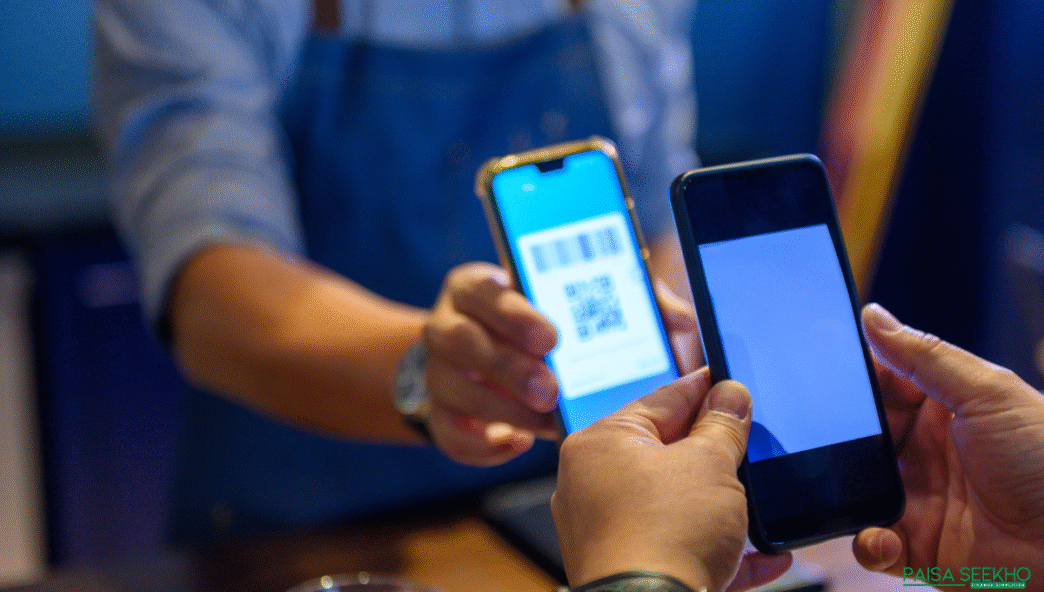
- Example: You scan a QR code at your neighbourhood grocery store using Google Pay.
Step 2: Authentication
- You confirm the transaction using a PIN, OTP, password, fingerprint, or Face ID.
- Example: Entering your UPI PIN before sending ₹500.
Step 3: Processing
- The payment request goes through a secure network (like UPI, Visa, RuPay, or NEFT/RTGS systems).
- Your bank checks if you have sufficient balance.
Step 4: Settlement
If everything checks out, the amount is debited from your account and credited to the receiver instantly (or within a few hours, depending on the method).
Step 5: Confirmation
Both you and the receiver get a message/notification confirming the payment.
👉 Think of it like ordering food through Swiggy: you place the order (initiation), authenticate payment, the system processes it, the restaurant gets the confirmation, and your food (money) is delivered!
What are the types of digital payments in India?
India’s digital payments ecosystem is one of the most diverse in the world. Here are the major types:
1. Unified Payments Interface (UPI)
- Real-time money transfer using mobile apps like PhonePe, Paytm, Google Pay, or BHIM.
- Requires only a UPI ID/QR code, no need to share bank details.
- Example: Splitting dinner bills instantly with friends.
2. Mobile Wallets
- Apps where you can load money and pay digitally (like Paytm Wallet, Amazon Pay, Mobikwik).
- Often used for small-value transactions and app-based purchases.
3. Debit/Credit/Prepaid Cards
- Card swipes or tap-and-pay transactions at POS machines.
- Prepaid cards are loaded in advance and used like debit cards (often given as gift cards).
4. Internet Banking (Netbanking)
- Payments through NEFT, RTGS, or IMPS directly from your bank’s website/app.
- Common for larger transactions like rent, business transfers, or utility bills.
5. AEPS (Aadhaar Enabled Payment System)
- Allows banking transactions using Aadhaar number and fingerprint at micro-ATMs.
- Popular in rural India for cash withdrawals, balance checks, and transfers.
6. Contactless Payments (NFC)
- Tap-and-pay cards or devices (like smartphones/smartwatches) with Near Field Communication technology.
- Example: Tapping your card at a metro gate.
7. *USSD Payments (99#)
- For feature phones without internet. Works by dialing *99# and using simple menu options.
- Useful in rural areas with limited smartphone penetration.
👉 In short: From chaiwalas in small towns to luxury malls in metros, India has a digital payment option for every situation.
What are the advantages of digital payments?
Digital payments have grown massively in India because they offer benefits that cash simply can’t.
1. Convenience & Speed
- Pay bills, transfer money, or shop online anytime, anywhere, no queues, no waiting.
- Example: Recharging your DTH or paying electricity bill at midnight with one click.
2. 24/7 Access
Unlike bank branches, digital payments work round the clock, even on weekends and holidays.
3. Transparency & Record-Keeping
Every transaction is recorded in your bank app or email/SMS, making it easier to track spending and plan budgets.
4. Reduced Cash Dependency
No need to carry large amounts of cash. Even a street vendor now accepts UPI.
5. Financial Inclusion
With Aadhaar-linked systems and UPI Lite/USSD, even people in rural areas or those without smartphones can use digital payments.
6. Safety During Emergencies
During COVID-19, contactless payments reduced the risk of handling physical cash.
7. Boost to the Economy
Digital payments reduce black money circulation and increase tax compliance, strengthening India’s economy.
👉 In short: Digital payments = faster, safer, smarter money movement.
What are the disadvantages of digital payments?
Of course, digital payments are not perfect. There are some challenges and risks to be aware of:
1. Cybersecurity Risks
- Phishing scams, fake UPI links, and fraudulent apps can trick users into sharing OTPs or PINs.
- Example: Getting a fake SMS saying “Click here to claim refund”.
2. Dependence on Internet & Power
- No internet = no transaction (except USSD or offline UPI, which are limited).
- Rural and remote areas still struggle with connectivity.
3. Technical Glitches
Server downtimes, failed UPI transactions, or delayed refunds can frustrate users.
4. Digital Literacy Gap
Elderly people or first-time smartphone users may find apps confusing, leading to mistakes.
5. Overspending Risk
- Since payments are instant and cashless, people may overspend without realising it.
- Example: Multiple small Swiggy orders add up faster than you think.
6. Hidden Charges
Some transactions (like credit card EMI conversions or international payments) carry fees that users often overlook.
👉 Bottom line: Digital payments are powerful, but you must use them wisely and cautiously.
Are digital payments safe in India?
Yes, digital payments in India are generally safe because they are regulated by the Reserve Bank of India (RBI) and powered by secure technology like UPI, RuPay, and Aadhaar-enabled systems. But safety is a two-way street, banks provide security tools, and users must follow safe practices.
🔒 How banks and regulators keep it safe:
- Two-Factor Authentication – Every transaction requires a PIN, OTP, or biometric confirmation.
- Encryption – Payment details are encrypted, making it nearly impossible for hackers to read.
- Tokenisation – RBI mandates tokenisation of debit/credit cards (your 16-digit card number is replaced with a secure token).
- Transaction Alerts – Instant SMS/email alerts help detect suspicious activity.
- Fraud Detection Systems – Banks use AI to flag unusual transactions.
🛡️ How you can stay safe:
- Never share OTPs, UPI PINs, or passwords with anyone.
- Use only official banking/payment apps.
- Avoid making payments on public Wi-Fi.
- Set transaction limits for UPI and cards.
- Regularly update apps and mobile OS for the latest security patches.
👉 Digital payments are safe in India, but your vigilance is the final lock on the door.
What is the future of digital payments in India?
India is already the world leader in digital transactions (UPI processes billions of payments monthly), and the future looks even more exciting.
1. Offline UPI (UPI Lite X)
Even without internet, small-value payments (up to ₹500) can be made through NFC-enabled phones. This will revolutionise payments in low-connectivity areas.
2. Credit on UPI
RBI has allowed pre-sanctioned credit lines on UPI, which means you could soon borrow small amounts directly through your UPI app.
3. CBDC (Digital Rupee)
India is piloting its own Central Bank Digital Currency (e₹). Once integrated, it could coexist with cash and UPI as a third payment option.
4. Cross-Border UPI Linkages
UPI is already linked with Singapore’s PayNow, and more international corridors are on the way, making global remittances cheaper and faster.
5. Voice-Based & Feature Phone Payments
With UPI 123PAY and IVR-based solutions, people without smartphones or internet can transact digitally, pushing inclusion deeper into rural India.
6. AI-Powered Fraud Prevention
Expect smarter systems that detect and block fraudulent transactions in real time.
7. Personalised Payment Ecosystems
Apps may soon integrate financial dashboards, showing spending patterns, savings suggestions, and even investment nudges alongside payment features.
👉 In short: The future of digital payments in India is faster, safer, offline-friendly, and globally connected.
Conclusion
Digital payments have transformed India into a global leader in cashless transactions. From the local chaiwala with a QR code to international UPI linkages, money now moves faster, safer, and more transparently than ever before.
For young earners, digital payments aren’t just about convenience, they’re about financial empowerment. They simplify life, reduce reliance on cash, and make saving and tracking money easier. At the same time, users must remain vigilant: secure your accounts, avoid scams, and build healthy payment habits.
👉 Bottom line: Digital payments are not just the future of money in India, they are the present reality. Mastering them today puts you in control of your finances tomorrow.
FAQs on Digital Payments
1. What are digital payments with examples?
Digital payments are cashless transactions done electronically. Examples include UPI transfers, card swipes, internet banking, and Paytm/Amazon Pay wallets.
2. Which is the most popular digital payment method in India?
UPI (Unified Payments Interface) is the most popular, handling billions of transactions every month due to its speed, zero cost, and simplicity.
3. What are the advantages of digital payments over cash?
They are faster, safer, more transparent, and available 24/7. They also reduce black money and help track expenses easily.
4. Are digital payments free in India?
Most UPI, IMPS, and wallet transactions are free. However, some services like RTGS/NEFT or credit card EMIs may involve small charges.
5. What are the risks of digital payments?
Main risks include phishing, fake apps, and frauds. These can be avoided by using official apps, never sharing OTP/PIN, and avoiding public Wi-Fi.
6. Can I use digital payments without internet?
Yes. With USSD (*99#) or UPI Lite X (offline UPI), small-value transactions can be done without internet.
7. Do digital payments work internationally?
Currently, Indian UPI works in Singapore and some countries are joining soon. Credit/debit cards and netbanking are widely used internationally.
8. Is Aadhaar required for digital payments?
No, not for all. Aadhaar is needed only for AEPS transactions, not for UPI, cards, or wallets.
9. How do I keep my digital payments safe?
- Use only official apps
- Set transaction limits
- Avoid sharing OTPs/PINs
- Enable two-factor authentication
- Regularly check account statements
10. What is the future of digital payments in India?
The future includes offline UPI, digital rupee (CBDC), credit on UPI, cross-border linkages, and AI-driven fraud prevention.