

In a world that often equates success with accumulation, the minimalism lifestyle offers a refreshing perspective. For Gen Z, this lifestyle is not just about decluttering physical spaces but also about simplifying life to focus on what truly matters. Adopting minimalism can lead to greater clarity, reduced stress, and significant financial savings—aligning perfectly with long-term financial goals.
Let’s explore the principles of minimalism, its connection to financial well-being, and practical tips to live with less while achieving more.
What Is Minimalism?
Minimalism is the practice of intentionally reducing excess in life to focus on what’s essential. It emphasises:
- Quality over Quantity: Prioritising meaningful possessions and experiences.
- Mindful Consumption: Making thoughtful decisions about what to buy or keep.
- Clarity and Simplicity: Reducing distractions to create space for growth and happiness.
For Gen Z, the minimalism lifestyle can serve as a tool to break free from materialism, save money, and align daily choices with larger goals.
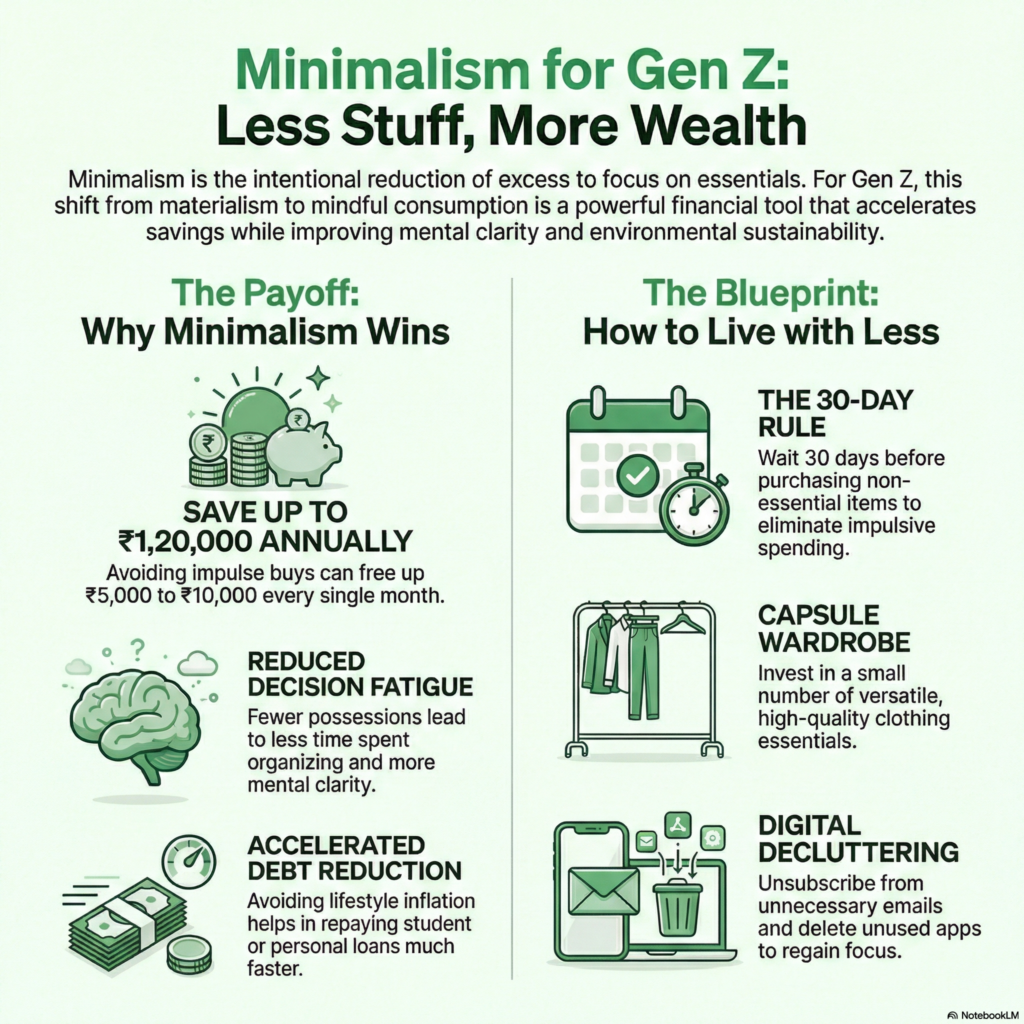
Why Should Gen Z Embrace the Minimalism Lifestyle?
1. Improved Financial Health
Minimalism encourages conscious spending, which helps reduce unnecessary expenses.
- Benefit: Save more money for important goals like education, travel, or investments.
2. Reduced Stress
A clutter-free environment promotes mental clarity and reduces decision fatigue.
- Benefit: Less time spent organising or worrying about possessions.
3. Environmental Impact
Minimalism often involves sustainable living practices.
- Benefit: Lower carbon footprint and reduced waste.
4. Focus on Experiences
Instead of material possessions, minimalism emphasises meaningful experiences.
- Benefit: Greater satisfaction and happiness.
How Minimalism Supports Financial Goals
1. Lower Spending
Adopting a minimalist mindset reduces impulsive purchases.
- Instead of buying the latest gadgets or fast fashion, minimalists invest in durable, high-quality items.
- Example: Buying a timeless, well-made jacket instead of multiple trendy ones.
2. Savings for the Future
With reduced spending, more money can go into savings or investments.
- Pro Tip: Set up a monthly savings plan to redirect unused funds.
3. Debt Reduction
Minimalists avoid lifestyle inflation, which helps in repaying loans or debts faster.
- Example: Opting for a smaller, more affordable home reduces EMI payments.
4. Mindful Budgeting
Minimalism aligns with financial discipline, making it easier to stick to a budget.
- Use apps like YNAB (You Need A Budget) or Mint for effective budgeting.
Tips for Living a Minimalist Lifestyle
1. Start with Decluttering
Simplify your surroundings by removing items you no longer use or need.
- Method: Follow the KonMari Method—keep only what sparks joy.
- Steps:
- Sort items into categories (clothes, books, gadgets).
- Donate, sell, or recycle items that no longer serve you.
Pro Tip: Use platforms like OLX or Quikr to sell unwanted items.
2. Adopt a Capsule Wardrobe
A capsule wardrobe consists of a small number of versatile clothing pieces.
- Benefit: Saves time, money, and wardrobe space.
- How to Start:
- Choose neutral, interchangeable items.
- Invest in durable, high-quality essentials.
Example: A pair of black jeans, a white shirt, and a blazer can create multiple outfits.
3. Practice Mindful Spending
Before making a purchase, ask yourself:
- Do I need this item, or is it a want?
- Will it add value to my life?
- Can I afford it without compromising my savings?
Pro Tip: Wait 30 days before making non-essential purchases to avoid impulse buys.
4. Digital Decluttering
Minimalism isn’t limited to physical spaces; it applies to digital life too.
- Unsubscribe from unnecessary emails and delete unused apps.
- Organise files into folders and back up important data.
- Set limits on screen time to focus on meaningful activities.
Example: Use apps like Cleanfox to manage email subscriptions.
5. Emphasise Quality Over Quantity
Minimalists focus on owning fewer but better-quality items.
- Benefit: Reduces the need for frequent replacements, saving money in the long run.
- Example: A high-quality mattress might be expensive initially but lasts longer and improves sleep quality.
6. Create a Minimalist Budget
Align your spending habits with minimalist principles.
- Allocate funds for essentials, savings, and experiences.
- Reduce categories like entertainment, dining out, or subscriptions.
- Track spending using apps like Walnut or Goodbudget.
Pro Tip: Set up automatic transfers to a savings or investment account.
7. Focus on Experiences, Not Things
Invest in experiences like travel, learning, or hobbies instead of accumulating material possessions.
- Example: Attend a photography workshop instead of buying another gadget.
Experiences create lasting memories and personal growth, which are more fulfilling than owning objects.
8. Adopt Sustainable Practices
Minimalism often overlaps with sustainability.
- Steps:
- Buy reusable items like steel bottles or cloth bags.
- Avoid fast fashion by choosing sustainable brands.
- Repair items instead of discarding them.
Pro Tip: Follow minimalism-focused communities on Instagram for inspiration.
9. Learn to Say No
Minimalism teaches you to say no to excess commitments, purchases, or social obligations.
- Benefit: Frees up time and resources for priorities that align with your values.
Example: Declining a party invitation to focus on a personal project or self-care.
10. Simplify Your Goals
Minimalism extends to goal setting:
- Focus on a few meaningful goals instead of juggling too many.
- Break each goal into actionable steps.
Pro Tip: Use tools like Notion or Trello to track progress.
Financial Benefits of Minimalism for Gen Z
The minimalist lifestyle can help with:
1. Reduced Living Costs
Minimalists tend to choose smaller homes or shared accommodations, reducing rent and utility expenses.
2. Investing in Experiences
Saving on material possessions allows spending on travel, skill-building, or hobbies.
3. Emergency Fund Growth
Minimalist spending habits free up money for building a robust emergency fund.
Example: By avoiding impulse buys, you could save ₹5,000–₹10,000 monthly, which adds up to ₹60,000–₹1,20,000 annually.
Final Thoughts
Minimalism is more than a trend; it’s a lifestyle that empowers you to focus on what truly matters. For Gen Z, embracing minimalism can lead to not only a simpler, more meaningful life but also substantial financial savings and growth.
Start small—declutter your space, adopt mindful spending habits, and set financial goals. By living with less, you’ll discover that minimalism isn’t about deprivation; it’s about liberation. Your journey to living with less and achieving more begins today!
FAQs
1. What is minimalism, and how does it benefit Gen Z?
Minimalism lifestyle is focused on reducing excess and prioritising what truly matters. For Gen Z, it offers several benefits:
- Financial Savings: Less spending on unnecessary items.
- Mental Clarity: Decluttered spaces promote better focus and reduced stress.
- Sustainability: Encourages eco-friendly practices like reusing and recycling.
- Fulfilment: Shifts focus from material possessions to meaningful experiences.
Minimalism helps Gen Z align their lifestyle with their values while achieving financial and personal growth.
2. How can minimalism improve my financial health?
Minimalism helps improve financial health by:
- Encouraging mindful spending, reducing unnecessary expenses.
- Freeing up money for savings or investments.
- Preventing lifestyle inflation by prioritising needs over wants.
- Enabling faster repayment of debts due to controlled spending.
Example: Instead of buying multiple gadgets, you could invest the money in a mutual fund or emergency fund.
3. How can I start living a minimalist lifestyle?
To start minimalism:
- Declutter: Remove unused or unnecessary items from your space.
- Adopt Mindful Spending: Evaluate needs vs wants before making purchases.
- Simplify Your Goals: Focus on a few meaningful priorities.
- Embrace Quality Over Quantity: Invest in durable, high-quality essentials.
- Digital Declutter: Unsubscribe from emails, delete unused apps, and organise files.
Start small and gradually incorporate minimalist practices into your daily routine.
4. What are the financial benefits of minimalism?
The financial benefits include:
- Lower Monthly Expenses: Less spending on non-essentials.
- Increased Savings: Redirecting unused funds to savings or investments.
- Debt Reduction: Faster loan repayment due to controlled expenses.
- Emergency Fund Growth: Saving for unexpected events.
Minimalism allows you to align your spending with long-term financial goals.
5. How does minimalism relate to sustainable living?
Minimalism promotes sustainable living by:
- Reducing consumption, which decreases waste and carbon footprints.
- Encouraging reuse and recycling of items.
- Supporting sustainable brands and eco-friendly products.
- Focusing on quality items that last longer, reducing the need for replacements.
By adopting minimalism, Gen Z can make a positive environmental impact while saving money.
6. How can minimalism help me manage stress?
Minimalism reduces stress by:
- Decluttering your space, creating a calmer environment.
- Simplifying decision-making, reducing mental fatigue.
- Encouraging intentional living, focusing on meaningful goals.
- Minimising financial worries by controlling spending.
A minimalist lifestyle fosters mental clarity and emotional well-being.
7. Can minimalism help me achieve my financial goals?
Yes, minimalism supports financial goals by:
- Reducing unnecessary expenses, freeing up money for savings.
- Encouraging mindful budgeting, making it easier to stick to plans.
- Allowing investments in experiences or personal growth instead of material possessions.
Example: Saving ₹5,000 monthly by adopting minimalist habits can accumulate ₹60,000 annually, which could be invested in mutual funds.
8. What are some practical tips for Gen Z to practice minimalism?
Practical tips include:
- Declutter Regularly: Donate or sell items you no longer use.
- Create a Capsule Wardrobe: Invest in versatile, high-quality clothing.
- Limit Subscriptions: Cancel unnecessary streaming or app subscriptions.
- Adopt Mindful Spending: Wait 30 days before making non-essential purchases.
- Focus on Experiences: Spend on travel, hobbies, or learning instead of material items.
Small changes can lead to significant long-term benefits.
9. How can I manage minimalism in a digital age?
To practice digital minimalism:
- Unsubscribe from irrelevant email lists and notifications.
- Organise files and photos into folders; delete duplicates or unused items.
- Limit social media usage to avoid digital clutter and distractions.
- Use apps like Cleanfox to manage email clutter.
- Set screen time limits to focus on meaningful offline activities.
Digital minimalism ensures better productivity and mental clarity.
10. What are some challenges in adopting minimalism, and how can I overcome them?
Challenges include:
- Letting Go of Sentimental Items: Focus on keeping a few meaningful items.
- Social Pressure: Explain your minimalist choices to friends or family.
- Impulsive Buying Habits: Adopt a 30-day rule before making non-essential purchases.
- Balancing Minimalism with Lifestyle Needs: Start small and customise minimalism to suit your life.
Overcoming these challenges requires patience, consistency, and a focus on long-term benefits.