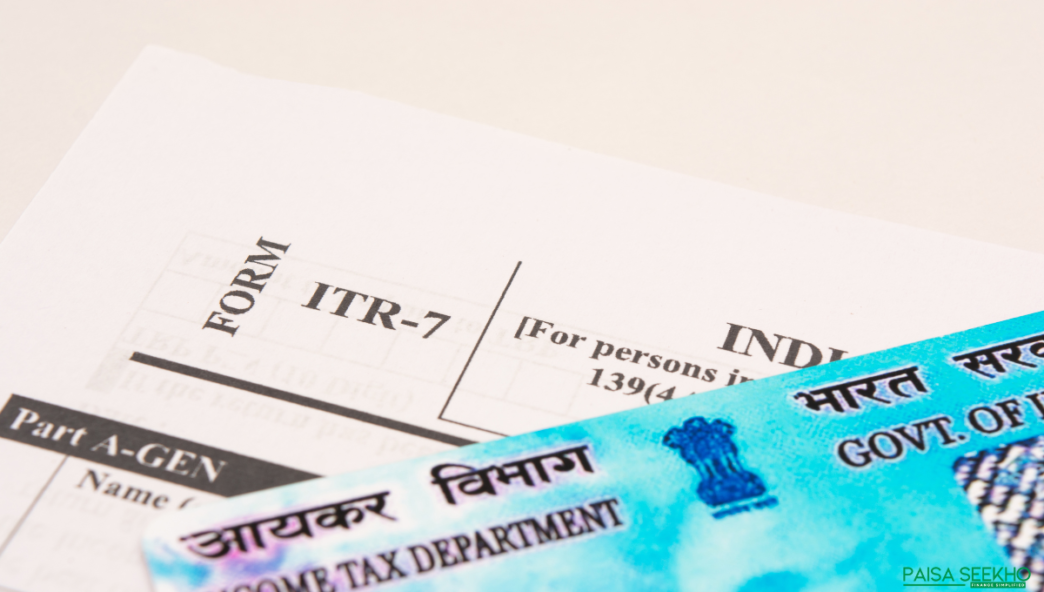
Every year, individuals and businesses in India are required to report their income to the government. This process is called filing an Income Tax Return (ITR). Filing your ITR not only ensures compliance with the law but also offers several benefits, such as claiming tax refunds, carrying forward losses, and avoiding penalties. While the term might sound complicated, it’s actually a straightforward process that involves declaring your income, taxes paid, and deductions claimed. Let’s break it down to understand what an income tax return is and why it’s so important.
What is an Income Tax Return?
An Income Tax Return (ITR) is a document that taxpayers use to report their income, expenses, and taxes to the Income Tax Department of India. It serves as a summary of the taxpayer’s financial activity for a given financial year (April to March). Depending on your income level and source of income, you may be required to file an ITR annually.
Key points about Income Tax Returns:
- Income Declaration: You report all sources of income, such as salary, business profits, rental income, or capital gains.
- Tax Deductions: You can claim deductions under sections like 80C, 80D, or 80G to reduce your taxable income.
- Tax Liability: If your taxes paid (TDS or advance tax) are less than the calculated liability, you need to pay the balance. If excess tax has been paid, you can claim a refund.
- ITR Forms: Different forms (ITR-1, ITR-2, etc.) are available depending on your income type and category (individual, HUF, or company).
- Mandatory Filing: Filing is mandatory if your income exceeds the basic exemption limit (currently ₹2.5 lakh for individuals below 60 years).
By filing an ITR, you not only comply with tax regulations but also create a financial record that can be useful for obtaining loans or visas.
Types of ITR Forms
The Income Tax Department offers different ITR forms to cater to various income sources and taxpayer categories. Here’s a summary of the key ITR forms:
| Form Name | Applicable To | Key Features |
| ITR-1 (Sahaj) | Individuals with income from salary, one house property, or other sources (excluding lottery winnings or racehorses). | For those with total income up to ₹50 lakh. Does not apply if there is income from capital gains or business/profession. |
| ITR-2 | Individuals and HUFs with income from salary, more than one house property, or capital gains. | Suitable for those who do not have income from business or profession. |
| ITR-3 | Individuals and HUFs with income from a proprietary business or profession. | For those involved in business activities or earning professional income. |
| ITR-4 (Sugam) | Individuals, HUFs, and firms with presumptive income from business or profession (under Sections 44AD, 44ADA, or 44AE). | Simplified form for small taxpayers opting for presumptive taxation. |
| ITR-5 | Firms, LLPs, AOPs, BOIs, and artificial juridical persons. | Applicable to entities other than individuals, HUFs, and companies. |
| ITR-6 | Companies other than those claiming exemption under Section 11 (charitable or religious trusts). | For companies that do not fall under tax-exempt categories. |
| ITR-7 | Entities required to file under Sections 139(4A), 139(4B), 139(4C), or 139(4D) (e.g., charitable trusts, political parties, research institutions). | For organisations claiming tax exemptions based on specific provisions. |
Choosing the correct form ensures accurate filing and compliance with tax regulations.
Is it Mandatory to File an Income Tax Return?
Yes, filing an Income Tax Return (ITR) is mandatory under certain conditions. Here are the key scenarios where filing is required:
- Income Above Exemption Limit: Individuals with taxable income exceeding the basic exemption limit (₹2.5 lakh for individuals below 60 years, ₹3 lakh for senior citizens).
- Businesses and Professionals: Those earning income from business or profession must file regardless of income levels.
- Claiming Tax Refund: To claim a refund for excess tax paid, filing an ITR is necessary.
- Foreign Assets or Income: If you own foreign assets or earn income outside India, filing is compulsory.
- TDS Deduction: If taxes have been deducted at source (TDS), you should file an ITR to reconcile your tax liability or claim refunds.
- Carrying Forward Losses: To carry forward business or capital losses for future tax adjustments, filing an ITR is essential.
By filing your ITR, you stay compliant with tax laws and avoid penalties while enjoying the benefits of financial transparency.
5 Reasons Why You Should File ITR
Filing your Income Tax Return is not just about compliance; it offers several tangible benefits:
- Claiming Refunds: Filing ensures that you can claim refunds for excess tax paid through TDS or advance tax. Without filing, this money remains unclaimed.
- Loan Approval: Most banks require ITR receipts as proof of income for approving loans such as home, car, or personal loans.
- Avoiding Penalties: Non-filing attracts penalties of up to ₹10,000 under Section 234F. Filing on time helps you avoid these unnecessary expenses.
- Carrying Forward Losses: Business or capital losses can be carried forward for future tax adjustments only if you file your ITR.
- Proof of Financial Record: An ITR serves as an official document for income proof, which is useful for visa applications, financial planning, or investments.
Filing your ITR not only keeps you on the right side of the law but also provides financial advantages that can support your future goals.
Who Should File Income Tax Returns?
While filing ITR is mandatory for certain individuals and entities, it’s advisable for others as well to take advantage of the benefits. Here’s who should file:
- Individuals with Taxable Income: Anyone whose income exceeds the basic exemption limit (₹2.5 lakh for individuals below 60 years, ₹3 lakh for senior citizens).
- Self-Employed Individuals: Freelancers, consultants, or professionals with independent income sources must file, regardless of their earnings.
- Businesses: All businesses, whether small or large, must file an ITR.
- NRIs: Non-Resident Indians earning income in India are required to file if their income exceeds the exemption limit.
- Individuals with Tax Deductions: Those with TDS deducted from their income should file to claim refunds or reconcile tax liabilities.
- People Owning Foreign Assets: Individuals holding assets outside India or earning foreign income must file, irrespective of income levels.
Even if you fall below the taxable income threshold, filing can be beneficial for establishing a financial record or claiming tax benefits.
How to File ITR?
Filing your Income Tax Return can be done online or offline, depending on your preference and eligibility. Here’s a step-by-step guide:
- Choose the Correct ITR Form: Select the form that matches your income sources (e.g., ITR-1 for salaried individuals).
- Log in to the Income Tax Portal: Visit the official Income Tax Department website (www.incometax.gov.in) and log in using your PAN and password.
- Fill in the Details: Enter your personal details, income information, tax deductions, and TDS details. The portal provides pre-filled data to simplify the process.
- Upload Supporting Documents: Attach necessary documents like Form 16, TDS certificates, and proof of deductions.
- Verify Tax Calculation: Use the portal’s utility to calculate your tax liability or refund.
- Pay Any Pending Tax: If additional tax is due, pay it using the online payment gateway.
- Submit and Verify: Submit the ITR and verify it using Aadhaar OTP, net banking, or a physical verification process.
Filing online is faster and more convenient, ensuring compliance without hassle.
Documents Required to File ITR
Having the right documents ready can make the filing process smooth and error-free. Here’s a list of essential documents:
- Form 16: Issued by your employer, it contains details of your salary and TDS.
- Form 16A/16B/16C: For TDS on income other than salary (e.g., interest, rent).
- Bank Statements: To verify interest income and other transactions.
- Investment Proofs: Documents for claiming deductions under sections like 80C (e.g., LIC premiums, PPF deposits).
- Home Loan Certificate: If you’re claiming deductions for home loan interest under Section 24.
- Capital Gains Statements: For income from the sale of shares, property, or mutual funds.
- Aadhaar and PAN: Mandatory identification documents for filing.
- TDS Certificates: Issued by entities that deducted tax on your income.
- Rent Receipts: If you’re claiming HRA benefits.
Keeping these documents handy ensures accurate filing and reduces the chances of errors or delays.
Due Dates for Filing ITR
Filing your ITR on time is crucial to avoid penalties and other legal consequences. Here are the key due dates to keep in mind:
- Individuals and HUFs: July 31 of the assessment year.
- Businesses Requiring Audit: October 31 of the assessment year.
- Filing for Taxpayers Involved in Transfer Pricing: November 30 of the assessment year.
It’s important to regularly check for updates as these dates may change due to government announcements or extensions. Late filing attracts penalties, so mark your calendar and file well in advance.
How to Check Your ITR Status Online?
After filing your ITR, it’s essential to check its status to ensure it’s processed successfully. Here’s how you can do it online:
- Log in to the Income Tax Portal: Use your PAN and password to access your account.
- Navigate to ‘View Filed Returns’: Click on the ‘e-Filing’ tab and select ‘Income Tax Returns’ from the dropdown.
- Check Status: Locate your ITR and check its current status. It will show whether it’s ‘Submitted,’ ‘Verified,’ or ‘Processed.’
- Additional Methods: You can also check via the NSDL website using your PAN and acknowledgment number.
Staying updated on your ITR status helps identify and resolve issues, ensuring compliance and timely refunds.
How to Download Income Tax Return?
Downloading your filed ITR is a simple process and can serve as proof of filing for various purposes:
- Log in to the Income Tax Portal: Visit the official website and log in using your PAN, password, and CAPTCHA.
- Go to ‘View Filed Returns’: Under the ‘e-File’ menu, select the option to view filed ITRs.
- Select the Assessment Year: Choose the relevant year for which you want to download the ITR.
- Download ITR-V: Click on the acknowledgment number to download the ITR-V (verification form) or the complete ITR.
- Save for Records: Ensure you save the downloaded ITR for future use, such as loan applications or tax references.
This document serves as proof of compliance and can be used for financial transactions or audits.
Penalty for Late Filing of ITR
Filing your ITR after the due date can result in penalties and other consequences:
- Penalty Under Section 234F:
- ₹1,000 for taxpayers with an income below ₹5 lakh.
- ₹5,000 for taxpayers with an income above ₹5 lakh.
- Penalty increases for further delays.
- Interest on Outstanding Tax: Additional interest under Section 234A is charged on the tax payable after the due date.
- Loss of Benefits: Late filers cannot carry forward certain losses (e.g., business or capital losses).
- Legal Consequences: Repeated non-compliance can lead to scrutiny or penalties from the Income Tax Department.
Filing on time helps you avoid unnecessary expenses and ensures compliance with tax laws.
Conclusion
Filing your Income Tax Return is not just a legal requirement but also a step towards responsible financial management. It provides opportunities to claim refunds, reduce liabilities, and maintain financial transparency. By understanding the process, adhering to deadlines, and using the right tools, you can make tax filing seamless and stress-free. Stay proactive, and ensure you’re always on the right side of the law while maximising the benefits available to you.
FAQs
1. What is an Income Tax Return (ITR)?
An Income Tax Return (ITR) is a form filed annually by taxpayers to declare their income, deductions, and taxes paid to the government.
- It helps calculate whether you owe additional tax or are eligible for a refund.
- Filing an ITR is mandatory if your income exceeds the basic exemption limit.
- It is essential for maintaining financial records and availing of tax benefits.
2. Who needs to file an ITR?
Filing an ITR is mandatory for:
- Individuals with income above ₹2.5 lakh (below 60 years) or ₹3 lakh (for senior citizens).
- Self-employed individuals, freelancers, and business owners, regardless of income levels.
- Individuals with foreign assets or income.
- Taxpayers who want to claim a refund on excess tax paid.
Even if filing is not mandatory, it is beneficial to establish financial proof.
3. What are the benefits of filing an ITR?
Filing an ITR offers numerous benefits:
- Helps claim refunds for excess tax paid.
- Provides financial proof for loans and visa applications.
- Avoids penalties and legal consequences for non-compliance.
- Allows carrying forward of certain losses, like business or capital losses.
It also shows financial responsibility, enhancing your credibility.
4. How can I file my ITR online?
To file an ITR online:
- Log in to the Income Tax Department portal using your PAN.
- Choose the applicable ITR form based on your income sources.
- Fill in details about income, deductions, and taxes paid.
- Upload supporting documents like Form 16 and investment proofs.
- Submit the form and verify using Aadhaar OTP, net banking, or physical verification.
5. What documents are required to file an ITR?
The essential documents include:
- Form 16 (salary details and TDS) and TDS certificates.
- Bank statements for interest income verification.
- Investment proofs for deductions under Section 80C (e.g., PPF, insurance premiums).
- Home loan interest certificates for Section 24 claims.
- Rent receipts for HRA claims and capital gains statements for investments.
6. What happens if I file my ITR after the due date?
Late filing attracts penalties and other consequences:
- A fine of ₹1,000 to ₹5,000 under Section 234F, depending on income.
- Interest is charged on outstanding taxes under Section 234A.
- Certain losses, like business or capital losses, cannot be carried forward.
To avoid penalties, file your ITR on time.
7. How do I check my ITR status online?
You can check your ITR status through the Income Tax Department portal:
- Log in using your PAN and password.
- Navigate to the “View Filed Returns” section under e-Filing.
- Select the relevant assessment year to view the status.
The status could be “Submitted,” “Verified,” or “Processed.”
8. Can I revise my ITR after filing it?
Yes, you can revise your ITR if you find errors or omissions:
- Log in to the portal and select the “Revised Return” option.
- File the corrected return using the same form as the original one.
- The revised return must be filed before the end of the assessment year.
Revising ensures accurate compliance and prevents legal issues.
9. What are the due dates for filing ITR in India?
The standard due dates are:
- July 31: For individuals and HUFs.
- October 31: For businesses requiring audits.
- November 30: For entities involved in international transactions or transfer pricing.
Regular updates and extensions may apply, so stay informed.
10. Can I claim a tax refund after filing my ITR?
Yes, you can claim a tax refund if you’ve paid excess tax:
- The refund request is processed after your ITR is verified and approved.
- Ensure bank account details are correctly provided in the ITR.
- You can check the refund status online on the Income Tax portal.
Refunds are typically credited directly to your bank account.