
TL;DR: Global Gold Reserves by Country – Key Takeaways
If you are short on time, here are the most important facts about global gold reserves:
- The Ultimate Safety Net: Countries hold gold reserves to protect their national wealth from economic crashes, inflation, and currency failures. Gold is money that no other country can control.
- The Undisputed King: The United States holds the largest gold reserve in the world by a massive margin, with over 8,100 tonnes stored mostly in places like Fort Knox.
- The European Stronghold: Germany, Italy, and France take the next three spots on the list. They hold massive amounts of gold to support the stability of the Euro currency.
- The Eastern Buyers: Russia, China, and India are currently the most aggressive buyers of gold. They are buying hundreds of tonnes to reduce their reliance on the US Dollar (a trend called De-dollarization).
- Deep Underground Storage: Most of the world’s gold is not kept in the countries that own it. It is stored deep underground in massive, highly secure vaults in New York and London.
Introduction to Global Gold Reserves by Country
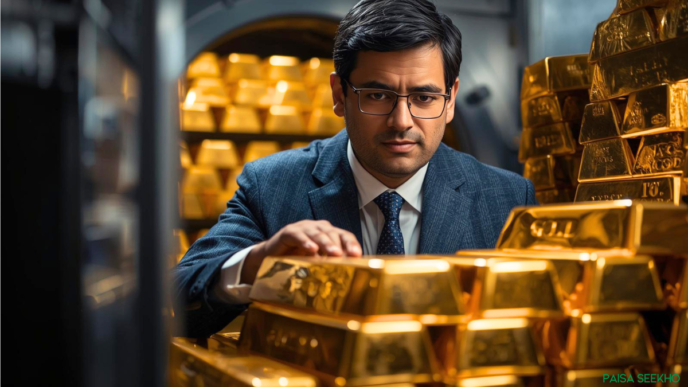
Imagine that every country in the world has a giant, national piggy bank. Instead of filling this piggy bank with paper money, which can lose its value over time due to inflation, many countries choose to fill it with solid, heavy gold bars. These savings are called “Gold Reserves.”
For thousands of years, gold has been the ultimate symbol of wealth and power. Even today, in our modern world of digital banking and cryptocurrencies, the most powerful governments on Earth are still hoarding massive amounts of physical gold. In fact, over the last few years, central banks have been buying gold at a faster rate than at any point in modern history.
But why are countries doing this? Who owns the most? And where do they actually hide all this treasure?
Whether you are a student trying to understand how the global economy works, or an investor looking to understand the future of money, this comprehensive guide will explain everything you need to know about global gold reserves in simple, easy-to-understand language.
1. What Are Gold Reserves and Why Do Countries Need Them?
To understand global gold reserves, you first need to understand the role of a “Central Bank.” Every country has one. In the United States, it is called the Federal Reserve. In India, it is the Reserve Bank of India (RBI).
A central bank is responsible for printing the country’s paper money and making sure the national economy does not collapse. To do this job safely, a central bank needs to have emergency savings. These savings are made up of foreign currencies (like US Dollars or Euros) and physical gold.
Here is exactly why countries still rely so heavily on gold:
A Shield Against Inflation
Paper money is basically just a promise from a government. If a government prints too much paper money, the value of that money drops. This is called inflation. Gold, on the other hand, cannot be printed in a factory. It has to be mined from the earth. Because there is a limited supply of gold in the world, it holds its value over decades and centuries, protecting the country’s purchasing power.
No Counterparty Risk
If India holds its emergency savings in US Dollars, it is relying on the United States government to keep that dollar stable and valuable. That is called “counterparty risk.” Gold has zero counterparty risk. It does not rely on any politician, president, or foreign government to be valuable. A gold bar is valuable all by itself, anywhere in the world.
Geopolitical Independence
In times of war or severe political disagreement, countries can use money as a weapon. They can freeze another country’s bank accounts or ban them from using the US Dollar. However, if a country has physical gold locked inside its own borders, no enemy can freeze it or take it away. It provides total financial independence.
2. The Top 10 Countries with the Largest Gold Reserves
The total amount of gold held by central banks around the world is staggering—roughly 36,000 tonnes. However, this wealth is not distributed equally. Let’s look at the top ten countries that hold the vast majority of the world’s national gold.
(Note: The numbers below are approximate, based on the latest available data from the World Gold Council, as central bank reserves fluctuate slightly month to month).
1. The United States (Approx. 8,133 Tonnes)
The United States is the undisputed heavyweight champion of the gold world. It holds more gold than the next three countries combined. How did they get so much? During World War I and World War II, European countries bought military supplies and weapons from the US, and they paid for them in solid gold. By the end of WWII, the US held the vast majority of the world’s gold, which allowed them to make the US Dollar the most powerful currency on Earth. Today, most of this gold is heavily guarded in the famous Fort Knox in Kentucky and vaults in Denver and New York.
2. Germany (Approx. 3,352 Tonnes)
Germany holds the second-largest reserve in the world. After the devastation of World War II, West Germany experienced a massive economic boom known as the “Wirtschaftswunder” (economic miracle). They exported massive amounts of goods and earned huge amounts of gold in return. During the Cold War, Germany was afraid the Soviet Union might invade, so they secretly sent almost all their gold to be stored safely in New York, London, and Paris. Recently, Germany completed a massive project to bring a large portion of that gold back home to Frankfurt.
3. Italy (Approx. 2,451 Tonnes)
Italy has maintained a massive gold reserve for decades. Unlike many other countries where the gold is owned entirely by the government, Italy’s gold is actually owned by the Banca d’Italia, and the shares of this bank are held by various Italian financial institutions. Italy has rarely sold any of its gold in modern history. They view it as a crucial safety net that provides confidence to international investors, especially during times when the Italian economy has faced severe debt crises.
4. France (Approx. 2,436 Tonnes)
France holds nearly the same amount of gold as Italy. In the 1950s and 1960s, French President Charles de Gaulle famously demanded that the United States exchange France’s US Dollars for physical gold. He even sent French naval ships across the Atlantic Ocean to pick up the gold and bring it back to Paris! Today, the Banque de France stores this massive treasure deep in a highly secure, underground vault in Paris, surrounded by a moat of water.
5. Russia (Approx. 2,332 Tonnes)
Over the last fifteen years, Russia has been one of the most aggressive buyers of gold on the planet. For a long time, Russia kept its savings in US Dollars. But as political tensions with the United States grew, Russia realized that relying on American money was a massive security risk. To “sanction-proof” their economy, the Russian central bank sold off almost all of its US Treasury bonds and used that money to buy thousands of tonnes of physical gold. When the war in Ukraine started and Western nations froze Russia’s dollar accounts, their massive gold reserves helped keep their economy from completely collapsing.
6. China (Approx. 2,262 Tonnes)
China is the world’s largest producer of gold (from mining) and the largest consumer of gold (from jewelry and investments). In recent years, the People’s Bank of China has been on a historic buying spree, adding hundreds of tonnes to its official reserves. Like Russia, China is aggressively trying to reduce its reliance on the US Dollar. Many financial experts believe that China actually holds much more gold than they officially report to the public, keeping the true size of their national wealth a secret.
7. Switzerland (Approx. 1,040 Tonnes)
Switzerland is a tiny country, but it is a global financial superpower. For a long time, the Swiss Franc was actually legally backed by gold, meaning you could theoretically exchange your paper money for real metal. While that rule has ended, Switzerland still holds the world’s largest gold reserve per capita (meaning they have the most gold per citizen). Switzerland is also the gold refining capital of the world; the vast majority of the gold dug out of the earth globally passes through Swiss factories to be purified.
8. Japan (Approx. 845 Tonnes)
As the third-largest economy in the world, Japan needs a significant emergency fund. While Japan relies heavily on the US Dollar for trade, they have steadily maintained and slightly grown their gold reserves over the last two decades. Interestingly, in 2021, Japan’s Ministry of Finance transferred a portion of its gold to different internal accounts to generate cash to help fund the country’s massive COVID-19 economic recovery programs.
9. India (Approx. 822 Tonnes)
India is the second-largest consumer of gold in the world, driven heavily by wedding traditions and festivals. However, the Reserve Bank of India (RBI) is also a massive player. Since 2017, the RBI has been consistently buying gold almost every single month. In early 2024, the RBI made headlines by secretly moving over 100 tonnes of its gold from vaults in the UK back to domestic vaults in India. This shows a growing desire by the Indian government to have direct, physical control over its national wealth.
10. Netherlands (Approx. 612 Tonnes)
The Netherlands rounds out the top ten. The Dutch central bank stores its gold to guarantee the stability of its financial system. They famously state on their official website: “A bar of gold always retains its value… Gold is the perfect piggy bank; it forms the ultimate anchor of trust for the financial system.” Recently, the Netherlands moved a large portion of its gold from the center of Amsterdam to a new, high-security military facility outside the city.
3. The “De-Dollarization” Megatrend
When you look at the list above, you will notice a major shift happening right now. The Western countries (like the US, Germany, and France) have held their gold for a long time and are mostly just keeping it sitting still.
The Eastern countries (like Russia, China, and India), however, are buying gold as fast as they can. Why is this happening? It is due to a massive global movement called “De-dollarization.”
Since the end of World War II, the US Dollar has been the “world’s reserve currency.” If India wants to buy oil from Saudi Arabia, they usually have to pay for it in US Dollars. This gives the United States incredible power. If the US government gets angry at a country, they can block that country from using the banking system that processes US Dollars. This is exactly what the US did to Russia in 2022.
When other countries saw the US freeze billions of dollars of Russian savings, they got scared. They realized that paper money in a digital bank account isn’t truly theirs if a foreign president can turn it off with the push of a button.
To protect themselves, countries (especially those in the BRICS alliance: Brazil, Russia, India, China, South Africa) are selling off their US Dollars and buying physical gold. By keeping physical gold in their own vaults, they are guaranteeing their financial independence and safety. This massive central bank buying is the primary reason why the price of gold has been hitting record highs over the last few years.
4. Where Do Countries Actually Hide All This Gold?
You might assume that every country keeps its gold inside its own borders, heavily guarded by its own military. Surprisingly, this is not true. A massive percentage of the world’s gold is actually stored in foreign countries.
There are two main “Fortresses” of global gold:
The Federal Reserve Bank of New York
Deep beneath the busy streets of Manhattan in New York City, sitting on solid bedrock, is the largest known gold storage facility in the world. The New York Fed holds gold on behalf of dozens of different countries. During World War II, European countries shipped their gold across the ocean to New York to keep it safe from invasions. Why do they leave it there today? Because it makes trading very easy. If Germany wants to sell some gold to Italy, they don’t have to put it on an airplane. Workers in the New York vault simply pick up the heavy gold bars from the “Germany” room and walk them over to the “Italy” room.
The Bank of England in London
London is the global center of the gold trade. Deep underground, below the Bank of England, are massive vaults holding over 400,000 bars of gold. Just like New York, many countries around the world choose to store their gold in London because the security is flawless and it allows them to sell the gold quickly on the international market if they ever face an economic emergency.
The Trend of “Repatriation”
However, the trust in keeping gold in foreign countries is starting to crack. Because of global tensions, many countries are deciding they want their gold back home. This process is called “Repatriation.” Germany, Austria, and India have all recently spent millions of dollars on high-security airplanes and military escorts to fly tonnes of their gold out of New York and London to bring it back inside their own borders.
5. How Do Gold Reserves Affect You and the Global Economy?
It is easy to think that massive gold vaults have nothing to do with your everyday life. But these national reserves directly affect your wallet and the global economy in several important ways.
- Currency Confidence: If you travel to another country, why do they accept your Indian Rupees or US Dollars? Because they trust the government that printed them. A large gold reserve tells the world that a country is financially stable. It gives international investors the confidence to do business with that country, which creates jobs and keeps the economy running smoothly.
- Exchange Rates: When a central bank buys large amounts of gold, it helps strengthen the national currency. A stronger currency means that when your country imports goods from abroad (like electronics or petrol), they are cheaper to buy. This helps keep the prices of everyday items lower for you.
- The Price of Jewelry: Central banks are the “whales” of the gold market. When countries like China and India buy hundreds of tonnes of gold, they drain the global supply. This massive demand pushes the price of gold higher. So, the next time you go to a jeweler and notice that gold chains are incredibly expensive, it is partially because central banks are aggressively buying up the global supply.
Conclusion: The Ultimate Anchor of Trust
In an age of digital payments, stock market algorithms, and cryptocurrencies, it is fascinating that the most powerful governments in the world still rely on a heavy, yellow metal dug out of the dirt.
Global gold reserves are the ultimate financial safety net. They are the anchor of trust that keeps the global economic system from floating away during times of war, panic, and extreme inflation. As the world continues to face political uncertainty and countries try to break away from the dominance of the US Dollar, you can expect the race to acquire physical gold to only get faster. The countries with the most gold will have the most financial security and independence in the decades to come.
Frequently Asked Questions (FAQs)
Q1: Why does the United States have so much more gold than everyone else?
The US gained most of its gold during World War I and World War II. While European countries were fighting, they bought massive amounts of food, weapons, and supplies from the United States. Because paper money was unreliable during the war, they paid the US in solid gold. By the end of WWII, the US held roughly 70% of the world’s monetary gold.
Q2: Can a country go bankrupt if it has a lot of gold?
It is very difficult for a country to go completely bankrupt if it holds massive gold reserves. Gold acts as the ultimate emergency fund. If a country’s currency collapses or it cannot pay its debts, it can sell its physical gold on the international market to raise billions of dollars in emergency cash to save its economy.
Q3: Does the Reserve Bank of India (RBI) keep all its gold in India?
No, but they are bringing more of it home. Historically, the RBI kept a large portion of its gold in the Bank of England in London for safekeeping and trading purposes. However, in early 2024, the RBI secretly moved over 100 tonnes of that gold back to highly secure domestic vaults in India to ensure direct control over the asset.
Q4: If a country prints too much money, why don’t they just buy more gold to fix it?
When a country prints too much money, the value of that money drops rapidly (hyperinflation). If the money is worthless, the country cannot afford to buy gold on the international market, because gold is priced in strong currencies like the US Dollar. You have to buy gold before an economic crisis happens, not during it.
Q5: Is a country’s paper money backed by gold today?
No. In the past, the world used the “Gold Standard,” meaning you could literally trade your paper dollar for physical gold at the bank. In 1971, the United States completely ended this system. Today, all global money is “fiat currency,” meaning it has value simply because the government says it does, not because it is backed by gold.
Q6: How do countries physically move tonnes of gold?
Moving a nation’s gold is a massive logistical and military operation. It involves heavily armored trucks, decoy vehicles, police escorts, and specially chartered cargo airplanes. The movements are planned in absolute secrecy, and the public is usually only told about the transfer months after the gold has safely arrived in its new vault.
Q7: Does China really have more gold than they claim?
Many international financial experts strongly suspect that China holds significantly more gold than the 2,260 tonnes they officially report. China is the world’s largest gold mining country, and they rarely export any of the gold they dig up. Experts believe China keeps a vast amount of gold hidden in separate, off-the-books government accounts.
Q8: Why doesn’t the United Kingdom (UK) appear in the top 10 list?
The UK made a massive financial mistake between 1999 and 2002. The British Finance Minister at the time decided to sell off more than half of the UK’s gold reserves because the price of gold was at a 20-year low. He believed gold was no longer important. Shortly after he sold it, the price of gold skyrocketed. Today, the UK holds only about 310 tonnes.
Q9: What is “De-dollarization”?
De-dollarization is a global trend where countries try to stop using the US Dollar for international trade and savings. Because the US has a habit of using its currency to punish countries politically, nations like Russia, China, and India are selling their dollars and buying physical gold instead, giving them total financial freedom.
Q10: Can individuals buy gold bars like central banks do?
Absolutely! While you can’t buy thousands of tonnes like the Reserve Bank of India, regular citizens can buy 1-gram, 10-gram, or 100-gram pure 24-karat gold bars from certified jewelers or banks. This is a very common and smart way for everyday people to protect their life savings from inflation.
⚠️ Disclaimer:
At Paisaseekho, our mission is to make you financially literate. The information provided in this article is for educational and informational purposes only and should not be construed as professional tax or legal advice.
Last Updated on 5 months ago by Sujay Puri