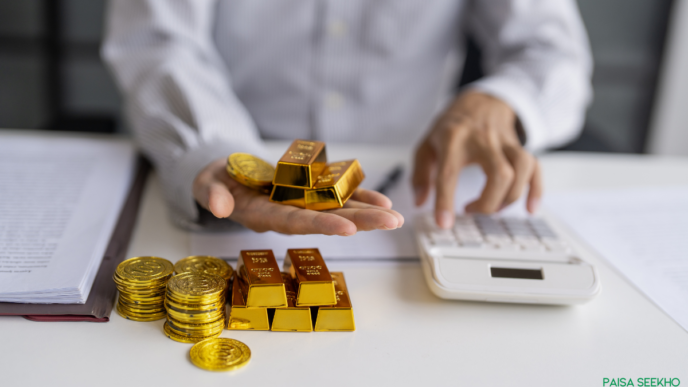

TL;DR: Quick Facts the Impact of Gold on the Indian Economy
If you are just looking for the core reasons why the government is trying to stop you from buying physical gold, here is the quick summary:
- The Import Burden: India consumes massive amounts of gold but mines almost zero. We have to import it, which drains billions of US Dollars from our foreign exchange reserves.
- The Deficit Trap: In the first quarter of 2026 alone, the value of gold demand in India surged 99% to a staggering ₹227,530 crore. Buying this much gold from abroad widens the Current Account Deficit, weakening the Indian Rupee.
- The “Dead Asset”: Physical gold sitting in a locker does not create jobs, build factories, or produce goods. It locks up capital that could have been used to grow the domestic economy.
- The Tax Weapon: To discourage buying, the government recently increased the import tariffs on gold to a massive 15%.
- The Solution: The government pushes Sovereign Gold Bonds (SGBs) and Digital Gold because they give citizens financial returns without forcing the country to physically import the metal.
Introduction
You live in a bustling city like Gurugram, you attend a lavish family wedding, and the first thing you notice is the dazzling display of heavy jewelry. Whether it is a bride dripping in traditional ornaments or a modern influencer capturing a gorgeous flat-lay accessory arrangement on social media, gold is the undisputed king of Indian culture. It is our ultimate status symbol, our emotional anchor, and our traditional financial safety net.
But while you are admiring that 24K necklace, the Prime Minister, the Finance Ministry, and the Reserve Bank of India (RBI) are staring at their financial dashboards with deep, genuine concern.
Why? Because our national obsession with physical gold is creating a massive, bleeding wound in the country’s economic budget.
We are decoding the impact of gold on the Indian economy. We will explain the terrifying math of the “Current Account Deficit,” explore why the government considers your bank locker a financial “dead zone,” and show you how you can protect your wealth without draining the nation’s resources.
1. The Core Problem: We Don’t Make Gold, We Just Buy It
To understand the Prime Minister’s worry, you first have to understand the basic supply chain of gold in India.
We love gold, but the harsh geological reality is that India hardly mines any gold of its own. The famous Kolar Gold Fields shut down decades ago. Today, domestic gold production is a drop in the ocean compared to the massive consumer demand.
Therefore, to feed our appetite for wedding jewelry and Diwali coins, the Indian bullion market has to import thousands of tonnes of gold every year, primarily from Switzerland, the UAE, and South Africa.
This creates a massive geopolitical and economic problem.
When an Indian jeweler buys gold from Switzerland, they do not pay in Indian Rupees. International trade is conducted in the global reserve currency: The US Dollar. Every time a container of gold lands at the Mumbai airport, billions of US Dollars leave the vaults of the Reserve Bank of India.
2. The Current Account Deficit (CAD) Nightmare
This massive outflow of US Dollars leads us to a terrifying economic metric known as the Current Account Deficit (CAD).
Simply put, the Current Account Deficit tracks the difference between what a country earns from exporting goods and what it spends on importing goods.
- If you export more than you import, you are running a surplus (you are getting rich).
- If you import more than you export, you are running a deficit (you are bleeding money).
India naturally runs a deficit because we have to import massive amounts of crude oil to keep our transport and industries running. Oil is a non-negotiable necessity.
But gold is the second-largest item on our import bill. Unlike oil, gold is not used to run trains or power factories; it is mostly bought for personal adornment and hoarding.
When our import bill explodes because citizens are buying too much gold, the CAD widens dangerously. To pay for these imports, we have to sell our Rupees to buy US Dollars. This massive selling pressure causes the value of the Indian Rupee to crash (e.g., from ₹80 to ₹85 against the Dollar). A weak Rupee makes everything else we import (like electronics, defense equipment, and fuel) much more expensive, triggering nationwide inflation.
3. The “Dead Asset” Argument: Why Your Locker Hurts the Economy
Economists absolutely hate physical gold. They refer to it as a “Dead Asset” or an “Idle Asset.”
To understand why, let us look at what happens to your money when you make different types of investments:
Scenario A: You put ₹5 Lakhs in a Bank Fixed Deposit (FD)
You give the money to the bank. The bank does not just lock it in a vault. They lend that ₹5 Lakhs to a local entrepreneur who wants to open a new restaurant. The entrepreneur buys equipment and hires ten staff members. Your ₹5 Lakhs actively created jobs, generated tax revenue, and stimulated the local economy.
Scenario B: You buy stocks worth ₹5 Lakhs in an Indian Company
You are providing capital to a business. The company uses that money to expand its manufacturing plant, produce more cars, and export them abroad, bringing foreign currency back into India.
Scenario C: You buy a ₹5 Lakh Gold Biscuit
You take the biscuit, wrap it in a red cloth, and lock it inside a dark steel bank locker for 20 years. That ₹5 Lakhs is now completely removed from the economic cycle. It does not create a single job. It does not fund a single infrastructure project.
When millions of families lock up billions of dollars in “dead assets,” the country suffers from a severe lack of domestic investment capital.
4. The Government’s Counter-Attack: Import Duties
The government cannot simply ban the sale of gold; it would cause public outrage and fuel a massive black market for smuggling.
Instead, the government uses a financial weapon to discourage you from buying: Import Duties.
By artificially making gold incredibly expensive, the government hopes you will change your mind and put your money into mutual funds or real estate instead. To curb the recent surge in precious metal imports and ease pressure on foreign exchange reserves, India raised import tariffs on gold and silver to 15%.
This means that out of every ₹1 Lakh you spend on a physical gold coin, ₹15,000 goes straight to the government in the form of customs duty and AIDC (Agriculture Infrastructure and Development Cess), before you even pay the making charges or GST!
5. Why is the Sovereign Gold Bond (SGB) a A Win-Win Solution?
The Prime Minister and the RBI realize that Indians will never fully stop investing in gold. It is in our cultural DNA.
To solve the CAD crisis without upsetting the public, the government launched the Sovereign Gold Bond (SGB) Scheme. It is one of the most brilliant macroeconomic policies of the decade.
How SGBs save the economy:
When you buy an SGB, you give your Rupees to the RBI. The RBI issues you a digital certificate that tracks the exact market price of gold.
- For You: You get the exact financial returns of gold, plus an extra 2.5% annual interest. You have zero locker fees, zero making charges, and zero risk of theft.
- For the Country: The government does not have to actually import physical gold from Switzerland. Zero US Dollars leave the country. The CAD remains stable, and the Rupee stays strong. Furthermore, the government can use your invested Rupees to fund domestic infrastructure projects while you hold the bond!
6. Interactive Tool: The Forex Drain & Dead Asset Simulator
At Paisaseekho, we believe in showing you the hard math behind these macro-economic concepts.
Use our custom simulator below. Enter the amount of gold you plan to buy for an upcoming event, and see exactly how much US Dollar wealth you are draining from the country, and how much “opportunity cost” you are losing by holding a dead asset.

Forex Drain & Dead Asset Simulator
See the real economic impact of your physical gold purchase.
The “Dead Asset” Penalty
If you put this money in an 8% FD instead of a locker, in 5 years it would generate an extra:
+ ₹1,75,999
(And that money would build domestic businesses!)
Conclusion
No Finance Minister or RBI Governor expects the citizens of India to stop buying gold completely. It is deeply woven into our religious ceremonies, our marriages, and our psychological need for safety.
However, understanding the impact of gold on the Indian economy transforms you from a blind consumer into a strategic, responsible investor.
The next time you decide to invest your savings, think about the macro-economic picture. If you are buying gold purely to make a profit in the future, step away from the jewelry counter. Open your Demat account and buy Sovereign Gold Bonds. You will earn higher returns, save yourself from heavy import duties, and most importantly, you will protect the Indian Rupee from bleeding out on the international stage.
Protect your wealth, and protect the nation’s wealth.
Frequently Asked Questions (FAQs) About Impact of Gold on the Economy
Q1: Why does buying gold negatively impact the Indian economy?
Because India does not mine gold, we must import it from other countries using US Dollars. Massive gold imports drain the RBI’s foreign exchange reserves, which widens the Current Account Deficit (CAD) and weakens the Indian Rupee, leading to inflation.
Q2: What is a “Dead Asset” in economics?
A “dead asset” refers to wealth that is locked away and not participating in the economic cycle. Physical gold sitting in a bank locker does not generate jobs, fund infrastructure, or produce goods, making it economically useless for the country’s domestic growth.
Q3: How much import duty is levied on gold in India in 2026?
To curb massive imports, the government raised the basic customs duty and the Agriculture Infrastructure and Development Cess (AIDC) on gold, bringing the total effective import tariff to 15%.
Q4: How do Sovereign Gold Bonds (SGBs) help the economy?
SGBs allow citizens to invest in gold digitally without the government having to physically import the metal. This saves precious US Dollars. Furthermore, the Rupees you use to buy SGBs can be utilized by the government for internal development.
Q5: Does digital gold (on apps like PhonePe) hurt the economy?
Yes, to an extent. Digital gold is backed by 24K physical gold stored in vaults by companies like MMTC-PAMP. For every gram of digital gold you buy, the company must import and store a physical gram, which still contributes to the import bill. SGBs or Gold ETFs are better for the macro-economy.
Q6: What happens if the Current Account Deficit (CAD) gets too high?
If CAD gets too high, India has to sell Rupees to buy foreign currency to pay its bills. This devalues the Rupee. A weak Rupee makes importing essential items—like crude oil and electronics—much more expensive, which causes prices of everyday goods to skyrocket for citizens.
Q7: Has the demand for gold in India decreased due to high prices?
Surprisingly, no. Despite record-high prices, investment demand remains incredibly strong. In the first quarter of 2026, while physical jewelry volumes dipped slightly, the total value of gold demand surged 99% to a massive ₹227,530 crore.
Q8: Why does the government encourage stock market investment over gold?
When you invest in the stock market or mutual funds, your money provides capital to Indian businesses. Those businesses use the capital to build factories, hire employees, and innovate, which actively grows the GDP and the domestic economy.
Last Updated on 4 months ago by Team Paisaseekho