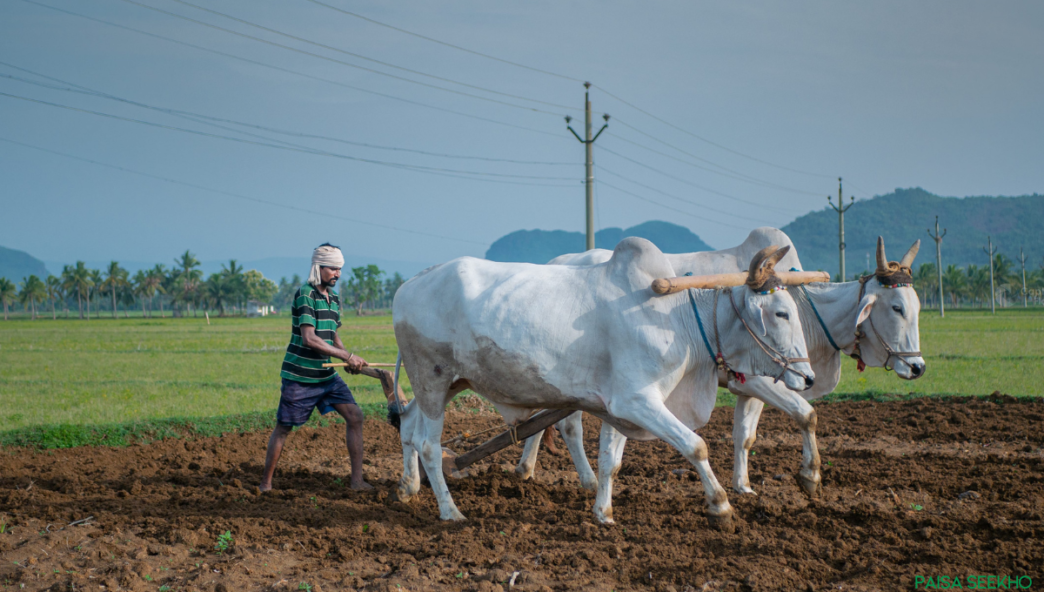
If your family recently sold a piece of agricultural land back home, whether it was ancestral farmland or a plot bought years ago, you have probably heard both sides of the story. Some people say agricultural land sales are completely tax free. Others say you will get a notice from the tax department if you do not report it correctly. The truth is that both can be right, depending on where exactly your land is located.
This single detail, rural versus urban, decides whether your sale proceeds are fully exempt or fully taxable. Here is how to check which one applies to you.
Is All Agricultural Land Automatically Tax Free?
No, and this is the most common misunderstanding. Under the Income Tax Act, only rural agricultural land is excluded from the definition of a capital asset. This means gains from selling rural agricultural land are not taxed at all, regardless of how much profit you make.
Urban agricultural land, on the other hand, is treated as a capital asset, just like a flat or a plot in the city. If your land falls into this category, the sale is taxable under capital gains, even though the land itself was used for farming.
How Do You Know If Your Land Is Rural or Urban?
This depends entirely on the land’s distance from the nearest municipality or cantonment board, based on that area’s population. Your land is considered urban, and therefore taxable, if it falls within any of these limits:
- Inside the jurisdiction of a municipality or cantonment board with a population of 10,000 or more
- Within 2 kilometres of a municipality with a population between 10,000 and 1 lakh
- Within 6 kilometres of a municipality with a population between 1 lakh and 10 lakh
- Within 8 kilometres of a municipality with a population above 10 lakh
If your land falls outside all of these distances, it counts as rural agricultural land, and the sale is exempt from capital gains tax.
One important detail here: this distance is measured as a straight line, also called aerial distance, not the distance you would travel by road. Families have been surprised to learn their land counts as urban simply because a highway or a new township pushed the nearby town’s boundary closer over the years.
What If Your Land Is Rural Agricultural Land?
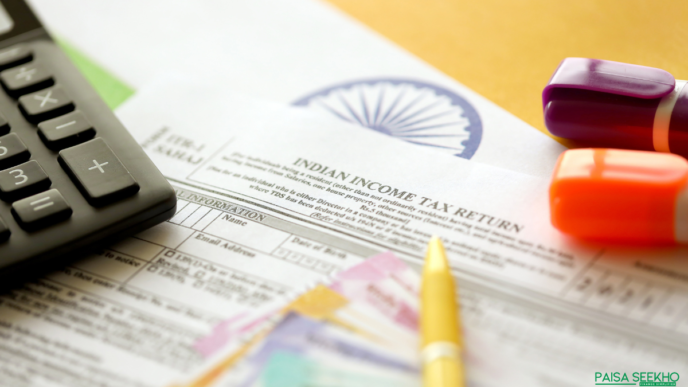
If your land qualifies as rural, congratulations, you owe no capital gains tax on the sale, no matter the sale value. However, you still need to report this sale in your ITR under Schedule EI, which stands for Exempt Income. Skipping this step is a common mistake. Even though the amount is not taxed, the tax department expects you to disclose it, especially since large bank deposits from the sale proceeds are likely to show up in your Annual Information Statement.
What If Your Land Is Urban Agricultural Land?
If your land falls under the urban criteria, the sale is taxable as a capital gain. The tax treatment depends on how long you or your family held the land before selling it:
- If held for more than 24 months, it counts as a long term capital gain
- If held for 24 months or less, it counts as a short term capital gain
How Much Tax Will You Pay on Urban Agricultural Land?
For long term capital gains, the applicable rate is 12.5 percent without indexation for land acquired on or after July 23, 2024. If the land was acquired before that date, you can choose between 12.5 percent without indexation or 20 percent with indexation, whichever works out cheaper for you.
For short term capital gains, there is no special rate. The gain simply gets added to your total income and taxed at your regular income tax slab rate.
Can You Avoid Paying This Tax?
If your land is urban agricultural land, a few exemptions can help reduce or eliminate the tax:
- Section 54B lets you claim a full exemption if you reinvest the capital gains into another agricultural plot, rural or urban, within 2 years of the sale. The land you sold must have been used for agricultural purposes by you or your parents for at least 2 years before the sale. This exemption is available only to individuals and HUFs.
- Section 54EC allows you to invest the capital gains in specified bonds issued by NHAI, REC, IRFC, or PFC within 6 months of the sale, with exemption available up to Rs 50 lakh.
- Section 10(37) provides full exemption if the land was compulsorily acquired by the government, such as for a road or infrastructure project, and it was used for agriculture by you or your parents for 2 years before acquisition.
What About TDS When You Sell Agricultural Land?
Here is some genuinely good news. The standard TDS rule under Section 194-IA, which normally applies when property worth Rs 50 lakh or more is sold, does not apply to agricultural land, whether rural or urban. This is one of the reasons families sometimes confuse agricultural land sales with being completely outside the tax system, when only the rural category actually is.
One more practical point: under Section 269ST, no one can accept more than Rs 2 lakh in cash for a single transaction. If the sale proceeds are received in cash beyond this limit, both the buyer and seller can face a penalty equal to the amount received. Always insist on a bank transfer for any high value land transaction.
How Do You Report This in Your ITR?
If your land is rural agricultural land, report the sale under Schedule EI as exempt income. If it is urban agricultural land, report it under Schedule CG for capital gains. Since capital gains reporting requires a more detailed ITR form, you cannot use the simplest form, ITR-1, in this case. You will typically need ITR-2 or ITR-3, depending on whether you also have business or professional income.
Before filing, it also helps to check your AIS and TIS to make sure the sale proceeds and any TDS details match what you are declaring. We have a simple walkthrough on this here: paisaseekho.in/tax/ais-tis-explained/
The Bottom Line
Do not assume every agricultural land sale is automatically tax free just because the land was used for farming. Check the actual distance from the nearest municipality or cantonment board based on its population, since that single factor decides whether you owe nothing or owe capital gains tax. When in doubt, especially with land near a growing town, it is worth getting the rural or urban classification confirmed before you file your return, not after.
Frequently Asked Questions
Is capital gains tax applicable on sale of ancestral agricultural land?
It depends on the land’s location, not on whether it is ancestral. If the ancestral land qualifies as rural agricultural land based on its distance from a municipality, the sale is exempt. If it qualifies as urban agricultural land, the sale is taxable regardless of how long the family has owned it.
Do I need to pay tax if I sell agricultural land in a village?
Not necessarily. If the village falls outside the specified distance limits from the nearest municipality or cantonment board, based on that area’s population, the land is treated as rural agricultural land and the sale is fully exempt from capital gains tax.
What is the difference between rural and urban agricultural land for tax purposes?
Rural agricultural land is excluded from the definition of a capital asset under the Income Tax Act, so its sale is not taxed. Urban agricultural land is treated as a capital asset, so its sale is taxable under capital gains, based on distance and population criteria around the nearest municipality.
Is TDS deducted when selling agricultural land?
No. The TDS rule under Section 194-IA, which applies to most property sales above Rs 50 lakh, does not apply to the sale of agricultural land, whether it is classified as rural or urban.
Can I avoid capital gains tax by buying another agricultural land?
Yes, if your land is urban agricultural land, Section 54B allows a full exemption if you reinvest the capital gains into another agricultural plot within 2 years of the sale, provided the original land was used for agriculture for at least 2 years before the sale.
Do I need to report the sale of rural agricultural land in my ITR even if it is exempt?
Yes. Even though rural agricultural land sales are not taxed, you should still report the transaction under Schedule EI as exempt income to avoid any mismatch with the deposits reflected in your Annual Information Statement.