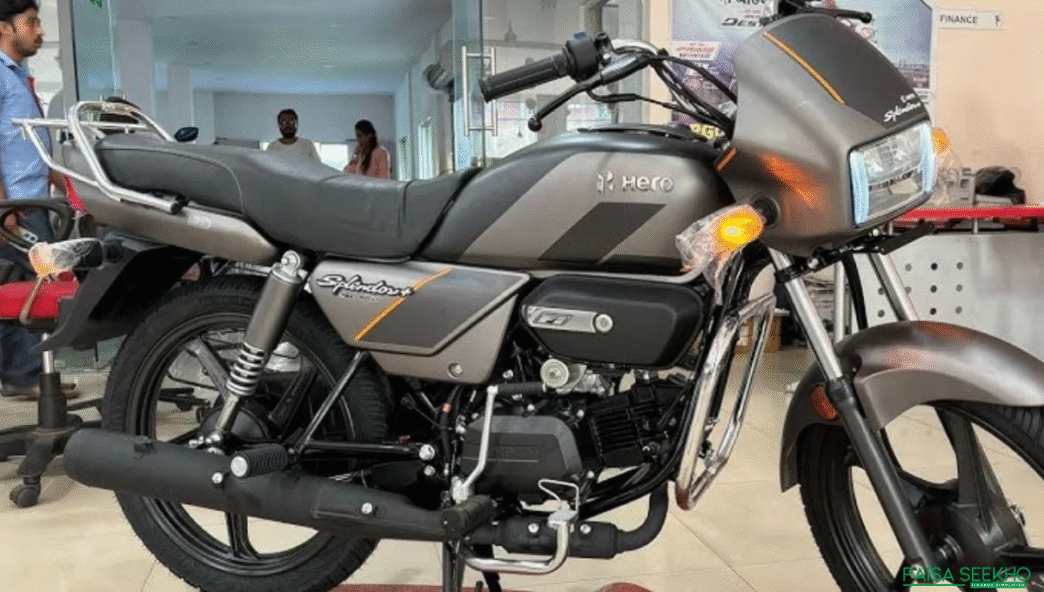
You’ve seen it on every Indian road… the Hero Splendor Plus gliding past traffic, reliable as ever, fuel-efficient, and perfect for both city commutes and weekend rides. Maybe it was your dad’s first bike, or maybe it’s the one you’ve promised yourself once that next salary hits.
The thought of buying your own bike?
It’s exciting! Freedom, independence, and no more waiting for cabs or autos.
But then comes the big question:
“Can I really afford it right now without burning through my savings?”
Whether the bike is affordable depends on your actual dealer quote, household expenses, savings buffer and loan terms. The examples below are planning illustrations, not a promise that a particular salary can comfortably support the purchase.
Buying a Hero Splendor Plus isn’t just about walking into a showroom, it’s about planning smartly so the purchase fits comfortably within your budget.
In this guide, we’ll break down:
- Hero Splendor Plus Price in India 2025
- How much you’ll need as downpayment
- The EMI options that work best for your salary
- A simple savings plan to reach your goal faster
- And what to do once your bike loan ends, to keep your money growing
By the end, you’ll have a practical roadmap to buy your dream bike without tension or guilt, just confidence and a clear plan.
Section 1: Understand the Real Cost of Your Hero Splendor Plus
Check the current price for your variant and city
Start with Hero MotoCorp’s official Splendor page and obtain a written quote from an authorised dealer. Splendor+, Splendor+ XTEC and Splendor+ XTEC 2.0 are separately listed models; do not compare a quote for one with an advertisement for another.
The earlier tables on this page used Q1 2025 figures. They are not a verified current price list and should not be used to decide how much to borrow. We have not substituted an unverified 2026 city-price table.
What to ask for in an on-road quote
| Quote item | What to check |
|---|---|
| Exact model and variant | Match the model, brakes and selected equipment. |
| Ex-showroom price | Record city, quote date and any conditional discount. |
| Registration and road tax | Ask for an itemised amount for your lawful registration location. |
| Insurance | Check cover type, policy periods, insured value and optional add-ons. |
| Accessories and other dealer charges | Separate optional purchases from required charges; ask for the basis of each fee. |
| Financing costs | Compare processing charges and total repayment separately from the bike price. |
Keep the signed quote before paying a booking amount. The loan illustration below is deliberately separate from current retail pricing.
Why Hero Splendor Plus Prices Differ by City
Every metro adds its own layer of costs:
- Road tax: Karnataka and Maharashtra have higher tax slabs than Delhi or Haryana.
- Insurance: Premiums rise in metro cities due to higher traffic-risk ratings.
- Dealer margins & offers: Showroom handling, logistics, and festive discounts vary locally.
- Accessories: Seat covers, guards, and number plates are priced differently.
💬 Tip: Always ask your dealer for a written price breakup, it helps you avoid “hidden” handling or accessory fees when finalising your booking.
Section 2: Plan Your Hero Splendor Plus Downpayment Smartly
How Much Downpayment Do You Need for a Hero Splendor Plus?
Once you have a written quote, ask the lender what amount it will finance and which charges remain payable upfront. The table below illustrates down-payment arithmetic; it does not establish that lenders universally finance 85–90% of the on-road price.
Here’s what that looks like in numbers:
| On-Road Price (Approx.) | 10 % Downpayment | 15 % Downpayment | Loan Amount (after 15 %) |
| ₹ 90,000 | ₹ 9,000 | ₹ 13,500 | ₹ 76,500 |
| ₹ 95,000 | ₹ 9,500 | ₹ 14,250 | ₹ 80,750 |
| ₹ 1,00,000 | ₹ 10,000 | ₹ 15,000 | ₹ 85,000 |
💬 Tip: Always confirm whether your lender is financing the ex-showroom or on-road price, this small detail can change your upfront payment by several thousand rupees.
Finding your down-payment amount
Compare the cash you can spare after essential expenses and emergency reserves with the loan repayment you can sustain. A larger down payment lowers the loan principal, but a fixed 10%, 15% or 20% rule cannot tell whether the purchase is affordable for your household.
How to save for your down payment
For an illustrative ₹13,500 goal, saving ₹4,500 a month takes three months, ₹2,250 takes six months, and ₹1,500 takes nine months, before interest. Choose a timeline that leaves room for essentials and emergencies.
Keep the money accessible for the purchase date and check any withdrawal conditions. Add riding gear, insurance and other quoted costs not already included in your purchase budget. Taking another loan for the down payment creates another repayment to accommodate.
Section 3: What Will Your EMI Look Like?
Understanding Your Monthly Commitment
Once your downpayment is sorted, the next step is figuring out how much you’ll pay every month, your EMI (Equated Monthly Instalment).
It’s that small number that decides whether you’ll cruise to work every day stress-free, or feel the pinch by mid-month.
Think of it like your bike subscription, only this time, it’s for freedom, not streaming.
How EMIs are calculated
Use the loan amount after the down payment, the quoted interest method and the repayment term. A flat rate and a reducing-balance rate with the same printed percentage do not produce the same borrowing cost. Ask the lender for its repayment schedule and Key Facts Statement so you can compare the annual percentage rate and charges.
Illustrative EMI comparison, not a current Hero offer
Assume a purchase budget of ₹93,700, a down payment of ₹14,000 and a loan of ₹79,700. The down payment is about 14.94%, not exactly 15%. At an assumed 10% annual reducing-balance rate, with monthly instalments and no fees:
| Term | Monthly EMI | Total interest | Total loan repayment |
|---|---|---|---|
| 12 months | ₹7,007 | ₹4,383 | ₹84,083 |
| 24 months | ₹3,678 | ₹8,566 | ₹88,266 |
| 36 months | ₹2,572 | ₹12,881 | ₹92,581 |
Figures are rounded to the nearest rupee from the unrounded EMI calculation. Total loan repayment excludes the ₹14,000 down payment, fees and ownership costs. Actual lender rounding and repayment dates may differ. Formula: EMI = P × r × (1+r)n ÷ ((1+r)n − 1), where P is principal, r is the annual interest rate expressed as a decimal divided by 12, and n is the number of months.
How to choose the right tenure
In this illustration, 12 months costs less interest but requires a much larger monthly payment than 36 months. Compare that payment with your household budget, not just the dealer’s lowest-EMI advertisement. There is no single tenure that works best for most buyers.
Affordability check
Subtract essentials, existing repayments, insurance, fuel, maintenance and your savings buffer from take-home income before deciding what EMI fits. A percentage-of-income rule is only a rough starting point; it does not guarantee affordability. Our 50/30/20 budgeting guide explains one framework you can adapt.
Before signing the loan
Compare written offers using the same amount and tenure. Check total repayment, fees, prepayment conditions and the due date. Set a payment reminder or authorised auto-debit, and keep sufficient funds available; automation does not guarantee a clean repayment record.
Section 4: How to Save for Your Hero Splendor Plus the Smart Way
You’ve checked the specs, compared prices, even imagined your first ride.
Now comes the real test: saving up, not just dreaming about it.
The truth is, you don’t need to earn a fortune to afford a Hero Splendor Plus.
You just need a plan that fits your salary, timeline, and spending habits.
Let’s break it down step by step.
Step 1: Fix Your Purchase Timeline
First, decide when you want to buy the bike.
Are you planning to get it before the monsoon?
Or saving up to surprise your parents on Diwali?
Once you fix the timeline, the maths gets easy.
| Goal Timeline | Target Downpayment (₹ 13,500) | Monthly Saving Needed (₹) |
| 3 months | ₹ 13,500 | ₹ 4,500/month |
| 6 months | ₹ 13,500 | ₹ 2,250/month |
| 9 months | ₹ 13,500 | ₹ 1,500/month |
💬 Tip: Always choose a plan you can actually stick to.
A 9-month goal you complete feels far better than a 3-month goal you abandon halfway.
Step 2: Choose where to keep your money
For a purchase with a fixed near-term date, check access to the money, capital risk, withdrawal restrictions and any early-closure charge. Compare current bank deposit terms rather than relying on a return table. A mutual fund is not a guaranteed-return substitute for a bank deposit; its value can fall. Do not make the down payment depend on earning a particular market return. See AMFI’s mutual-fund risk explanation.
Step 3: Automate Your Savings
If it suits your cash flow, set an automatic transfer after salary credit. You can also save manually; the useful test is whether the chosen amount is sustainable and actually reaches the goal.
💬 Paisaseekho Tip: If your salary arrives on the 5th, set an auto-transfer on the 6th.
That ₹ 2,000 you don’t see is ₹ 2,000 closer to your bike.
Step 4: Use Extra Income Smartly
If extra income arrives, decide how much can go toward the bike after other needs. The effect on your timeline depends on the amount saved and the remaining target; a windfall does not automatically shorten the goal by a fixed number of months.
Step 5: Prepare for extra costs
Get actual quotes for insurance, registration, required riding gear and any optional accessories. Check what is already included in the on-road quote so you do not count it twice. Set a separate allowance for fuel and maintenance based on your own commute and the model’s service schedule, rather than treating a generic rupee range as a dealer promise.
Example: Real-Life Splendor Savings Plan
Illustrative budget only: suppose take-home salary is ₹25,000 a month. The following allocations add to ₹25,000; they are not a recommendation for every household or a guarantee that the purchase can happen within a year.
| Category | Monthly Allocation (₹) | Remarks |
| Rent + bills | 10,000 | Essentials |
| Groceries + fuel | 7,000 | Day-to-day |
| Bike fund goal | 2,000 | Automated saving |
| Emergency / SIP | 3,000 | Long-term |
| Lifestyle / fun | 3,000 | Enjoy guilt-free |
No extreme frugality, no skipping chai breaks, just steady progress.
The Paisaseekho Way of Saving
At Paisaseekho, we believe saving isn’t about giving up what you love, it’s about building the life you want.
When you save with purpose, every rupee has meaning.
That first ride on your own Hero Splendor Plus won’t just feel like freedom, it’ll feel like achievement.
Section 5: After You Buy, Managing EMI & Lifestyle
So, the day has finally come.
You walk into the showroom, sign the papers, and hear that satisfying click of the ignition for the first time.
You’ve made it, your own Hero Splendor Plus is standing in front of you. 🏍️✨
But once the excitement fades, reality sets in:
“How do I manage my EMI, fuel, and daily expenses without cutting corners?”
Don’t worry, this is where planning turns into peace of mind.
1. Rework your monthly budget
Add the actual EMI and expected ownership costs to your existing budget before buying. If the total exceeds your income or leaves no room for irregular expenses, reduce the borrowing, save for longer or reconsider the purchase. Do not treat a sample salary split as a guarantee that a bike fits your finances.
2. Automate Your EMI Payments
Life gets busy. Forgetting a payment can cost you late fees or impact your credit score.
Set your EMI auto-debit for 2–3 days after salary credit. That way, your payment is done and dusted before you even think about spending.
If you keep a repayment buffer, base it on the actual EMI and your wider emergency needs. One instalment is not a guarantee against missed payments or unexpected expenses.
3. Account for monthly running costs
Estimate fuel from your expected kilometres, realistic fuel economy and the local petrol price. Add servicing, insurance renewals, parking and replacement parts using your actual quotes and service schedule. Keep these costs separate from the EMI.
4. Review savings alongside the new repayment
Decide what you can continue saving after essentials and repayments. A SIP is a payment method, not a promised return. Check the underlying investment’s risk and your time horizon rather than assuming that a monthly contribution will produce a particular amount by the next bike upgrade.
5. Don’t Fall into Lifestyle Inflation
That first sense of independence, the weekend rides, impromptu chai stops, short trips, it’s addictive.
Enjoy it, but consciously.
Ask yourself before every swipe:
“Will this spend make my month better or just my moment?”
If it’s just a moment, maybe skip it.
That’s how financially confident people think.
6. Track and Review Every 3 Months
Just like your bike needs regular servicing, your budget does too.
Every quarter:
- Review your EMI, expenses, and savings.
- See if you can prepay one EMI using your bonus or extra income.
- If your salary changes, review saving and spending amounts against your priorities rather than following fixed increases.
Small tweaks = big wins.
The Paisaseekho Way of Ownership
Buying your first bike isn’t just about travel, it’s about transformation.
You’ve proven to yourself that with patience, discipline, and planning, you can own what you want without drowning in debt.
Now, every time you ride your Hero Splendor Plus to work, remember:
You’re not just moving forward on the road, you’re moving forward in life.
Section 6: Once Your EMI Is Over, What Next?
That final EMI reminder pops up on your phone, and this time, you smile instead of sighing.
No more monthly deductions.
No more credit alerts.
You’ve officially paid off your Hero Splendor Plus! 🏍️💪
But here’s the real financial glow-up moment, what you do next will decide whether this milestone becomes just a memory or the start of your wealth journey.
Let’s make sure it’s the second one.
1. Keep the Habit Alive
When the loan is fully repaid, review the monthly amount it frees up. Your payment history and next priorities will determine how to use that cash flow.
You may keep the saving habit after repayment, but choose the destination according to your emergency needs, goals and time horizon.
2. Decide where the freed-up EMI should go
Once the loan ends, you can redirect the payment toward another goal, emergency savings or suitable investments. Choose the destination according to when you need the money and the risk you can take. Equity or balanced-fund returns are not fixed at 10%, and investing regularly does not remove market risk.
3. Create a “Next Goal” Fund
Now that your Splendor is yours, what’s next on your wishlist?
Maybe a Royal Enfield, a trip to Ladakh, or saving for your first car.
Set up a new SIP named after that dream, just like you did for your bike.
When you can see your progress every month, you stay consistent without needing motivation quotes.
4. Revisit Your Insurance and Emergency Plan
Now that your loan is over, revisit your basics:
- Review your bike insurance cover, renewal dates and premium quote before changing it.
- Keep your emergency fund equal to 3–6 months of expenses (including fuel and maintenance).
- Review your health and term insurance once a year, they’re your financial helmet.
💬 Tip: The financial confidence that comes after closing your first loan? Use it to upgrade your protection, not your impulse buys.
5. Celebrate Smartly
Take a small victory lap, literally.
Go for that long ride, maybe gift your parents a dinner out, or buy a small add-on for your bike.
You’ve earned it.
But remember, true celebration is when your money habits start compounding, not just your speedometer.
The Paisaseekho Perspective
Paying off your first loan is special.
It’s proof that you can commit, stay disciplined, and achieve your goals step by step.
When you channel that same energy into investing, you’re no longer just a bike owner, you’re a wealth builder.
Because at Paisaseekho, we believe every milestone, whether it’s buying your first Hero Splendor Plus or your first home, is part of a bigger journey: earning freedom, one smart choice at a time.
Conclusion: Freedom on Two Wheels, Built the Smart Way
Owning a Hero Splendor Plus isn’t just about convenience, it’s about confidence.
That feeling when you start your day knowing you’ve earned your ride, paid for it responsibly, and still have your finances under control.
You didn’t just buy a bike, you built a plan.
You learned to budget, save, repay, and now, invest.
And that’s what real financial growth looks like, step by step, EMI by EMI.
Because at Paisaseekho, we believe every milestone, no matter how small, brings you closer to freedom.
Your Hero Splendor Plus is not just a two-wheeler. It’s a symbol of how far discipline, patience, and smart money moves can take you.
So the next time you hit the road, remember, this isn’t just a ride.
It’s your journey towards independence, one smart decision at a time. 🛵💨
FAQs: Hero Splendor Plus Price and Budget
1. How can I check the current on-road price of Hero Splendor Plus?
The old Q1 2025 price estimates are not current dealer quotes. Check the official Hero model page and obtain an itemised quote for the exact variant, city and purchase date before setting the loan amount.
2. What mileage should I use for budgeting?
Check the fuel-economy information for the exact model and use a conservative estimate for your commute. Riding conditions, load and maintenance affect actual mileage; this page does not establish a verified current mileage figure for every Splendor variant.
3. What is the monthly EMI for Hero Splendor Plus?
For the illustrative ₹79,700 loan at 10% annual reducing-balance interest, the calculated EMI is about ₹7,007 for 12 months, ₹3,678 for 24 months or ₹2,572 for 36 months. This is not a lender offer; fees are excluded.
4. How much down payment is required?
Ask the lender what portion of the actual quoted price it will finance and which costs must be paid upfront. The percentage depends on its product and your eligibility. A larger down payment reduces borrowing, but should not be chosen without checking your emergency cash needs.
5. Is it better to buy Hero Splendor Plus on loan or full cash?
Paying in full avoids loan interest but uses cash upfront. Borrowing preserves some cash while adding interest, fees and repayment obligations. Compare both against your emergency needs and household budget; do not borrow just to try to improve a credit score.
6. What is the maintenance cost of Hero Splendor Plus?
Ask the authorised dealer for the applicable service schedule and a written explanation of what any free service includes. Labour, consumables and replacement parts should not be assumed to have the same treatment. We have not verified a universal monthly maintenance cost for all owners.
7. Is the Hero Splendor Plus right for my budget?
Compare the exact model with your commute, current quote, running costs and repayment budget. A bike can suit one household and stretch another; this guide does not establish a universal best-buy ranking.
What to Read Next on Paisaseekho
If you’re planning your next financial goal after your bike, here are a few hand-picked reads to guide you:
- 💡 Budgeting You’ll Actually Follow: What is the 50/30/20 Rule of Budgeting (with examples)
- 🏦 Smart Money Habits: Budgeting Hacks for Young Indians: Spend Smart, Save More
- 📈 Turn EMIs into Investments: Fixed Deposits vs Mutual Funds – Which is Better for Beginners?
- 🛡️ Build Your Safety Net: 10 Types of Financial Emergencies & How to Be Prepared
- 🚗 Goal-Based Planning: How to Buy a Hyundai VENUE in India (2025 Guide to Price, EMI & Savings)
Disclaimer
This article is for educational purposes only. The loan figures are hypothetical planning assumptions, not verified current dealer prices or lender offers. Please verify current prices, EMI offers, and loan terms with authorised Hero MotoCorp dealers and financial institutions before purchase.
Last Updated on 5 days ago by Team Paisaseekho