TL;DR: Key Takeaways on Global Gold Demand
If you are in a hurry, here is a quick summary of what is happening in the global gold market right now:
- Central Banks are the Biggest Buyers: Countries around the world (especially China, India, and Poland) are buying record amounts of gold to protect their national wealth and rely less on the US Dollar.
- Jewelry Demand is Struggling with High Prices: India and China still buy the most gold jewelry in the world. However, because the price of gold has gotten so high, many everyday people are buying lighter jewelry or waiting for prices to drop.
- Investors are Seeking Safety: Regular people are buying gold bars and coins to protect their savings from inflation (the rising cost of living) and global wars.
- Technology Needs Gold: The booming Artificial Intelligence (AI) industry and smartphone manufacturers are using more gold because it is a perfect conductor of electricity that never rusts.
- Recycling is Surging: Because gold prices are at record highs, millions of people are selling their old, broken jewelry for cash, which adds a lot of recycled gold back into the global supply.
Introduction
Gold is one of the oldest and most fascinating forms of money in human history. For thousands of years, wars have been fought over it, empires have been built on it, and families have passed it down from generation to generation. But in today’s modern world of digital money, credit cards, and cryptocurrencies, you might wonder: who is still buying physical gold?
The answer might surprise you. Today, the demand for gold is stronger and more complex than ever before. It is not just grandmothers buying necklaces for weddings anymore. The biggest buyers in the world right now are entire countries, massive investment funds, and high-tech electronics companies.
If you want to understand why the price of gold has been breaking record highs recently, you have to look at the global demand. You have to understand who is buying it, why they are buying it, and where the metal is physically going.
This simple, easy-to-understand guide will break down the latest global gold demand trends. We will look at the massive “whales” of the financial ocean, the cultural buyers in Asia, and the invisible gold hidden inside your smartphone.
1. The Heavyweights: Central Banks on a Buying Spree
To understand the global gold market today, you have to start at the very top. The biggest and most important trend over the last few years is the massive appetite of “Central Banks.”
A central bank is the main government bank of a country. For example, in India, it is the Reserve Bank of India (RBI). In the United States, it is the Federal Reserve. These banks are responsible for keeping their country’s economy safe and holding the nation’s emergency savings, which are called “reserves.”
The Move Away from the US Dollar
For decades, most central banks kept their emergency savings in US Dollars. The US Dollar was considered the safest money in the world. But recently, things have changed.
Many countries have watched how the United States uses the dollar to control global trade or punish countries through “sanctions” (economic time-outs). Because of this, countries like China, Russia, India, and many others in the Middle East decided they do not want to rely entirely on the US Dollar anymore. This trend is called “De-dollarization.”
Hoarding the Ultimate Safe Asset
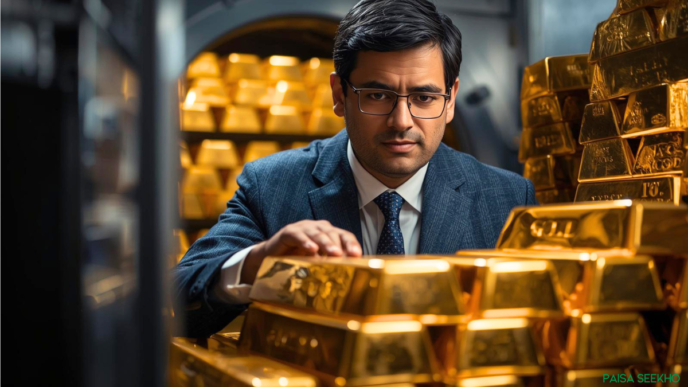
So, if these countries don’t want to hold dollars, what do they buy? They buy physical gold. Gold is the only money in the world that is not controlled by any single politician or president. If a country holds physical gold in its own vaults, no other country can freeze it, cancel it, or take it away.
Since 2022, central banks have been buying gold at a record-breaking, historic pace—often buying over 1,000 tonnes of gold in a single year. When central banks buy gold, they buy it by the truckload and lock it away in underground vaults for decades. This takes a massive amount of gold out of the global market, creating a shortage that pushes the price of gold higher and higher for everyone else.
2. The Cultural Pillars: Jewelry Demand in India and China
While central banks buy gold for national security, everyday people buy it for love, tradition, and personal savings. When we talk about gold jewelry, two countries dominate the entire world: India and China. Together, these two nations consume more than half of all the gold jewelry made globally.
The Indian Wedding Engine
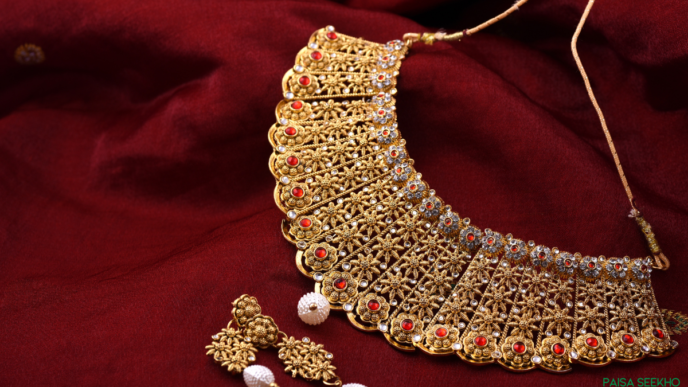
In India, gold is not just a metal; it is a deeply emotional and religious part of life. It is considered highly auspicious (lucky) and is an essential part of festivals like Diwali, Dhanteras, and Akshaya Tritiya.
Even more importantly, gold is the backbone of the Indian wedding industry. In many cultures, giving gold to a bride is a way to ensure she has financial security and independence in her new life. This cultural engine means that no matter what is happening in the stock market, Indians will always buy gold.
The Chinese Market
In China, gold also has deep cultural roots, representing good luck, wealth, and prosperity. During the Lunar New Year, millions of Chinese citizens buy gold jewelry and small gold statues as gifts for their families.
The Problem with Record High Prices
However, there is a major trend currently affecting jewelry demand: the price of gold has simply gotten too high.
When the price of gold jumps to record levels, it hurts the average consumer. A middle-class family planning a wedding has a fixed budget. If gold prices double, that same budget can only buy half as much gold as it used to.
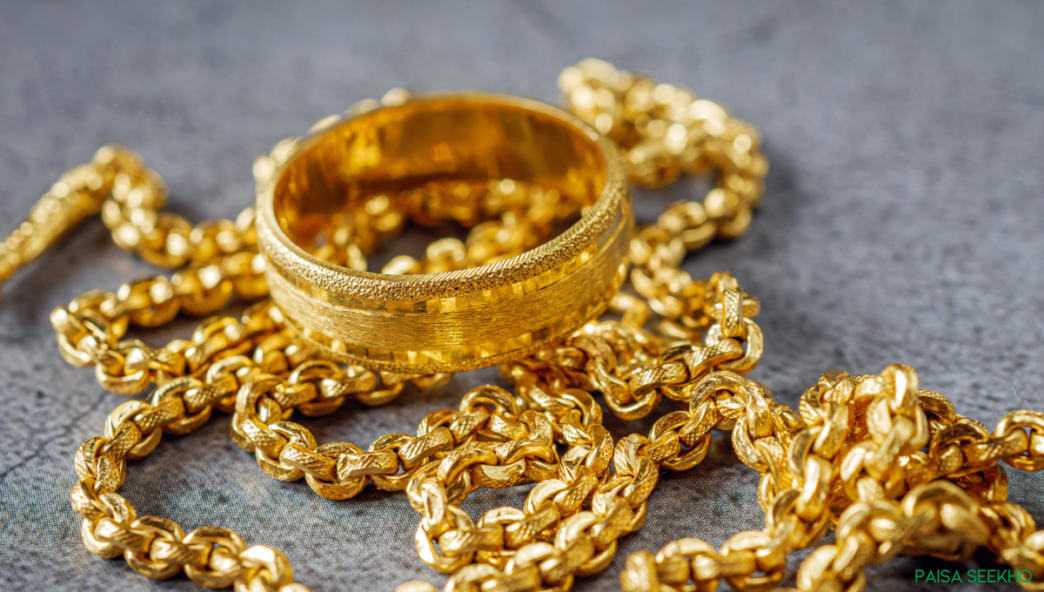
Because of these sky-high prices, we are seeing a shift in consumer behavior. Jewelers in India and China are reporting that people are buying “lightweight” jewelry. Instead of buying a heavy, thick gold bangle, they are buying thin, beautifully designed pieces that look big but use very little actual gold. Many people are also delaying their purchases, waiting and hoping for the price to drop before they buy.
3. The Safe Haven: Investment Demand for Bars and Coins
Aside from jewelry, the other way regular people buy physical gold is by purchasing solid gold bars and coins. This is called “Retail Investment Demand.” People who buy bars and coins are usually not buying them to look pretty; they are buying them as a financial shield.
Protecting Against Inflation
Inflation is the silent thief of wealth. It means that the cost of your groceries, rent, and petrol goes up every year, making the paper money in your bank account worth less and less.
Gold is famous for being the ultimate “inflation hedge.” Because governments cannot print gold in a factory the way they print paper money, gold holds its value over long periods. If a loaf of bread costs more rupees today than it did ten years ago, an ounce of gold will also naturally cost more rupees, protecting the owner’s purchasing power.
When the news is full of stories about high inflation, everyday investors rush to buy small gold coins and 100-gram bars to protect their life savings.
The Fear Factor
Investment demand is also driven by fear. When the world feels dangerous—like during a global pandemic, a stock market crash, or when two countries go to war—people panic. They sell their risky investments, like company stocks, and they look for a “safe haven.” Gold has survived every war, every plague, and every economic collapse in human history. When people are scared about the future of the world, global demand for physical gold coins and bars skyrockets.
4. The Modern Investor: Gold ETFs (Paper Gold)
You do not need to buy a physical heavy metal bar to invest in gold anymore. Modern financial markets have created a new, massive category of demand called “Paper Gold,” specifically Gold Exchange-Traded Funds (ETFs).
How Gold ETFs Work
A Gold ETF is a fund that you can buy on the stock market using your phone or computer. When you buy one share of a Gold ETF, the large financial company managing the fund goes out and buys physical gold, locking it in a highly secure bank vault for you.
This means you get to own gold and benefit when the price goes up, but you don’t have to worry about thieves breaking into your house to steal it, and you don’t have to pay a jeweler extra “making charges.”
The Tug-of-War with Interest Rates
The demand for Gold ETFs is largely driven by professional investors and big Wall Street funds. These investors are constantly comparing gold to bank interest rates.
Gold is a “non-yielding” asset. That means if you hold a gold bar, it just sits there. It does not pay you a monthly interest cheque.
- When bank interest rates are high: Investors prefer to put their millions of dollars into government bonds or savings accounts because they get a guaranteed, safe payout every month. When this happens, demand for Gold ETFs drops.
- When bank interest rates are low: Investors aren’t making any money in their savings accounts, so they take their cash out of the bank and buy Gold ETFs hoping the price of the metal will go up.
Understanding how money flows in and out of these massive Gold ETFs is one of the biggest keys to predicting global gold demand.
5. The Invisible Consumer: Technology and Industry
When people think of gold demand, they picture bank vaults and jewelry stores. They rarely picture an electronics factory. But the technology sector is a vital, consistent source of global gold demand.
Why Use Gold in Electronics?
Gold has unique chemical properties that make it an absolute superpower for manufacturing.
- It is one of the best conductors of electricity in the world.
- It is highly “malleable,” meaning it can be stretched into a wire thinner than a human hair without breaking.
- Most importantly, gold never rusts or corrodes.
If you use a cheap metal like copper inside a tiny computer chip, it might eventually rust from the humidity in the air, causing your device to break. Because gold never degrades, it is used in places where failure is not an option.
The AI and Medical Boom
There is a tiny amount of gold inside the smartphone in your pocket, the laptop on your desk, and the airbags in your car.
Recently, the explosive growth of Artificial Intelligence (AI) has sparked a new wave of demand. AI requires massive, incredibly powerful computer servers to process data. These high-end computer chips require reliable gold connections to work perfectly at high speeds without failing.
Additionally, gold is used in the medical field. It is used in rapid diagnostic test kits (like the ones used for malaria or COVID-19) and in advanced dentistry. While technology only makes up about 7% to 10% of total global gold demand, it is a crucial sector because once gold goes into a tiny computer chip, it is usually never recovered or recycled; it goes straight to a landfill.
6. The Supply Reaction: The Surge in Gold Recycling
When we talk about demand, we also have to talk about how the world satisfies that demand. All the gold in the world comes from two places: mining it out of the ground, or recycling it.
Mining is a slow, expensive process. It takes years to find gold in the earth and build a mine. So, when global demand is high and prices shoot up quickly, the mining companies cannot just magically dig faster.
Instead, the global market relies on recycling.
When the price of gold hits a new all-time high, something interesting happens in local neighborhoods around the world. Regular people look in their cupboards and find old, broken necklaces, out-of-style earrings, or gold gifts they never wear. They take these items to the local pawn shop or jeweler and exchange them for cash.
This “scrap gold” is then melted down, refined back into pure 24-karat gold, and sold back to the market to meet the high demand from investors and central banks. In recent years, because gold prices have been so incredibly high, the amount of recycled gold entering the market has surged. This recycling acts as a pressure valve; without everyday people selling their old jewelry, the price of gold would go even higher due to massive shortages.
Conclusion: A Market in Transformation
The global demand for gold is going through a massive transformation. It is no longer driven just by wedding seasons in India or the Lunar New Year in China.
Today, gold is a geopolitical weapon and a financial shield. Central banks are buying up thousands of tonnes to protect their countries from the US Dollar, creating a massive, permanent baseline of demand. Meanwhile, everyday investors are using physical coins and digital ETFs to protect their life savings from inflation and an unpredictable world.
While high prices are currently making it difficult for the average family to buy traditional, heavy jewelry, the overall desire for gold remains unbreakable. Whether it is locked in a high-security government vault, worn proudly on a wedding day, or hiding invisibly inside the world’s most advanced AI supercomputers, gold remains the most important, universally desired asset on Earth.
Frequently Asked Questions (FAQs): Global Gold Demand
Q1: Which country buys the most gold in the world?
When it comes to consumer demand (jewelry, bars, and coins), China and India are the undisputed kings, constantly trading the number one and number two spots. However, when you include Central Bank buying, China has recently been the largest overall buyer of gold in the world.
Q2: Why are countries like China and Russia buying so much gold?
They are trying to reduce their dependence on the US Dollar. If they hold their national wealth in US Dollars, the American government has the power to freeze their money during a political argument. Physical gold stored in their own country gives them total financial independence and safety.
Q3: Does the demand for gold drop when the price gets too high?
Yes and no. High prices definitely hurt jewelry demand. When gold is very expensive, people buy lighter jewelry or delay their purchases. However, high prices actually attract investors. When investors see the price going up, they want to buy in to make a profit, so investment demand often increases when prices are high.
Q4: Will we ever run out of gold to mine?
We won’t completely run out anytime soon, but we have already found all the “easy” gold. Mining companies now have to dig much deeper into the earth and spend billions of dollars more to get the same amount of gold they used to get easily. This concept is called “Peak Gold,” and it means new gold will only get more expensive to produce in the future.
Q5: Is it better to buy physical gold or a Gold ETF?
It depends on your goal. If you want a safety net for a true global disaster, or if you want to give a cultural gift, physical gold is best. However, if you just want to make a financial investment and earn a profit when the price goes up, Gold ETFs are much smarter. They have no making charges, no storage costs, and no risk of being stolen from your house.
Q6: How much gold is used in a smartphone?
There is a very tiny amount of gold in a smartphone—usually about 0.034 grams, worth only a couple of dollars. However, because companies manufacture over a billion smartphones every single year, those tiny fractions of a gram add up to massive amounts of global industrial demand.
Q7: Why do Indians buy so much gold?
In India, gold is a vital part of the culture, religion, and economy. It is given as a traditional blessing during weddings (Stridhan) to provide the bride with financial security. Additionally, for millions of people in rural India who may not have easy access to modern banking, buying physical gold is their primary method of saving money for the future.
Q8: What happens to the price of gold if the stock market crashes?
Historically, if the stock market crashes, the demand for gold skyrockets. Investors pull their money out of falling company stocks and immediately buy gold to protect whatever wealth they have left. This sudden rush of investment demand almost always causes the price of gold to shoot up during a financial crisis.
Q9: Does recycling gold actually affect the global price?
Absolutely. Recycled gold makes up about 25% to 30% of the total gold supply every year. If people stop recycling their old jewelry, the global supply would shrink massively, and the price of gold would skyrocket even faster. Recycled gold helps balance the market when demand is too high.
Q10: Since the US Dollar is strong, why isn’t the demand for gold dropping?
Normally, a strong US Dollar hurts gold demand. But right now, the rules are broken. Even though the dollar is strong, the massive, relentless buying by global central banks is overpowering the normal market rules. The central banks are buying so much physical gold that they are keeping the demand (and the price) incredibly high, regardless of what the US Dollar is doing.
⚠️ Disclaimer:
At Paisaseekho, our mission is to make you financially literate. The information provided in this article is for educational and informational purposes only and should not be construed as professional tax or legal advice.
Last Updated on 5 months ago by Sujay Puri