TL;DR: Key Takeaways on the Iran War Price Hikes
If you are busy packing your bags for work and just need the quick facts, here is the summary of what is happening:
- The News: HUL has increased prices for soaps (Dove, Pears), detergents (Surf, Wheel), and tea (Red Label) by 2% to 10%.
- The Reason: The Iran-Israel war has caused Crude Oil and Palm Oil prices to jump.
- The Logistics Trap: Higher oil prices mean it costs more to run the trucks that deliver these products to your city.
- The Raw Material Problem: Palm oil is a key ingredient in soap. Since it is getting expensive globally, the price of your soap has to go up.
- The Tea Factor: Global uncertainty is affecting the supply and transport of tea leaves, making your morning cup more costly.
- The Future: Other companies like P&G, ITC, and Godrej are likely to follow HUL and increase their prices too.
Introduction
Have you noticed something strange during your last trip to the local Kirana store? You picked up your usual bar of Dove soap, a packet of Surf Excel, and your favorite Red Label tea. But when the shopkeeper told you the total, it felt a little… higher?
You aren’t imagining it. Your daily bath and your morning cup of tea are officially getting more expensive.
While we have been reading headlines about the conflict between Iran and Israel—something happening thousands of kilometers away in the Middle East—the “shockwaves” of that war have finally reached your bathroom shelf and your kitchen cabinet.
India’s biggest consumer goods company, Hindustan Unilever Limited (HUL), has officially started hiking prices on some of its most famous brands. We are talking about names you use every single day: Dove, Pears, Surf Excel, Wheel, and Red Label. But why does a war in a different part of the world make a bar of soap in India more expensive? What does crude oil have to do with your laundry detergent? And most importantly, how can you manage your monthly house budget when everything is suddenly costing 5% to 10% more?
1. Who is HUL and Why Does This News Matter to You?
Before we talk about the war, let’s talk about the company. You might not know the name “Hindustan Unilever,” but you definitely know their products.
HUL is the “King of the Indian Household.” If you look around your house right now, you will likely find at least 5 to 10 products made by them. They own brands like:
- Soaps: Lux, Lifebuoy, Dove, Pears.
- Detergents: Surf Excel, Rin, Wheel.
- Tea & Coffee: Red Label, Taj Mahal, Bru.
- Skincare: Glow & Lovely, Pond’s.
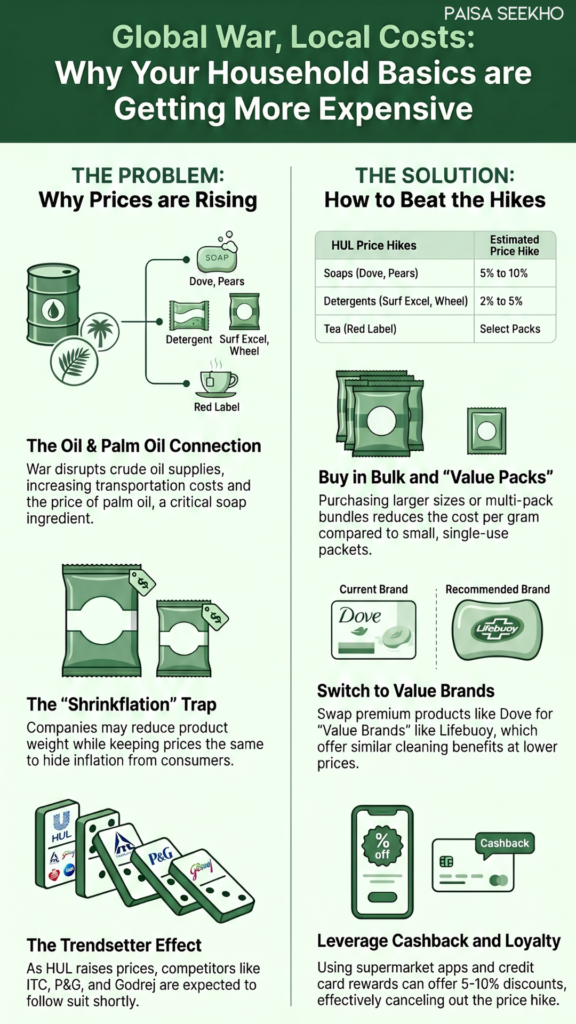
Because HUL is so huge, they are the “trendsetter.” When HUL decides to increase prices, it’s a signal to every other company in India that it’s time to raise their prices too. If HUL says soap is getting expensive, you can bet that your local brand or other big brands will also increase their prices in a few weeks.
This is why “Iran War Price Hikes” are a big deal. It’s not just about one company; it’s about a massive wave of inflation hitting the common man’s pocket.
2. The Science of the Hike: How War Affects Your Soap
It seems crazy, right? A rocket is fired in the Middle East, and suddenly your Dove soap costs ₹5 more. To understand this, we have to look at the “hidden ingredients” that go into making these products.
There are three main pillars that connect the Iran war to your grocery bill:
Pillar A: The Crude Oil Connection (Transportation)
Almost everything you buy travels on a truck. Whether it’s the raw chemicals going into a factory or the final packet of Surf Excel coming to your local shop, it moves using diesel.
- The Problem: The Middle East is the world’s biggest oil producer. When there is a war there, the supply of crude oil gets disrupted.
- The Result: Global oil prices shoot up. When crude oil gets expensive, diesel gets expensive.
- The Impact: HUL has to pay more money to transporters to move their products across India. To cover this extra “freight cost,” they increase the price of the product.
Pillar B: The Palm Oil Problem (The Soap Ingredient)
Did you know that the most important ingredient in almost every bar of soap is Palm Oil?
- The Problem: India doesn’t produce enough palm oil; we import most of it from countries like Indonesia and Malaysia. However, the price of palm oil is closely linked to the price of crude oil. When oil prices are high, farmers use palm oil to make “Bio-fuel” instead of soap.
- The Result: There is less palm oil available for making soap, which makes the price of “Soap Noodles” (the raw material for soap) skyrocket.
- The Impact: HUL’s cost of making a bar of Dove or Pears goes up. To keep making a profit, they pass that cost to you.
Pillar C: The Tea Supply Chain (Red Label)
You might think tea is 100% Indian, so why should a war affect it?
- The Problem: India is one of the world’s largest exporters of tea. But global trade happens in ships. The Iran-Israel conflict has made shipping routes in the Middle East (like the Red Sea) very dangerous.
- The Result: Ships have to take longer routes, which costs more in fuel and insurance.
- The Impact: This disrupts the entire global market for tea. When it becomes hard to move tea around the world, the prices in the local Indian market also start to rise because the “cost of business” has increased.
3. Which Specific Brands and Products are Getting Expensive?
According to the latest reports in April 2026, HUL has implemented these price hikes across several categories. Here is a breakdown of what you will see on the shelves:
The Soap Category (Dove & Pears)
Soaps have seen some of the highest increases, ranging from 5% to 10%.
- Dove: Known as a “premium” soap, Dove is very sensitive to the price of imported oils. A multi-pack that used to cost ₹250 might now cost ₹270 or more.
- Pears: Like Dove, Pears uses high-quality glycerine and oils. It has also seen a significant price jump.
The Detergent Category (Surf Excel & Wheel)
HUL has a detergent for everyone—from the expensive Surf Excel to the budget-friendly Wheel.
- Surf Excel: Prices have increased by about 2% to 5% on larger packs.
- Wheel: Even though it is a “mass-market” brand for lower-income families, HUL had to increase prices here because the chemicals used in detergents are derived from petroleum (crude oil).
The Tea Category (Red Label)
Your morning “Chai” is getting a bit bitter in terms of price.
- Red Label: HUL has increased prices on select packs of Red Label tea. While the hike might only be a few rupees per 250g pack, it adds up over a month if your family drinks a lot of tea.
4. The “Shrinkflation” Trap: Watch the Weight!
Sometimes, companies are scared to increase the “sticker price.” They know that if a bar of soap goes from ₹40 to ₹45, you will notice it immediately.
So, they use a clever trick called Shrinkflation.
- Instead of increasing the price, they reduce the weight.
- The price stays at ₹40, but the soap bar that was 100 grams yesterday is now only 85 grams today.
Paisaseekho Tip: When you go shopping this month, don’t just look at the price. Look at the “Net Weight” printed in small letters on the back of the pack. You might find that you are paying the same amount for much less product!
5. How This Affects Your Monthly Budget
Let’s look at a typical middle-class Indian family of four.
On average, this family might use:
- 4 Bars of Soap per month.
- 2 kg of Detergent Powder.
- 500g of Tea.
If the price of these items goes up by an average of 7%, your monthly grocery bill might only increase by ₹100 or ₹150.
However, you have to remember that HUL is just the beginning. Soon, the companies that make your cooking oil, your biscuits, your shampoo, and your toothpaste will also raise prices due to the same “Iran War” reasons.
If every item in your kitchen and bathroom goes up by 7%, a monthly grocery bill of ₹8,000 suddenly becomes ₹8,560. Over a year, that is an extra ₹6,720 coming out of your pocket for the exact same things you were buying before.
6. Paisaseekho Strategy: How to Beat the Price Hikes
Just because HUL is raising prices doesn’t mean you have to be a victim. Here are four smart ways to protect your wallet:
1. Buy in Bulk (The Value Packs)
Smaller packets (like 100g tea or single soaps) are always more expensive per gram than large “Value Packs” (like 1kg tea or “Buy 3 Get 1 Free” soap bundles). Since prices are rising, it makes sense to buy your non-perishable items (soap, detergent, tea) in the largest possible size. You might spend more today, but you will save 15-20% over the next three months.
2. Switch to “Value Brands”
Brands like Dove and Surf Excel are “Premium.” They have massive advertising budgets, which you pay for! If Dove becomes too expensive, consider switching to “Value Brands” like Lifebuoy or Wheel. They are made by the same company (HUL), use similar basic cleaning ingredients, but are much cheaper because they aren’t marketed as luxury products.
3. Use Cashback and Loyalty Apps
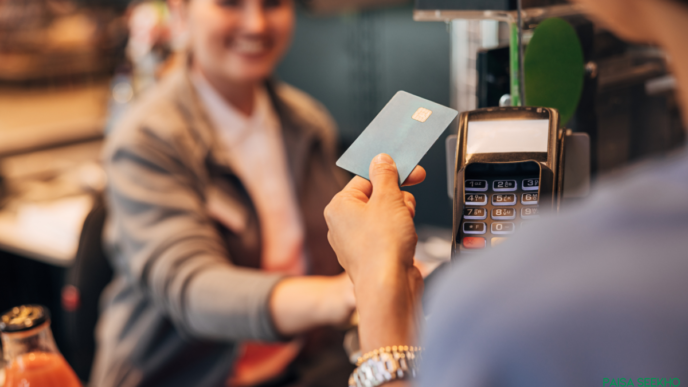
In 2026, almost every supermarket (like Reliance Smart or Big Bazaar) and online app (like Zepto, Blinkit, or BigBasket) offers loyalty points or bank cashback. Before you pay, check if your credit card or a specific app is offering a 5% or 10% discount. This cashback can completely cancel out the price hike!
4. Optimize Usage (Don’t Waste!)
It sounds simple, but most Indian households use 20% more detergent than they actually need for a load of laundry. By simply using a measuring scoop instead of “guessing,” you can make a packet of Surf Excel last 5 days longer. In a world of “Iran War Price Hikes,” every gram counts!
7. Conclusion
The news of HUL hiking prices is a reminder that we live in a global village. What happens in the oil fields of the Middle East directly affects the suds in your bucket in middle-class India.
While a 5% or 10% increase might not seem like a disaster today, it is the start of a broader trend. As crude oil remains volatile throughout 2026, we must prepare for a period of “Sticky Inflation”—where prices go up and stay there for a long time.
But as we say here at Paisaseekho: Knowledge is your best weapon. By understanding why the prices are rising, keeping an eye out for “Shrinkflation,” and switching to smarter bulk-buying habits, you can ensure that your family’s financial health stays strong, no matter what is happening in the global headlines.
Stay smart, shop wisely, and keep a close eye on those tea and soap prices!
Frequently Asked Questions (FAQs) About the HUL Price Hikes
Q1: Why did HUL increase the price of Dove and Pears soap?
HUL increased the prices because the war in the Middle East caused the price of Crude Oil and Palm Oil to rise. Palm oil is the main ingredient in soap, and crude oil is needed for transporting the soap to your city.
Q2: How much is the price increase on Surf Excel?
The price increase on detergents like Surf Excel and Wheel is roughly between 2% and 5%, depending on the size of the pack.
Q3: Will other brands like Lux and Lifebuoy also get expensive?
Yes. While the news specifically mentioned premium brands like Dove and Pears, HUL has also signaled price adjustments for its “mass-market” soaps like Lifebuoy to cover the rising cost of raw materials.
Q4: What is “Shrinkflation”?
Shrinkflation is when a company keeps the price of a product the same but reduces the quantity or weight. For example, a ₹10 biscuit packet might stay at ₹10 but go from 10 biscuits to 8 biscuits.
Q5: Is Red Label tea also affected by the Iran war?
Yes. The conflict has disrupted global shipping routes and created uncertainty in commodity markets, leading HUL to hike prices on select packs of Red Label tea.
Q6: Should I buy 6 months of soap right now to save money?
While prices have gone up, “panic buying” isn’t necessary. However, buying a “Value Pack” or a “Buy 3 Get 1 Free” bundle is a smart move right now, as it protects you from further price hikes later in the year.
Q7: Will prices come back down if the war ends tomorrow?
In the FMCG industry (Fast Moving Consumer Goods), prices are “sticky.” This means that when costs go up, prices go up quickly. But when costs come down, companies rarely reduce the price; they usually just offer more discounts or “extra 20% free” schemes.
Q8: Are there any tax benefits on buying these household items?
No, there are no income tax benefits for buying groceries. However, you can save money by using credit cards that offer “Reward Points” or “Cashback” specifically for grocery spending at supermarkets.
Q9: Which other companies are likely to raise prices?
Historically, when HUL raises prices, competitors like ITC (Fiama, Vivel), P&G (Ariel, Tide), and Godrej Consumer Products (Godrej No. 1, Cinthol) usually follow suit within a few weeks to maintain their profit margins.
Q10: What is the official website to track HUL’s products and prices?
You can visit the official HUL website at www.hul.co.in to see their full range of brands and any official announcements regarding their business operations in India.
Last Updated on 5 months ago by Team Paisaseekho