TL;DR: Quick Facts on the 2026 Medicine Price Hike
If you are at the pharmacy right now and just want the fast facts, here is your summary:
- The News: The government may allow a one-time “special” price hike of 10-20% for essential medicines.
- The Reason: The cost of raw materials (APIs), energy, and shipping has skyrocketed due to global conflicts (like the Iran war) and supply chain issues.
- Who is affected? Anyone buying “Scheduled Drugs” (essential medicines) for chronic conditions like diabetes, BP, and heart issues.
- The Companies’ Threat: Pharma companies say if prices aren’t raised, they will stop making these cheap medicines because they are currently losing money on every strip sold.
- The Solution: You can save up to 80% by switching to Jan Aushadhi (Generic) medicines, which will remain affordable even if branded prices go up.
Introduction
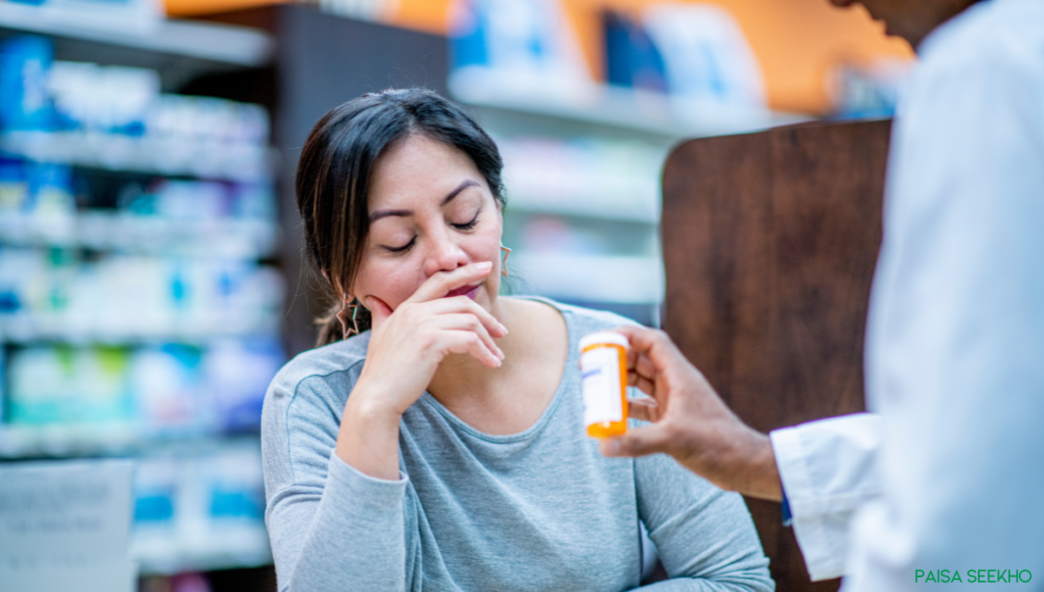
Imagine you are at the chemist shop. You’ve been buying the same strip of blood pressure or diabetes medicine for your parents for the last three years. You know the price by heart—it’s usually ₹120. But today, the chemist asks for ₹145. You look at the back of the pack, and there it is: a new, higher MRP.
If this hasn’t happened to you yet, it likely will very soon.
In April 2026, a major piece of news started circulating in the Indian pharmaceutical world. The government is currently considering a proposal to allow a temporary 10% to 20% hike in the prices of essential medicines. We aren’t talking about luxury vitamins or expensive skincare creams. We are talking about “essential drugs”—the ones people need to stay alive, like heart medicines, antibiotics, and painkillers.
Why is the government, which usually tries to keep medicine cheap, suddenly thinking about letting prices go up? What does a war in the Middle East have to do with the tablet you take every morning? And most importantly, how can a middle-class family manage their health budget when the “medicine price increase” hits their wallet?
1. What are “Essential Medicines” and Who Decides Their Price?
Before we talk about the price hike, we need to understand how medicine prices work in India. Unlike a packet of chips or a t-shirt, a pharma company cannot just wake up and decide to double the price of a heart medicine.
In India, we have something called the National List of Essential Medicines (NLEM). This is a list of around 380+ “life-saving” drugs that the government considers absolutely necessary for the public.
To protect the poor and middle class, the government has a special department called the NPPA (National Pharmaceutical Pricing Authority). The NPPA puts a “Price Ceiling” or a maximum cap on these essential medicines. No matter which brand makes them, they cannot sell them for even one paisa above that cap.
The Normal Rule: Every year in April, the NPPA allows a small price increase based on the Wholesale Price Index (WPI). This is usually around 2% to 10%.
The 2026 Situation: This year is different. The 2% to 10% regular increase isn’t enough anymore. The “medicine price increase” being discussed now is a special emergency hike of up to 20% to help companies survive a massive global crisis.
2. Why is the Government Allowing This Hike?
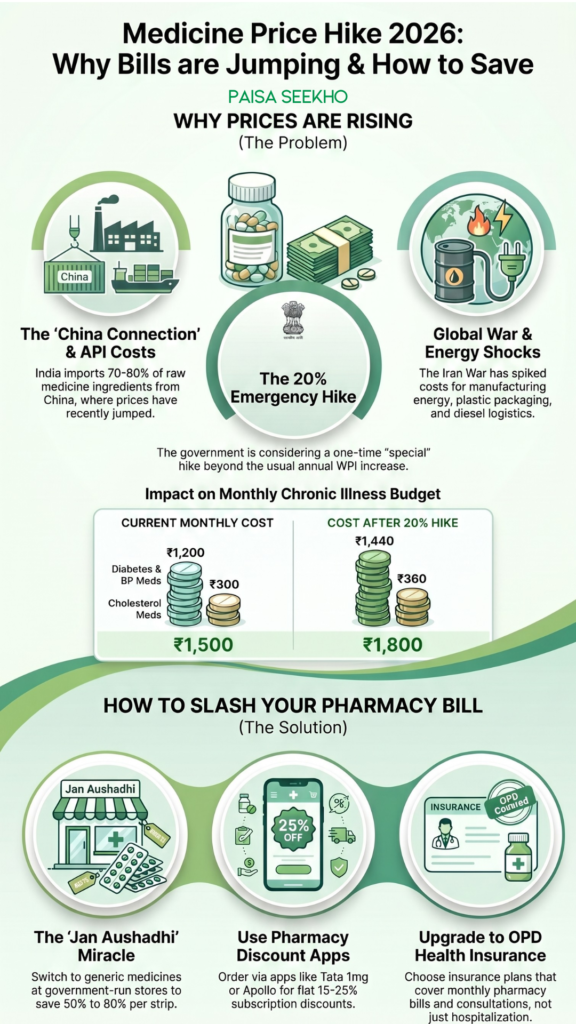
You might be angry at the government for allowing prices to go up. But to be fair, the government is stuck between a rock and a hard place.
To understand why, we have to look at how a medicine is made. A pill isn’t just powder; it’s made of a “hero ingredient” called an API (Active Pharmaceutical Ingredient). ### The China Connection
India is known as the “Pharmacy of the World,” but here is a secret: we are heavily dependent on China for the raw materials. We import nearly 70% to 80% of our APIs from China. In 2026, the price of these raw materials in China has jumped. Whether it’s the chemicals needed for paracetamol or the ingredients for advanced antibiotics, everything is costing more.
The Energy and War Shock
As we discussed in our previous blog about the Iran War Price Hikes, global oil and gas prices are currently very high.
- Manufacturing: Factories need a massive amount of electricity and heat to produce medicines. High energy prices mean higher production costs.
- Logistics: Moving medicines from a factory in Himachal Pradesh to a chemist in Chennai costs more because diesel is expensive.
- Packaging: Even the aluminum foil and plastic used for the strips are derived from petroleum. When oil prices go up, packaging becomes expensive.
The “Availability” Threat
Pharma companies have told the government: “The cost of making this medicine is now ₹12, but your price cap is ₹10. We are losing ₹2 on every strip. If you don’t let us increase the price to ₹14, we will simply stop making this medicine.”
If companies stop making essential drugs, there will be a shortage in the market. The government realized that a 20% price hike is better than a country with no life-saving medicines available at all.
3. How Will This Impact Your Monthly Budget?
A 20% “medicine price increase” sounds small on paper, but for a family dealing with “lifestyle diseases” or “chronic conditions,” it adds up to a massive amount over a year.
Let’s look at a typical Indian household where the elderly parents have Diabetes and High Blood Pressure.
Current Monthly Bill (Example):
- Diabetes Medication: ₹800
- BP Medication: ₹400
- Cholesterol Medication: ₹300
- Total: ₹1,500 per month.
New Monthly Bill (After 20% Hike):
- Diabetes Medication: ₹960
- BP Medication: ₹480
- Cholesterol Medication: ₹360
- Total: ₹1,800 per month.
That is an extra ₹300 per month, or ₹3,600 per year. For a middle-class family, that is the cost of a new pair of school shoes, a month’s electricity bill, or several gas cylinders! And this is just for one person. If multiple family members need daily medication, the burden becomes very heavy.
4. The Paisaseekho Strategy: How to Beat the Medicine Price Hike
At Paisaseekho, we don’t just give you the bad news; we give you the solution. Even if the government allows a 20% hike, there are three very powerful ways you can legally slash your medicine bills by 50% to 80%.
A. The “Jan Aushadhi” Miracle (The Best Kept Secret)
Most people buy “Branded” medicines because that is what the doctor wrote on the prescription. For example, you might buy a famous brand of Paracetamol for ₹30.
However, the government runs a massive network of shops called Pradhan Mantri Bhartiya Janaushadhi Pendra (PMBJP). * These shops sell Generic Medicines. * A generic medicine has the exact same chemical formula and the same power as a branded one, but it doesn’t have a fancy name or an expensive advertising budget.
- The Price Difference: A medicine that costs ₹100 in a private pharmacy often costs only ₹15 to ₹20 at a Jan Aushadhi Kendra.
- Action Plan: Ask your doctor: “Sir/Ma’am, can you please write the generic name of this medicine?” Then, use the “Jan Aushadhi Sugam” app to find the nearest government pharmacy.
B. Use Pharmacy Discount Apps
In 2026, the online pharmacy market (like Tata 1mg, Apollo 24/7, Netmeds, or PharmEasy) is very competitive.
- Most of these apps offer a flat 15% to 25% discount if you order through their app.
- Many of them also offer “Subscription Models.” If you tell them you need the same medicine every month, they will give you a deeper discount and deliver it automatically to your door.
- This discount can completely cancel out the 20% “medicine price increase” the government is planning!
C. Health Insurance with “OPD Cover”
Most people in India think health insurance is only for when you get admitted to a hospital (IPD). But in 2026, many new insurance plans offer OPD Cover. * These plans cover the cost of doctor consultations and pharmacy bills. * If your monthly medicine bill is high (e.g., ₹5,000+), it might be worth paying a slightly higher insurance premium to get a plan that pays for your monthly tablets.
5. The Long-Term Solution: Investing in Health
While we talk about the “medicine price increase,” we must also talk about why we need these medicines in the first place.
Nearly 60% of the essential medicines in the NLEM list are for “Lifestyle Diseases” like Type 2 Diabetes, Hypertension, and high cholesterol. These are often preventable or manageable through lifestyle changes.
The Best Financial Advice: The best way to save money on medicines is to not need them.
- Investing ₹1,000 a month in a good gym membership or a yoga class is a much better financial return than spending ₹2,000 a month on chronic disease medication for the next 30 years.
- Reducing sugar, salt, and processed oils (which are also getting expensive due to the Iran War Price Hikes) can significantly reduce your dosage over time.
6. Conclusion
The news of a 20% “medicine price increase” in 2026 is a harsh reality of the world we live in. As long as global supply chains are disrupted and raw material costs are high, the government will have to allow prices to rise to ensure that medicines remain available on the shelves.
But as a Paisaseekho reader, you are now ahead of the curve. You know why the prices are rising, you know the math of how it affects you, and most importantly, you know that Generic Medicines and Jan Aushadhi Kendras are your best weapons against inflation.
Don’t let the next trip to the chemist surprise you. Start the conversation with your doctor about generic alternatives today, and make sure your monthly budget is ready for the shift. Your health is your greatest wealth—make sure you protect both!
Frequently Asked Questions (FAQs) About Medicine Price Hikes
Q1: Is it official that medicine prices are increasing by 20%?
As of mid-April 2026, the government is “considering” the proposal. While the standard annual increase happens every April, this specific 10-20% hike is an emergency request from the pharma industry that is currently under discussion.
Q2: Which medicines will become more expensive?
The hike primarily affects “Scheduled Drugs” on the National List of Essential Medicines (NLEM). This includes common antibiotics, painkillers, heart medications, diabetes drugs, and anti-infection medicines.
Q3: Why can’t the government just refuse the price hike?
If the government refuses, and the cost of making the medicine (API, energy, transport) is higher than the selling price, companies will simply stop manufacturing them. This would lead to a dangerous shortage of life-saving drugs in India.
Q4: Are “Generic” medicines as good as “Branded” ones?
Yes, absolutely. A generic medicine contains the exact same Active Pharmaceutical Ingredient (API) in the same dosage as the branded version. They are checked for quality by the same government regulators. The only difference is the brand name and the price.
Q5: How can I find a Jan Aushadhi store near me?
You can download the official “Jan Aushadhi Sugam” mobile app. It uses your GPS to show you all the government-run generic pharmacies in your area and even lets you check the price of a generic medicine compared to a branded one.
Q6: Does this price hike apply to Ayurvedic or Homeopathic medicines?
The NPPA price caps and the current 10-20% hike proposal primarily focus on allopathic (modern) essential medicines. However, since raw material and transport costs are rising for everyone, you may see indirect price increases in other categories too.
Q7: Can I return medicines if the price increases after I bought them?
No, once a medicine is sold, most pharmacies will not take it back unless it is defective or expired. Always check the MRP on the pack before paying.
Q8: Will online pharmacies also increase their prices?
Yes. Online pharmacies sell the same branded products as physical shops. If the manufacturer increases the MRP, the price on the app will also go up. However, online apps often provide better discounts (15-25%) that can help you save money.
Q9: Does the Iran War really affect the price of a paracetamol tablet?
Yes, indirectly. The war has disrupted oil and gas supplies. Oil is needed for the fuel in delivery trucks and the plastic/aluminum in the packaging. Gas is needed to provide the massive heat required in chemical factories to make the medicine.
Q10: What should I do if my chemist is charging more than the MRP?
Charging more than the MRP is a crime. If a chemist tries to overcharge you, you can file a complaint with the NPPA through their “Pharma Sahi Daam” app or their official website.
Last Updated on 1 month ago by Team Paisaseekho