TL;DR: Quick Facts on the Gold Bear Market
If you are short on time, here is your quick cheat sheet on why gold prices crash:
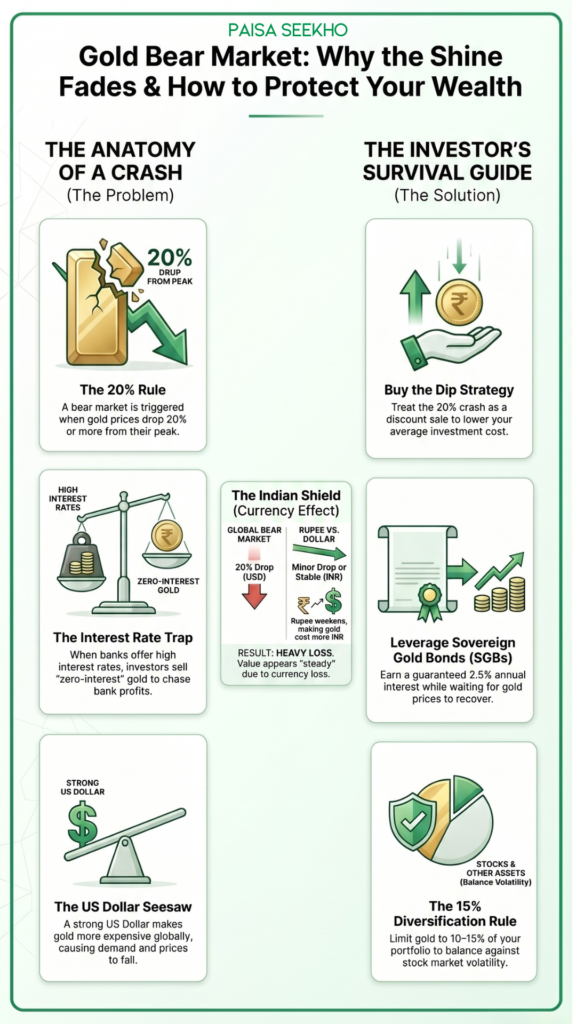
- The Definition: A “Bear Market” means the price of an asset has fallen by 20% or more from its recent high peak.
- The Dollar Effect: Gold and the US Dollar are enemies. When the US Dollar gets very strong, gold prices almost always fall.
- The Interest Rate Trap: Gold pays you zero interest. When banks offer high interest rates on Fixed Deposits or bonds, investors sell their gold and put their money in banks, causing gold to crash.
- The Peace Dividend: Gold is a “panic asset.” When the world is peaceful, economies are booming, and there is no inflation, people do not need gold. They sell it to buy stocks.
- The Indian Shield: In India, a global gold crash is sometimes “hidden” because the Indian Rupee loses value against the Dollar, keeping the local price of gold somewhat steady.
- The Strategy: Never panic sell. A bear market is the best time to buy Sovereign Gold Bonds (SGBs) at a massive discount.
Introduction
In Indian households, there is an unwritten financial rule passed down from generation to generation: “Gold never loses its value.” Whenever a child is born, whenever a wedding is planned, or whenever the stock market looks a bit scary, we immediately rush to the jeweler to buy gold coins, biscuits, or bangles. We have been conditioned to believe that gold is the ultimate, invincible safe haven. It only goes up, right?
Well, not exactly.
While gold is an incredible long-term asset, it is not immune to gravity. There are extended periods in history where the price of gold stops rising, turns around, and crashes heavily. It can stay down for months, years, or even decades. In the financial world, this terrifying scenario is called a Gold Bear Market.
If you are heavily invested in gold, or if you are planning to buy a massive amount of jewelry for an upcoming wedding, understanding how and why gold prices crash is absolutely critical. You do not want to buy at the absolute peak, only to watch your wealth melt away over the next five years.
So, let’s decode what causes the yellow metal to lose its shine, look at shocking historical examples, and give you a master plan to survive (and even make a profit) when gold prices start tumbling down.
1. What Exactly is a “Bear Market”?
Before we talk about gold, let us understand the animal slang used by financial experts. You will often hear the terms “Bull Market” and “Bear Market” on business news channels.
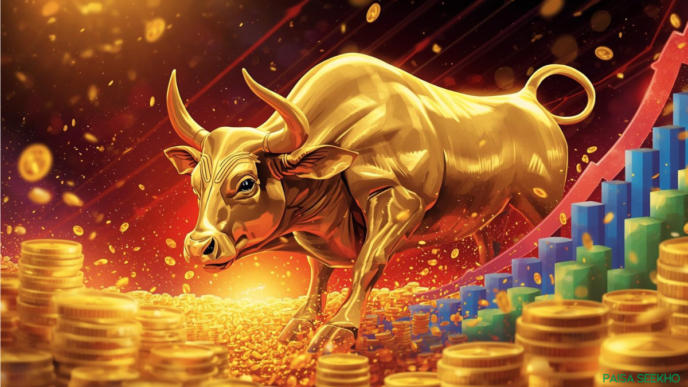
- The Bull Market: Think of a bull attacking. It thrusts its horns upwards into the air. When prices are rising, people are optimistic, and everyone is making money, it is called a Bull Market.
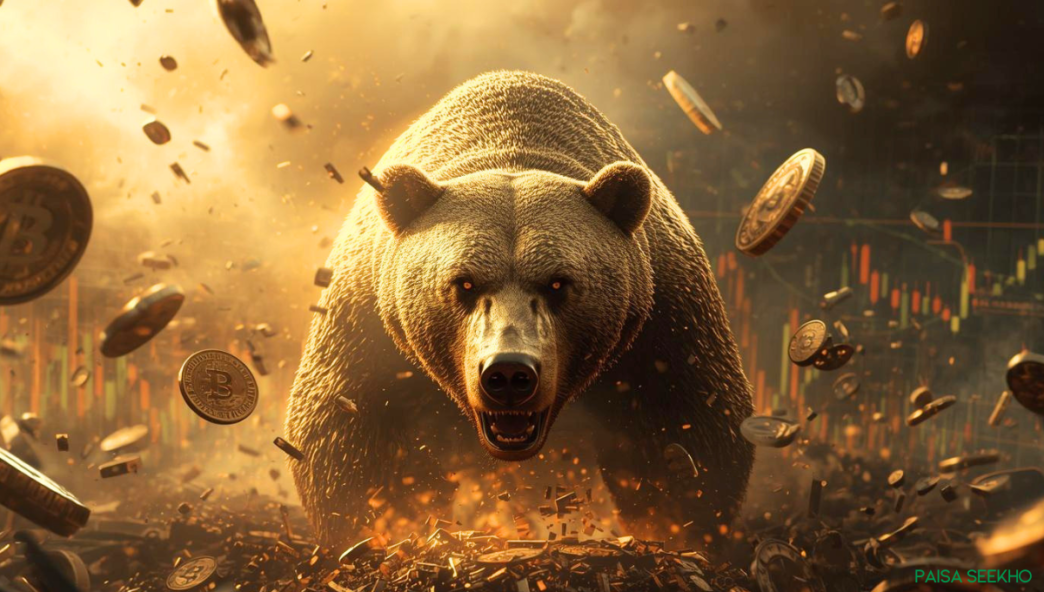
- The Bear Market: Think of a bear attacking. It swipes its heavy paws downwards. When prices fall heavily, people are panicking, and everyone is losing money, it is called a Bear Market.
The 20% Rule:
A price dropping by 2% or 5% is completely normal. That is just a regular Tuesday in the financial markets. But a market is officially labeled a “Bear Market” only when the price crashes by 20% or more from its highest recent peak and stays down for a prolonged period.
So, a Gold Bear Market means the global price of gold has crashed by at least 20% and investors have lost faith in the yellow metal for the foreseeable future.
2. The 3 Biggest Enemies of Gold: Why Do Prices Crash?
Gold is a very unique asset. Unlike a company (like Reliance or Tata) that creates products and earns profits, a piece of gold just sits inside a dark bank vault. It does not produce anything. Its price is based entirely on human psychology and global economics.
When a Gold Bear Market happens, it is usually because three powerful “enemies” of gold have teamed up. Let us look at them one by one.
Enemy #1: High Interest Rates
This is the biggest killer of gold prices.
Imagine you have ₹10 Lakhs. You can either buy a block of gold, or you can put it in a Bank Fixed Deposit.
If the bank is only offering a 3% interest rate, you might think, “That’s useless, I will just buy gold instead.”
But what if the Reserve Bank of India (or the US Central Bank) raises interest rates to 8% or 9%? Suddenly, keeping money in the bank guarantees you a massive, risk-free profit every year.
Since gold pays you zero interest and zero dividends, wealthy investors will immediately sell their gold and put their cash into high-interest bank bonds. When billionaires and massive mutual funds start selling thousands of kilos of gold, the price crashes, triggering a Bear Market.
Enemy #2: A Strong US Dollar
In the global market, gold is bought and sold in US Dollars. Because of this, gold and the US Dollar act like a seesaw.
- When the Dollar goes down, gold goes up.
- When the US Dollar becomes very strong, gold goes down.
Why? Because if the US economy is doing incredibly well and the Dollar is highly valuable, investors from all over the world want to hold Dollars, not gold. Furthermore, a strong dollar makes gold more expensive for buyers in other countries (like India or China). When things get too expensive, demand drops, and eventually, the global price of gold has to fall to attract buyers again.
Enemy #3: World Peace and Economic Booms
Gold thrives on fear. It is the ultimate “crisis asset.”
When there is a global pandemic, a massive war, or a terrifying stock market crash, people panic. They pull their money out of risky businesses and hide it in gold because gold feels safe.
But what happens when the war ends? What happens when a cure is found for the pandemic, and companies are reporting record-breaking profits?
When the world is peaceful and the economy is booming, investors feel brave. They realize they can make 15% or 20% returns by investing in the stock market or buying real estate. They take their money out of “boring” gold and pour it into growing businesses. This lack of fear completely destroys the demand for gold, pushing it into a Bear Market.
3. History Lesson: The Great Gold Crashes You Need to Know
If you think a Gold Bear Market is just a theoretical concept, history paints a very different, very brutal picture. Let us look at two times when gold broke the hearts of investors worldwide.
The 20-Year Winter (1980 to 1999)
In 1980, the world was panicking. Inflation was out of control, and gold hit a massive peak. But then, the US Central Bank took extreme action. They raised interest rates to an unbelievable 20% to kill inflation.
It worked, but it absolutely destroyed gold. Why would anyone hold a piece of yellow metal when the bank was paying 20% interest? Over the next two decades, the global economy boomed, the internet was invented, and stock markets skyrocketed. Gold, meanwhile, entered a massive, agonizing 20-year Bear Market. A person who bought gold at the peak in 1980 had to wait nearly 25 years just to get their original money back!
The 2013 Flash Crash
After the 2008 global financial crisis, people panicked and bought gold aggressively. The price hit record highs in 2011. But by 2013, the global economy had recovered. The US stock market was booming again.
In April 2013, investors realized they didn’t need a “safe haven” anymore. In a matter of just two days, the price of gold fell off a cliff, crashing by hundreds of dollars. It entered a brutal Bear Market and did not recover its 2011 peak until many years later.
4. The “Indian Shield”: Why Doesn’t Gold Feel Like it Crashes in India?
At this point, you might be scratching your head. You might be thinking: “Paisaseekho, you are saying gold crashed for years, but my mother’s jewelry has always gone up in value in rupees!”
You are absolutely right. There is a massive difference between the Global Gold Price (in US Dollars) and the Indian Gold Price (in Indian Rupees).
India imports almost all of its gold. We buy it in Dollars.
If the global price of gold drops by 20% (a Bear Market), the price of gold in India should also drop by 20%.
But here is the catch: Over the last 30 years, the Indian Rupee has consistently lost value against the US Dollar.
- In 2010, 1 US Dollar was equal to roughly ₹45.
- In 2026, 1 US Dollar is equal to roughly ₹83.
So, even if the price of gold crashes globally, the Indian Rupee is also becoming weaker at the exact same time. It costs us more Rupees to buy the exact same amount of cheap global gold. This currency depreciation acts as a “shield.” It masks the global Bear Market, making it look like the price of gold in India is stable or slowly rising, even when the rest of the world is losing money on it!
However, this shield is not perfect. If the global crash is severe enough (like in 2013), the price of gold in Indian jewelry shops will absolutely drop, leaving recent buyers with a heavy loss.
5. Gold Market Price Calculator
Use this gold market price calculator to see how the price of gold is affected by different factors!
📉 Macro-Economic Gold Simulator
Simulated Gold Price (10g)
₹70,000
6. How to Survive (and Profit) During a Gold Bear Market
If you wake up tomorrow and the news channels are screaming that gold has officially entered a Bear Market, what should you do? Should you sell all your wife’s jewelry? Should you panic?
Absolutely not. Smart investors actually look forward to Bear Markets. Here is your ultimate Paisaseekho survival guide:
Rule 1: Never Panic Sell
If you bought gold for a long-term goal (like your child’s wedding in 15 years), a temporary crash means absolutely nothing to you. Do not sell your physical gold or digital gold at a loss just because the news is scary. Gold has survived empires, world wars, and depressions. It will eventually recover. Just be patient.
Rule 2: “Buy the Dip”
A Bear Market is simply a massive discount sale. If you have been waiting to buy gold but felt it was “too expensive,” a 20% crash is a golden opportunity (pun intended). Use this time to slowly accumulate more gold at cheaper prices. This strategy is called “Averaging Down,” and it lowers your overall cost of investment.
Rule 3: Invest in Sovereign Gold Bonds (SGBs)
During a Bear Market, physical gold pays you nothing while its price falls. To counter this, buy Sovereign Gold Bonds issued by the Reserve Bank of India (RBI).
When you buy SGBs, you are buying digital gold at the current low price. But more importantly, the government pays you an extra 2.5% fixed interest every year, straight into your bank account! Even if the price of gold stays flat for five years, you are still making a guaranteed 2.5% return, cushioning the blow of the Bear Market.
Rule 4: Rebalance Your Portfolio
A Gold Bear Market usually happens because the Stock Market is booming. This is why diversification is critical. You should never put 100% of your savings into gold.
A healthy portfolio should have roughly 10% to 15% in gold, and the rest in Mutual Funds, FDs, and Real Estate. If your gold is losing value, your stock market mutual funds are likely making massive profits, keeping your overall wealth perfectly balanced and growing.
Conclusion
Gold is not a magic shield that protects you from all financial harm. Like any other asset in the world, it is subject to the ruthless laws of supply, demand, and global economics.
A Gold Bear Market is a natural, cyclical event. When interest rates rise, the US dollar strengthens, and global panic fades, gold will inevitably take a hit.
By understanding exactly how a Gold Bear Market works, you remove the fear from your financial planning. You will no longer rush to buy gold at the highest possible peak just because everyone else is doing it. Instead, you will wait patiently for the inevitable crash, buy the dip using smart tools like Sovereign Gold Bonds, and watch your wealth compound over the next decade.
Frequently Asked Questions (FAQs) About Gold Bear Markets
Q1: What exactly defines a Gold Bear Market?
A Gold Bear Market is officially declared when the global price of gold drops by 20% or more from its most recent peak price, usually accompanied by widespread investor pessimism that lasts for several months or years.
Q2: Why does a strong US Dollar cause gold prices to fall?
Gold is traded globally in US Dollars. When the Dollar becomes stronger, gold becomes more expensive for buyers using other currencies (like Rupees or Euros). This drops the global demand for gold, forcing the price to fall.
Q3: How do bank interest rates affect the price of gold?
Gold does not pay you any interest. If central banks raise interest rates, investors can make high, risk-free returns by keeping their money in bank deposits or government bonds. They sell their gold to get that cash, causing gold prices to crash.
Q4: Has gold ever been in a bear market for a long time?
Yes. The most famous Gold Bear Market started in 1980. After hitting a massive peak, the price crashed and stayed suppressed for nearly 20 years, only beginning a proper recovery around the early 2000s.
Q5: Why didn’t the price of gold crash heavily in India when it crashed globally?
The Indian Rupee has consistently depreciated (lost value) against the US Dollar over the last few decades. Even if the Dollar price of gold drops, it costs us more Rupees to buy that Dollar, which often masks the crash and keeps the INR price of gold relatively stable.
Q6: Should I sell my physical gold jewelry during a bear market?
No. Selling physical jewelry during a crash is a terrible idea because you will not only lock in your financial loss, but you will also lose the “making charges” and taxes you paid when you bought it. Keep it for the long term.
Q7: Is it a good idea to buy gold when the price is crashing?
Yes, if you buy in installments. A bear market offers a “discount” on gold. Buying slowly during a crash (Averaging Down) allows you to build a strong position so you can make huge profits when the next Bull Market begins.
Q8: What is a Sovereign Gold Bond (SGB) and why is it good during a crash?
SGBs are digital gold bonds issued by the Indian government. They are perfect during a bear market because even if the price of gold doesn’t rise, the government still pays you a guaranteed 2.5% extra interest every year on your investment.
Q9: Does inflation cause a Gold Bear Market?
No, it’s usually the opposite. High inflation scares people because their cash is losing value, so they buy gold (causing a Bull Market). When inflation is low and controlled, people feel safe and sell their gold, which can trigger a Bear Market.
Q10: How much of my total savings should be invested in gold?
To protect yourself from a sudden Gold Bear Market, financial experts recommend keeping only 10% to 15% of your total portfolio in gold. The rest should be diversified across mutual funds, real estate, and fixed deposits.
Last Updated on 5 months ago by Team Paisaseekho