The deadline for filing your Income Tax Return for FY 2025-26 (AY 2026-27) is 31 July 2026. If you have not filed yet, you are not alone – and there is still time. Most salaried employees with straightforward income can file in under 30 minutes on the Income Tax e-filing portal if their documents are in order. Here is everything you need.
Part 1: The Documents Checklist
Gather these before you open the portal. Missing even one can stall your filing midway.
Identity and Login
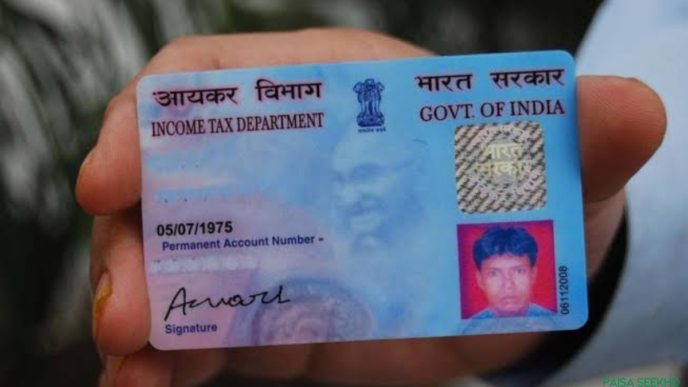
- PAN card (this is your login ID on incometax.gov.in)
- Aadhaar number (must be linked to PAN; check at myaadhaar.uidai.gov.in if unsure)
- Portal password (reset via Aadhaar OTP if forgotten)
- Mobile number linked to Aadhaar (needed for OTP-based e-verification)
Income Documents
- Form 16 (Part A and Part B) from your employer – the most important document for salaried filers; Part A shows TDS deposited, Part B shows your salary breakdown and deductions. See our Form 16 Part A vs Part B guide if you are unsure which part to use for what.
- Form 16 from any previous employer (if you changed jobs during FY 2025-26)
- Form 16A from your bank (for TDS deducted on FD interest). See our Form 16A guide.
- Bank passbook or statement (for savings account interest – even ₹500 must be declared)
- Interest certificate from your bank or NBFC (if you have fixed deposits)
Investment and Deduction Proofs
- Investment proofs for Section 80C (PPF passbook, ELSS statement, LIC premium receipt, home loan principal, tuition fee receipts)
- Health insurance premium receipts (Section 80D – up to ₹25,000 for self; ₹50,000 if parents are senior citizens)
- Home loan interest certificate from lender (for Section 24(b) deduction)
- Rent receipts or rental agreement (if claiming HRA under old regime)
- Donation receipts (Section 80G)
- NPS contribution proof (Section 80CCD)
Capital Gains (if applicable)
- Capital gains statement from CAMS or KFintech (for mutual fund redemptions)
- Broker statement or demat account statement (for equity share transactions)
- Sale deed and purchase deed (for property sold during FY 2025-26)
Cross-Check Statements
- Form 26AS (download from e-filing portal): verify every TDS entry matches your certificates
- AIS (Annual Information Statement): check that all income shown matches your own records and resolve any mismatches before filing. See our Form 26AS vs AIS vs TIS guide.
Part 2: Before You Start Filing – 3 Quick Checks
Check 1: Confirm your PAN-Aadhaar is linked.
An unlinked PAN is inoperative, and you cannot file with it. Check at incometax.gov.in under “Link Aadhaar.” Linking takes 24-48 hours to activate.
Check 2: Pick the right ITR form.
Most salaried employees with income below ₹50 lakh, no capital gains above ₹1.25 lakh (LTCG from equity), and up to two house properties use ITR-1. If you have capital gains, foreign income, or income above ₹50 lakh, use ITR-2. Freelancers and self-employed under presumptive taxation use ITR-4. Our ITR-1 vs ITR-2 vs ITR-4 guide for AY 2026-27 covers the decision in detail.
Check 3: Decide old regime vs new regime.
The new tax regime is the default and has lower slab rates but fewer deductions. The old regime allows Section 80C, 80D, HRA, and home loan interest deductions. If your deductions are large, the old regime may result in lower tax. Run both calculations on the portal before choosing.
Part 3: The 10-Step Filing Process
- Log into incometax.gov.in using your PAN and password
- Go to e-File → Income Tax Returns → File Income Tax Return
- Select AY 2026-27 and Online mode
- Choose your ITR form (ITR-1, ITR-2, or ITR-4)
- Select Original Return
- Verify the pre-filled data (salary, TDS, deductions) against your Form 16 and AIS; correct anything wrong
- Choose your tax regime (old or new)
- Fill in any income sources not pre-filled (bank interest, capital gains, rental income)
- Pay any tax due via e-Pay Tax before proceeding (if the return shows any balance tax payable)
- Submit and e-Verify using Aadhaar OTP, net banking, or your bank’s EVC – verification must be done within 30 days or the return is invalid
What Happens If You Miss 31 July 2026?
Missing the deadline does not mean you are done. You can still file a belated return up to 31 December 2026. But there are costs:
- Late filing fee: ₹5,000 if your total income exceeds ₹5 lakh; ₹1,000 if income is below ₹5 lakh (under Section 234F)
- Interest: Section 234A charges 1% per month on unpaid tax from 1 August onwards
- Loss of carry-forward: Capital losses and most other losses cannot be carried forward to future years if you file late
- Regime lock: Certain regime-related choices may be restricted in belated returns
If you owe no tax (because TDS was fully deducted or your income is below the exemption limit), there is no interest, but the ₹5,000 fee still applies if income exceeds ₹5 lakh.
5 Last-Minute Mistakes to Avoid
- Not verifying after submitting. Filing without e-verifying makes the return invalid. Use Aadhaar OTP immediately.
- Claiming TDS that is not in Form 26AS. Only TDS reflected in Form 26AS can be claimed. If something is missing, contact the deductor first.
- Forgetting bank interest. FD and savings account interest must be declared even if no TDS was deducted (interest below TDS threshold is still taxable income).
- Filing ITR-1 with capital gains. Any short-term capital gains or LTCG above ₹1.25 lakh from equity requires ITR-2. Using ITR-1 creates a defective return.
- Not paying advance tax before filing. If the portal shows tax payable, pay it first using e-Pay Tax and then proceed with filing. Filing with outstanding tax leads to interest under Section 234B.
You have until midnight on 31 July 2026. Open the portal now.
Sources: Income Tax Department: ITR Filing AY 2026-27; CBDT Notification No. 24/2026 dated 30 March 2026: ITR Forms for AY 2026-27.
This checklist is for general guidance only. For complex income situations, consult a Chartered Accountant before the deadline.