Quick summary: If you are applying for a Permanent Account Number (PAN) card in India, the form you need depends entirely on one thing: your citizenship. Form 49A is for Indian citizens, including Indian companies and entities. Form 49AA is for foreign nationals, Overseas Citizens of India (OCI) without an Indian passport, and foreign companies. The most common mistake is NRIs assuming they need Form 49AA because they live abroad. If you hold an Indian passport, you are an Indian citizen and you use Form 49A regardless of where you live. There is also a major structural update to know about: from April 1, 2026, both forms have been replaced by a new four-form system under the Income Tax Rules, 2026. This guide covers the original forms, the all-important citizenship rule, the NRI and OCI confusion, and what has changed for new PAN applications in 2026.
What Is a PAN Card and Why Does It Matter?
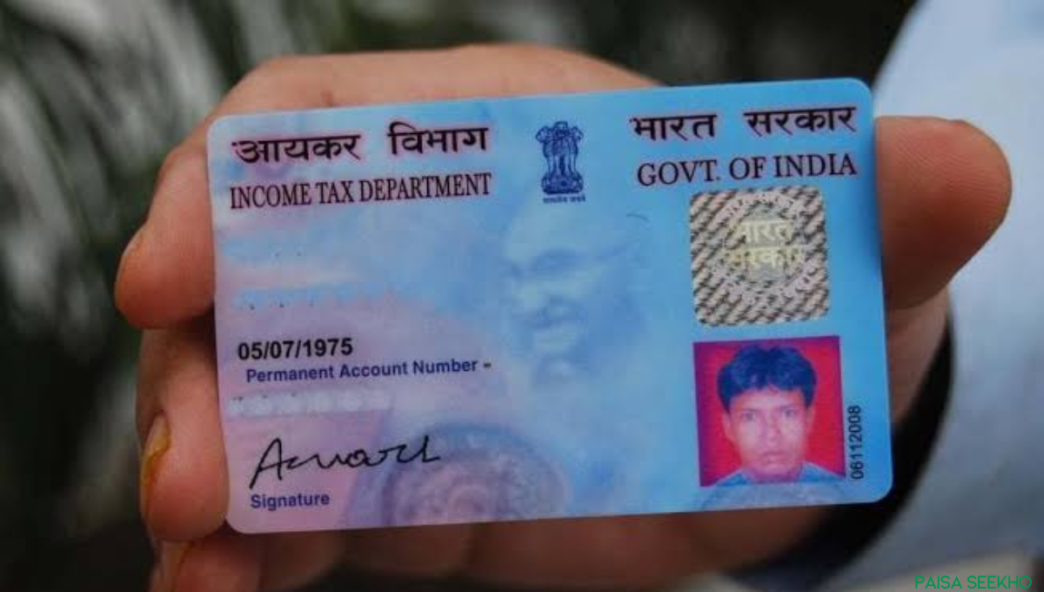
A Permanent Account Number (PAN) is a 10-digit alphanumeric identifier issued by the Income Tax Department of India under Section 139A of the Income Tax Act, 1961. It is mandatory for filing income tax returns, opening bank accounts, investing in mutual funds and stocks, buying or selling property above ₹10 lakh, and conducting most significant financial transactions in India.
Both Indian citizens and foreign nationals who earn income in India or transact in Indian financial markets need a PAN. However, the application form they must use is different, which is where Form 49A and Form 49AA come in. For context on how PAN is used across various financial transactions and reporting, see our guide on Form 61A and the Statement of Financial Transactions.
What Is Form 49A?
Form 49A is the PAN application form for Indian citizens and entities incorporated or formed in India. It is used to apply for a new PAN, request a correction or update to an existing PAN, or obtain a PAN for the first time.
Who Uses Form 49A?
- Indian citizens living in India
- Indian citizens living abroad as NRIs (Non-Resident Indians) who hold a valid Indian passport
- Indian companies registered under the Companies Act, 2013
- Partnership firms, LLPs, trusts, HUFs, and other entities formed and registered in India
- Indian students living abroad on Indian passports
- Minors who are Indian citizens (with a parent or guardian signing on their behalf)
The Most Important Rule for NRIs
The key insight: the form is determined by passport nationality, not country of residence, not ethnic origin, and not duration of time abroad. An Indian citizen who emigrated 40 years ago and has lived in Canada since 1985 but still holds an Indian passport uses Form 49A. There is no exception based on how long you have lived outside India, your tax residency status (RNOR or NRI), or any other factor. Indian passport equals Indian citizen equals Form 49A.
This confuses many NRIs who assume they need a “foreign” form because they live abroad. They do not.
What Does Form 49A Cover?
Form 49A has 16 sections capturing:
- AO (Assessing Officer) code
- Applicant’s full name (first, middle, last), abbreviated name for PAN printing
- Date of birth (or date of incorporation for entities)
- Gender
- Father’s name (and mother’s name, mandatory from 2026)
- Aadhaar number (for Indian residents; NRIs can declare NRI status and proceed without Aadhaar)
- Address (Indian and correspondence address)
- Sources of income
- Representative assessee details (if applicable)
- Documents submitted (identity, address, date of birth proofs)
The Aadhaar field is exclusive to Form 49A. Form 49AA does not have this field.
What Is Form 49AA?
Form 49AA is the PAN application form for foreign nationals, OCIs (Overseas Citizens of India) without an Indian passport, PIOs (Persons of Indian Origin) without an Indian passport, and entities incorporated outside India.
Who Uses Form 49AA?
- Foreign citizens of any nationality who earn income in India (from employment, property, investments, royalties, or any other source)
- OCI cardholders who do not hold an Indian passport (they have renounced Indian citizenship)
- PIO (Person of Indian Origin) cardholders who do not hold an Indian passport
- Foreign citizens of Indian origin who have renounced Indian citizenship
- Foreign companies, branch offices, liaison offices, and project offices operating in India
- Non-resident entities incorporated or formed outside India with Indian income
- Foreign Institutional Investors (FIIs) and Qualified Foreign Investors (QFIs)
- Foreign spouses of Indian citizens (regardless of whether they live in India or abroad)
What Is Unique to Form 49AA?
Form 49AA includes several fields not found in Form 49A:
- Country of citizenship and ISD (International Subscriber Dialling) code
- Taxpayer Identification Number (TIN) from the applicant’s home country
- For entities: type of company (public/private/non-government/charitable), net worth in Indian rupees, and whether the entity is involved in specific services such as gaming, lottery, money lending, foreign exchange dealing, or pawnbroking
- KYC details as required by SEBI for FIIs and QFIs
Attestation requirements are also different: documents submitted with Form 49AA must be attested by specified authorities such as an Indian Embassy or Consulate, a Notary Public, a Court Magistrate, or similar officials of the country where the applicant resides.
The Single Most Important Distinction: Citizenship, Not Residence
This is the most common source of confusion and error in PAN applications.
| Applicant Type | Correct Form |
| Indian citizen living in India | Form 49A |
| Indian citizen (NRI) living abroad with Indian passport | Form 49A |
| OCI cardholder with foreign passport (not Indian citizen) | Form 49AA |
| PIO cardholder with foreign passport (not Indian citizen) | Form 49AA |
| Foreign citizen of Indian origin (renounced Indian citizenship) | Form 49AA |
| Foreign citizen with no Indian connection, earning income in India | Form 49AA |
| Indian company (registered under Companies Act) | Form 49A |
| Foreign company operating in India | Form 49AA |
| Branch office of a foreign company in India | Form 49AA |
| HUF (Hindu Undivided Family) | Form 49A |
| Indian LLP or Partnership Firm | Form 49A |
| Minor who is an Indian citizen | Form 49A (signed by parent/guardian) |
| Minor who is a US citizen born to OCI parents | Form 49AA |
The OCI Card Confusion Explained
OCI (Overseas Citizen of India) is widely misunderstood. Despite the name, an OCI cardholder is not an Indian citizen. OCI is a long-term visa and residency status, not citizenship. When a person of Indian origin takes up foreign citizenship and renounces their Indian passport, they receive OCI status. But at that point, their Indian citizenship has ended. Their passport is foreign. Form 49AA applies.
If an OCI cardholder files Form 49A but cannot provide an Indian passport (because they only hold a foreign passport and an OCI card), the application will be rejected at the document verification stage. The applicant must reapply on Form 49AA, which means additional time and cost.
Dual Status During Citizenship Transition
If you are in the process of acquiring foreign citizenship and have not yet renounced your Indian passport, file based on your status on the date of application. If you still hold an Indian passport on that date, file Form 49A. Update your PAN records separately after your citizenship formally changes. India does not recognise dual citizenship; the Indian passport remains your primary legal identity until formally surrendered.
Documents Required
For Form 49A (Indian Citizens)
- Proof of Identity (any one): Aadhaar card, Voter ID card, Driving Licence, Passport, Arms Licence, Photo identity card issued by Central or State Government, pension card with photograph, central government health scheme card, original certificate of identity signed by a Member of Parliament or MLA.
- Proof of Address (any one): Aadhaar card, Voter ID, Driving Licence, Passport, bank account statement, credit card statement, electricity or water or landline telephone bill (not older than three months), property tax assessment order, Domicile Certificate.
- Proof of Date of Birth (any one): Birth certificate issued by municipal authority, matriculation certificate, Aadhaar card, Passport, Driving Licence, marriage certificate, affidavit sworn before a Magistrate.
- For Indian Companies and Entities: Certificate of incorporation (from the Registrar of Companies), certificate of registration (for partnerships, trusts, etc.), and PAN of the authorised signatory.
For Form 49AA (Foreign Nationals and Entities)
- Proof of Identity (any one): Valid Passport, PIO Card issued by the Government of India, OCI Card issued by the Government of India, photo ID card of the applicant’s country, TIN from the home country.
- Proof of Address (any one): Passport, foreign bank account statement, NRE bank account statement in India, Registration Certificate (Form C) issued by the Foreigners Registration Office or FRRO (for those residing in India on a long-term visa).
- For Foreign Entities: Certificate of registration in India (if registered), or the country of origin where the entity is incorporated, along with registration documents from the home country, if applicable.
- Attestation: All documents submitted with Form 49AA must be attested by one of the following: an Indian Embassy or Consulate, a Notary Public, an Apostille (for the Hague Convention countries), a Court Magistrate, or a Judge.
Important: Form 49A and Form 49AA Are Now Replaced
This is the most significant update for anyone applying for a PAN card today. Effective April 1, 2026, the Income Tax Department introduced a revamped PAN application process under the new Income-tax Rules, 2026. The existing Form 49A and Form 49AA have been replaced by a more detailed four-form system.
The four new forms are:
| New Form | Replaces | Who It Is For |
| Form 93 | Individual portion of Form 49A | Indian citizen individuals applying for a PAN |
| Form 94 | Entity portion of Form 49A | Indian entities (companies, LLPs, HUFs, trusts, partnerships) |
| Form 95 | Individual portion of Form 49AA | Non-resident individuals (foreign nationals needing PAN for India income) |
| Form 96 | Entity portion of Form 49AA | Foreign entities (companies, overseas organisations) with Indian income |
What Has Changed in the New Forms?
Key improvements under the new system:
- Mandatory digital contact details: All applicants must now provide a mobile number and email address. This enables real-time application tracking and direct digital delivery of ePAN.
- Mother’s name now mandatory in Form 93 for Indian citizen individuals (in addition to father’s name). Applicants may still choose which parent’s name appears on the physical PAN card.
- Aadhaar name matching: For Indian individuals applying via Form 93, the name must exactly match the Aadhaar database. Initials are generally not allowed unless they match Aadhaar exactly.
- Larger photograph: Physical applications now require a photograph of 4.5 cm x 3.5 cm (slightly larger than the earlier standard).
- More granular entity categorisation: The split into four forms (93, 94, 95, 96) improves data quality by separating individual applications from entity applications more cleanly.
For existing PAN holders: Nothing changes. Your existing PAN issued under the old Form 49A or Form 49AA remains fully valid. There is no need to re-apply.
For new applications from April 1, 2026: Use Form 93, 94, 95, or 96 as applicable. Both NSDL (Protean eGov) and UTIITSL portals have been updated to reflect the new forms.
The underlying logic remains identical: Indian citizens use the Indian-citizen forms (93 or 94), and non-residents or foreign entities use the non-resident forms (95 or 96).
How to Apply: Online and Offline
Both the old forms (49A and 49AA for applications made before April 2026) and the new forms (93-96 for applications from April 2026) can be filed online or offline through:
- NSDL/Protean eGov portal: protean-tinpan.com
- UTIITSL portal: pan.utiitsl.com
Online process (simplified):
- Visit the portal and select the applicable new form (93, 94, 95, or 96 based on your citizenship and entity type)
- Fill in all personal or entity details accurately
- Upload the required documents
- Pay the application fee: approximately ₹107 (with GST) for Indian delivery; higher for international dispatch
- Submit and receive an acknowledgement number for tracking
For ePAN (Indian individuals):
Indian resident individuals applying via Form 93 can receive an instant ePAN via Aadhaar-based OTP verification. No physical card required; the ePAN is sent to the registered email address and is legally equivalent to the physical card.
PAN and Aadhaar Linking: What NRIs and Foreigners Should Know
PAN-Aadhaar linking is mandatory for resident Indians. However, two important exemptions apply:
- NRIs (Indian citizens living abroad): Exempt from the PAN-Aadhaar linking requirement. An NRI’s PAN remains operative without Aadhaar linkage. However, the NRI must declare their NRI status when applying for PAN or when updating records.
- OCI holders and foreign citizens: Exempt from Aadhaar linking entirely, since non-citizens are not eligible for Aadhaar.
This is relevant because linking is mandatory for resident Indians from July 1, 2023 (with inoperative PANs for non-linking). NRIs and foreigners are specifically carved out from this mandate. For more on how PAN links to tax filing, see our ITR-1 vs ITR-2 vs ITR-4 guide for AY 2026-27 which explains the forms that salaried individuals and NRIs file.
Common Mistakes to Avoid
NRI filing Form 49AA:
If you hold an Indian passport, you are an Indian citizen. File Form 49A (or Form 93 from April 2026). This is the most common application error for NRIs.
OCI holder filing Form 49A:
An OCI card is not the same as Indian citizenship. If you hold only a foreign passport and an OCI card (having renounced Indian citizenship), file Form 49AA (or Form 95 from April 2026). Filing 49A without a valid Indian passport leads to rejection.
Using old forms for new applications after April 2026:
From April 1, 2026, new PAN applications must be made on Forms 93, 94, 95, or 96. The old Form 49A and 49AA are no longer accepted for new applications.
Wrong AO code for NRIs on Form 49A:
Even though NRIs use Form 49A, the AO (Assessing Officer) code they select must be an International Taxation AO code, not their hometown’s domestic code. Selecting the wrong AO code can cause jurisdictional issues during tax assessment.
Not getting foreign documents attested:
Documents submitted with Form 49AA (or Form 95/96 for foreign applicants) must be attested by an authorised official. Unattested documents lead to rejection.
Frequently Asked Questions
1. I am an Indian citizen living in the UAE for the last 10 years. Which form do I use for a new PAN?
Form 93 (the new form effective April 2026, which replaces Form 49A for individuals). Your passport is Indian, you are an Indian citizen, and duration of residence abroad is irrelevant. Select an International Taxation AO code for the UAE when applying.
2. I hold an OCI card and a US passport. Which form do I use?
Form 95 (the new form replacing Form 49AA for non-resident individuals). OCI is not Indian citizenship. Your passport is American. You use the foreign-applicant form. Documents must be attested by the Indian Consulate in the US or a US Notary Public.
3. My company is registered in Singapore but has a liaison office in India. Which form does it use?
Form 96 (replacing the foreign entity portion of Form 49AA). The company was incorporated in Singapore, not India. Foreign companies, branch offices, and liaison offices all use the foreign entity form.
4. Can a foreign national get a PAN card without coming to India?
Yes. Foreign nationals applying through Form 95 (or earlier Form 49AA) can apply online and courier their attested documents from abroad. The PAN card can be dispatched internationally (fees are higher for international dispatch). An ePAN can be emailed. Physical presence in India is not required.
5. Does having a PAN card make a foreign national taxable in India?
No. Having a PAN does not by itself create any tax liability. Tax liability arises from earning income that is taxable in India. PAN is simply the identifier used to track that income and file returns. Foreign nationals who need to buy property, invest in Indian markets, or receive payments from Indian entities must have a PAN regardless of their ultimate tax liability. For how foreign income is handled in tax returns and credits, see our Form 67 guide for foreign tax credit.
6. What if I applied for PAN using Form 49A but I should have used Form 49AA? Will my PAN be cancelled?
If the form was used incorrectly (for example, an OCI holder filing Form 49A), the application may be rejected during document verification before a PAN is even issued. If a PAN was somehow issued on the wrong form, banks and financial institutions may flag the mismatch when they verify your foreign passport against a PAN record showing Indian citizenship status. It is advisable to contact the PAN department (Protean or UTIITSL) to correct the citizenship detail in the PAN database.
Key Takeaways
- Form 49A is for Indian citizens (including NRIs with Indian passports) and entities incorporated in India. Form 49AA is for foreign nationals, OCI/PIO holders without Indian passports, and foreign entities.
- The deciding factor is citizenship (passport nationality), not country of residence, tax status, or duration of stay abroad. An Indian passport holder always uses Form 49A.
- OCI is not Indian citizenship. OCI cardholders who have renounced their Indian passport use Form 49AA.
- From April 1, 2026, both forms have been replaced by a four-form system: Form 93 (Indian individuals), Form 94 (Indian entities), Form 95 (non-resident individuals), Form 96 (foreign entities). Existing PANs remain valid.
- Applications are made online through the Protean or UTIITSL portal. ePAN for Indian residents can be issued instantly via Aadhaar OTP.
- NRIs and foreign citizens are exempt from PAN-Aadhaar linking requirements.
- Wrong form selection leads to outright rejection and requires reapplication from scratch, adding 4 to 6 weeks of delay.
Sources: Income Tax Department, Government of India: PAN Application Forms; CAClubIndia: PAN Application Using New Forms as per Income Tax Rules 2026, April 2026; Protean eGov Technologies: New PAN Application; PAN Card Services: Form 49A vs Form 49AA, March 2026; NRI Information: Form 49A vs Form 49AA, April 2026.
This article is for general information only and does not constitute legal or tax advice. For complex citizenship or entity situations, consult a Chartered Accountant or legal professional familiar with Indian tax law.